Landmark: Valdes Peninsula
City: Chubut
Country: Argentina
Continent: South America
Valdes Peninsula, Chubut, Argentina, South America
The Valdes Peninsula is a protected wildlife reserve located on the Atlantic coast of Patagonia, within the Chubut Province of Argentina.
This large, arid peninsula is characterized by its extensive coastline, steppe vegetation, and significant marine mammal populations.
Visual Characteristics
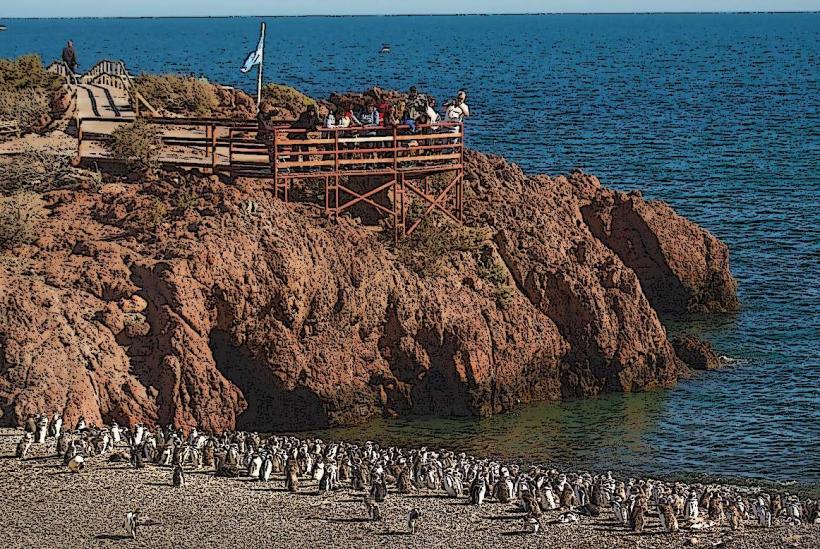
The peninsula's landscape consists primarily of arid steppe, with low-lying scrub vegetation. The coastline features steep cliffs in some areas and sandy beaches in others. The waters surrounding the peninsula are typically a deep blue, varying in clarity depending on currents and sediment. Rock formations are sparse, with the dominant visual being the open, windswept terrain and the expansive ocean.
Location & Access Logistics
The Valdes Peninsula is situated approximately 500 kilometers north of Comodoro Rivadavia and 1,500 kilometers south of Buenos Aires. Access is primarily via Provincial Route 2, which connects to National Route 3. The main entrance to the protected area is located about 15 kilometers from the town of Puerto Pirámides. A toll is required for entry. There is a parking area at the visitor center and designated parking zones at key wildlife viewing points. Public transport directly to the peninsula is limited; most visitors arrive via organized tours from Puerto Madryn or by private vehicle.
Historical & Ecological Origin
The Valdes Peninsula is a geologically recent formation, primarily composed of sedimentary rocks dating back to the Tertiary period. Its current form is the result of tectonic uplift and erosion. Ecologically, it is classified as a Patagonian steppe environment, supporting a unique assemblage of terrestrial and marine life adapted to arid conditions and coastal influences. The peninsula was declared a UNESCO World Heritage Site in 1999 due to its importance for the conservation of marine mammals.
Key Highlights & Activities
Whale watching tours are a primary activity, particularly for southern right whales from June to December. Boat tours depart from Puerto Pirámides. Land-based wildlife viewing includes observing elephant seals and sea lions at Punta Pirámide and Punta Delgada. Penguin colonies can be observed at Punta Tombo (though this is south of the peninsula, it's a common related excursion). Hiking is possible on designated trails, and diving and snorkeling are available in specific sheltered areas, subject to sea conditions.
Infrastructure & Amenities
Restrooms are available at the visitor center and at key viewing points like Punta Pirámide and Punta Delgada. Shade is limited in most areas, with natural rock overhangs offering minimal cover. Cell phone signal (4G/5G) is intermittent and generally only available near Puerto Pirámides. Food vendors are present in Puerto Pirámides, and some basic services may be found at the estancia-based lodges on the peninsula, but self-catering or planning meals in advance is recommended for most visitors.
Best Time to Visit
For southern right whale viewing, the optimal period is from August to October. Elephant seals are present year-round, with peak breeding seasons in September-October and February-March. Sea lions are also present throughout the year. The best time of day for photography depends on the specific location and time of year, but early morning and late afternoon generally offer softer light. Weather is most stable between September and April, with strong winds a constant factor year-round.
Facts & Legends
A unique aspect of the Valdes Peninsula is the "whale sound" phenomenon, where the acoustics of the coastline can amplify the calls of whales, making them audible from significant distances. Local folklore speaks of ancient sea spirits guarding the marine life, though these are oral traditions rather than documented legends.
Nearby Landmarks
- Puerto Pirámides (0.5km West)
- Punta Pirámide (15km Southwest)
- Salinas Grande (25km Northwest)
- Punta Delgada (80km Southwest)