Landmark: Wase Rock
City: Jos
Country: Nigeria
Continent: Africa
Wase Rock, Jos, Nigeria, Africa
Wase Rock is a large, prominent inselberg located near the town of Wase in Plateau State, Nigeria.
It is a significant geological feature and a protected area.
Visual Characteristics
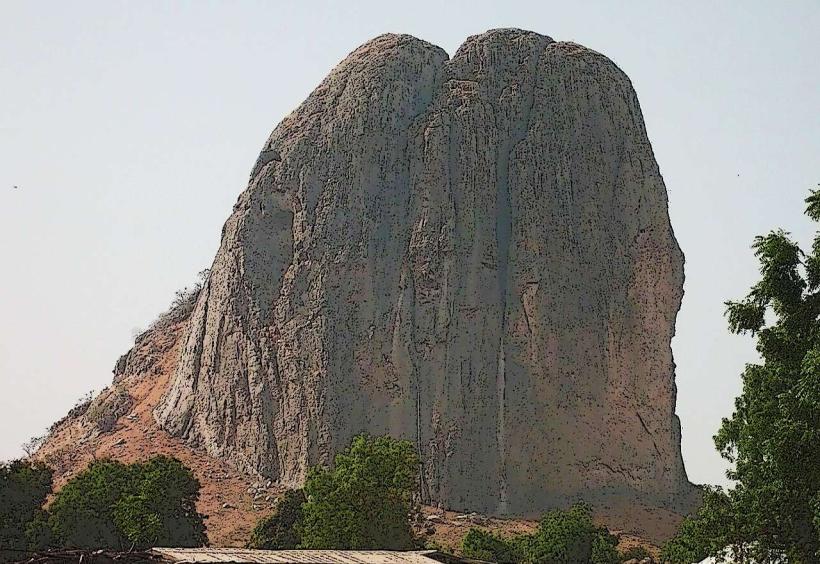
Wase Rock is a monadnock, a solitary hill rising abruptly from a level plain. It is composed of granite and measures approximately 350 meters (1,150 feet) in height above the surrounding terrain. The rock face is largely bare, with sparse vegetation clinging to its lower slopes and crevices. Its color is predominantly grey, with variations due to weathering and lichen growth.
Location & Access Logistics
Wase Rock is situated approximately 25 kilometers (15.5 miles) south of the city of Jos. Access is via the A2 highway (Jos-Gombe road). Turn off the highway onto a well-maintained dirt road leading directly to the base of the rock. The journey from Jos city center takes approximately 30-45 minutes by car. Parking is available at the base of the rock, with space for several vehicles. There are no direct public transport routes to Wase Rock; visitors typically arrange private transport or hire taxis from Jos.
Historical & Ecological Origin
Wase Rock is a geological formation, an inselberg formed by differential erosion of surrounding rock over millions of years. It is composed of Precambrian basement complex rocks. Ecologically, the rock and its immediate surroundings are a habitat for various bird species, most notably a large colony of straw-colored fruit bats that roost in its caves and crevices. The area is designated as a protected reserve.
Key Highlights & Activities
Observation of the straw-colored fruit bat colony is the primary activity. Visitors can observe the bats emerging from their roosts at dusk. Climbing the rock is possible via a designated, albeit steep and challenging, path for experienced hikers. Birdwatching is also a significant activity due to the diverse avian population.
Infrastructure & Amenities
Basic amenities are limited. There are no permanent restroom facilities at the site. Shade is minimal, primarily found at the base of the rock. Cell phone signal (4G/5G) is generally available but can be intermittent. No food vendors are present at the rock itself; visitors should bring their own provisions or purchase them in Wase town or Jos.
Best Time to Visit
The best time of day for observing the fruit bat colony is at dusk, approximately 30 minutes before sunset, when they begin to emerge. The dry season, from November to March, offers the most favorable weather conditions with less rainfall and clearer skies. The wet season (April to October) can make access roads muddy and increase the risk of rain.
Facts & Legends
The large colony of straw-colored fruit bats (Eidolon helvum) at Wase Rock is one of the largest known roosts in West Africa. Local folklore suggests the rock is a sacred site, and the bats are considered messengers or spirits. A specific tip for visitors is to bring binoculars for better viewing of the bats and surrounding birdlife.
Nearby Landmarks
- Rayfield Tourist Village (18km Northwest)
- National Museum Jos (22km Northwest)
- Shere Hills (28km North)
- Assop Falls (40km Southwest)