Information
Landmark: Wildebeest Kuil RockCity: Bloemfontein
Country: South Africa
Continent: Africa
Wildebeest Kuil Rock, Bloemfontein, South Africa, Africa
Wildebeest Kuil Rock is a significant rock art site located approximately 18 kilometers west of Bloemfontein, South Africa.
This site preserves ancient rock engravings created by early human inhabitants of the region.
Visual Characteristics
The site consists of a series of dolerite rock outcrops. The rock surfaces exhibit numerous engravings, primarily geometric patterns and depictions of animals, including wildebeest, hartebeest, and eland. The engravings vary in depth and clarity, with some appearing as faint lines and others as more pronounced incisions.
Location & Access Logistics
Wildebeest Kuil Rock is situated off the R703 road, heading west from Bloemfontein. The turn-off is clearly signposted. The site is approximately 18 kilometers from the Bloemfontein city center. Parking is available at the designated visitor area. Public transport is not a practical option for reaching this location; a private vehicle is recommended.
Historical & Ecological Origin
The rock engravings are attributed to the San people, with dating suggesting creation between 1000 and 1700 years ago. The dolerite outcrops are part of the Karoo Supergroup geological formation, a common feature in the Free State province. The engravings were created using harder stone tools to peck and abrade the dolerite surface.
Key Highlights & Activities
Visitors can observe the rock engravings. Guided walks are available, led by local guides who explain the significance of the art and the history of the San people. The site includes interpretive panels detailing the engravings and the local environment. Walking the marked trails around the rock formations is also possible.
Infrastructure & Amenities
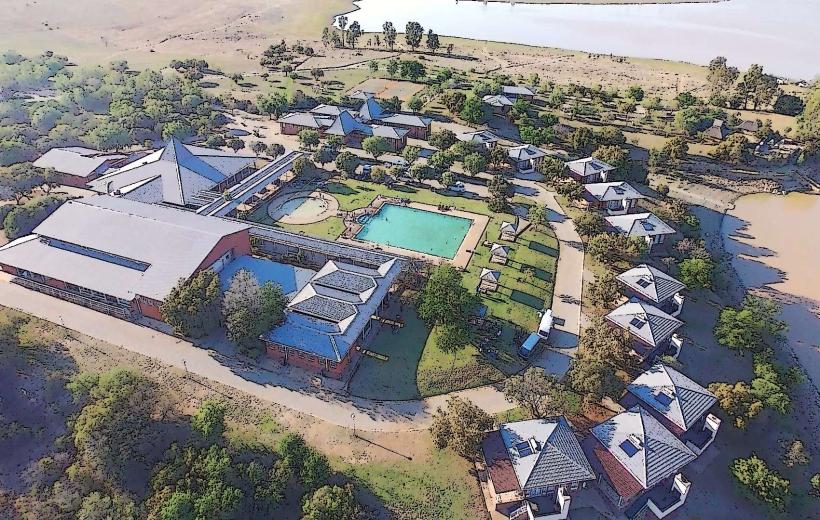
A visitor center is present, offering information and facilities. Restrooms are available. Shaded areas are provided at the visitor center and along some of the walking paths. Cell phone signal (4G) is generally available at the site. There are no on-site food vendors; visitors should bring their own provisions.
Best Time to Visit
The best time of day for viewing the engravings is during the late morning or late afternoon when the low-angle sunlight highlights the incisions. The months of April to September offer drier weather conditions and cooler temperatures, making outdoor exploration more comfortable. No specific tide requirements apply.
Facts & Legends
One of the most frequently depicted animals is the wildebeest, which gives the site its name. Local lore suggests that some engravings were made to ensure successful hunts or to record significant events. A specific tip for visitors is to look for the faint, almost invisible engravings that require careful observation and good lighting to discern.
Nearby Landmarks
- Naval Hill Nature Reserve (15km East)
- Oliewenhuis Art Museum (17km East)
- Anglo-Boer War Museum (18km East)
- National Museum Bloemfontein (19km East)