
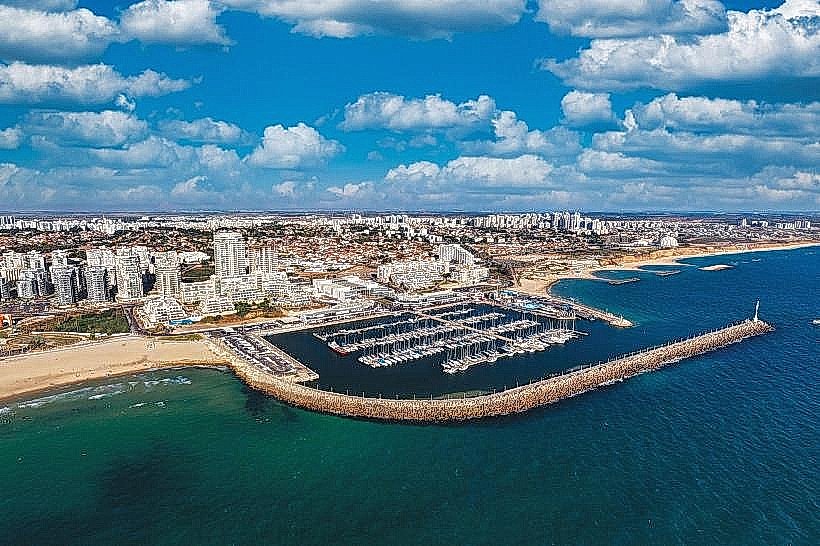
City: Ashkelon
Country: Israel
Continent: Asia
Ashkelon, Israel, Asia
Ashkelon serves as a primary Mediterranean logistics hub and a central coastal resort in Israel’s South District. It is situated on the coastline approximately 20 kilometers north of Gaza and 50 kilometers south of Tel Aviv.
Historical Timeline
Ashkelon was founded as a major Canaanite seaport around 2000 BCE. Primary eras of governance include the Philistine pentapolis period, Roman-Byzantine rule, the Islamic conquest, and the Crusader era, followed by destruction in 1270 CE and the later Ottoman establishment of Al-Majdal. Modern Ashkelon was resettled and planned in 1950. The primary event shaping the current urban form was the 1949 South African planning initiative, which introduced the "neighborhood unit" concept-specifically the Afridar district-creating a decentralized, garden-city structure.
Demographics & Population
The total population within city limits is approximately 160,000 residents. The top three ethnic or national demographics are Jews from the former Soviet Union, veteran Israeli Jews (Mizrahi and Ashkenazi), and a growing community of French and Ethiopian immigrants. The median age of the population is approximately 33 years.
Urban Layout & Key Districts
Ashkelon is organized into distinct suburban neighborhoods centered around an old commercial core. The 2-3 most important districts for visitors are Afridar (West), featuring the upscale garden-city layout and primary tourist zone; the Marina (West), a central hub for dining and maritime activity; and Migdal (East), the historic commercial center based on the former Arab town of Al-Majdal.
Top City Landmarks
Ashkelon National Park (containing the world's oldest arched gate)
The Roman Basilica and Bouleuterion
Ashkelon Marina
The Sheikh Awad Tomb (Mamluk-era structure)
The Sarcophagi Courtyard (Afridar)
Transportation Network
Internal movement relies on the local bus network operated by Dan BaDar and Egged. There is no metro or tram system. Ashkelon Railway Station connects the city to the national coastal line leading to Tel Aviv and Beersheba. Ride-sharing via Gett is standard; Uber is limited. Official taxis are white. Traffic density is moderate, primarily peaking at the northern entrance (Route 4) and the Marina area during weekends.
Safety & "Red Zones"
Ashkelon is generally safe for pedestrians; however, due to its proximity to the Gaza Strip, the city is a frequent target for rocket fire during military escalations. Visitors must locate the nearest "Merhav Mugan" (protected space) upon arrival. Avoid the industrial zones and poorly lit areas of the Migdal district late at night. Common scams are rare but may include unregulated private drivers at the train station.
Digital & Financial Infrastructure
Average internet speed is 200 Mbps with widespread fiber optic availability. Main mobile carriers include Partner, Cellcom, and Pelephone. Card acceptance is nearly universal; Google and Apple Pay are the standard payment methods. ATMs are ubiquitous in the Marina, Migdal, and Afridar commercial centers.
Climate & Air Quality
Summers (June–August) are hot and humid, ranging from 24°C to 31°C. Winters (December–February) are mild and rainy, ranging from 10°C to 18°C. Air quality is generally moderate, though high humidity in summer can trap urban particulates. Weather risks include seasonal flash flooding in lower coastal zones and occasional dust storms (Sharav) in spring.
Culture & Social Norms
A tipping rate of 12–15% is standard in restaurants. Handshakes are the standard greeting. Dress code is casual, but modest clothing (shoulders and knees covered) is required for religious sites and the city's more traditional residential quarters. Public transport and most businesses in Migdal close for Shabbat, while many dining venues at the Marina remain open.
Accommodation Zones
Stay in the Marina/Afridar area for immediate beach access, high-end hotels, and walking access to the promenade.
Stay in Barnea for modern residential rentals and a quieter atmosphere while remaining close to northern exits.
Local Cost Index
1 Espresso: 12 ILS ($3.25 USD)
1 Standard Lunch (Hummus/Grill): 60 ILS ($16.20 USD)
1 Metro/Bus Ticket: 5.50 ILS ($1.50 USD)
Nearby Day Trips
Ashdod (15 km)
Yad Mordechai Kibbutz and Museum (10 km)
Tel Aviv-Yafo (50 km)
Sderot (20 km)
Facts & Legends
According to local folklore and semi-historical records, the "Ashkelon Onion" (shallot) is named after the city. It is believed that the Crusaders first encountered the small scallion-like plant here and exported it to Europe, where it was referred to in Latin as ascalonia. To this day, the city remains historically linked to the global spread of this specific culinary staple.


