
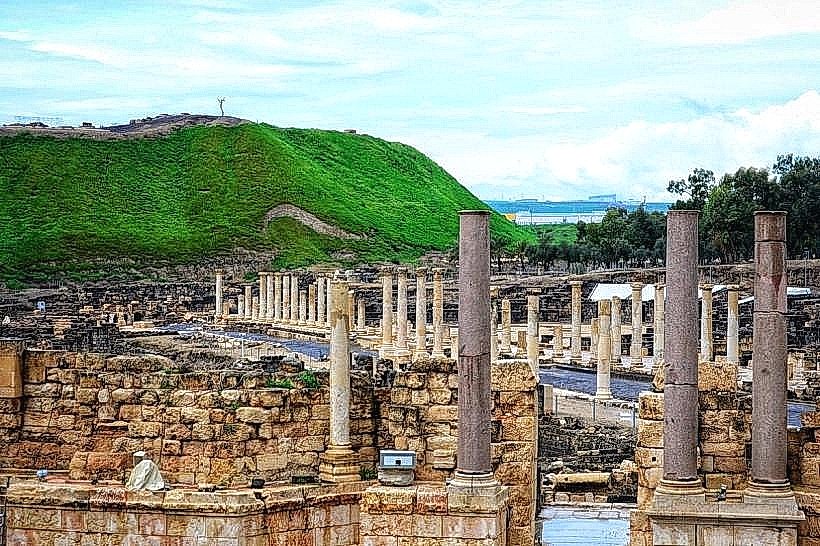
City: Beit Shean
Country: Israel
Continent: Asia
Beit Shean, Israel, Asia
Beit Shean serves as a primary logistical and historical hub in the Northern District of Israel, acting as a gateway between the Jordan Valley and the Jezreel Valley. It is situated at the junction of the Harod and Jordan Valleys, approximately 25 kilometers south of the Sea of Galilee.
Historical Timeline
The city was founded in the Neolithic period, with continuous habitation on the mound of Tel Beit Shean. Primary eras of governance include Egyptian rule in the Late Bronze Age, the Hellenistic period, the Roman-Byzantine era (as Scythopolis), and subsequent Umayyad, Crusader, and Mamluk periods. The most significant architectural reconstruction followed the catastrophic Galilee earthquake of 749 CE, which leveled the city. The primary event shaping its current urban form is the 1950s establishment of the modern town adjacent to the archaeological tel to house new immigrants.
Demographics & Population
The total population within city limits is approximately 18,500 residents. The demographic is almost exclusively Jewish (99%), with a median age of 28.6 years, reflecting a relatively young population compared to the national average.
Urban Layout & Key Districts
The city is organized with the massive archaeological site to the north and the residential sectors to the south. The most important districts for visitors are the Beit Shean National Park (North), containing the Roman-Byzantine ruins, and the City Center (Central), which houses the primary commercial facilities. The modern industrial zone is situated in the eastern cardinal direction toward the Jordan River border.
Top City Landmarks
Roman Theatre (5,000-seat capacity)
Palladius Street (Colonnaded Cardo)
Western Bathhouse (One of the largest in the Levant)
Tel Beit Shean (Biblical citadel mound)
The Roman Bridge over the Harod Stream
Transportation Network
Internal movement is facilitated by the local bus network operated by Superbus. The city is a major terminal for the Jezreel Valley Railway, with a station connecting to Haifa. Ride-sharing via Gett is available but limited; Uber is not operational. Official taxis are white. Traffic density is generally low, except for agricultural transit on Route 90 and Route 71 during peak harvest hours.
Safety & "Red Zones"
Beit Shean is a safe, quiet town with low crime rates. There are no specific "red zones" or neighborhoods to avoid at night. Visitors should be cautious in the surrounding agricultural fields due to the risk of wildlife (wild boars) or deep irrigation ditches. Common scams are virtually non-existent, though unregulated "guides" occasionally loiter near the entrance to the National Park.
Digital & Financial Infrastructure
Average internet speed is 100-150 Mbps. Main mobile carriers include Partner, Cellcom, and Hot Mobile. Card acceptance is high in modern shops and the National Park; however, the local street market and smaller kiosks often prefer cash (ILS). ATMs are located in the Zim Center and along the main commercial street.
Climate & Air Quality
Summers (June–September) are sweltering and arid, with temperatures frequently reaching 38°C to 42°C due to the valley's low elevation. Winters (December–February) are mild and wet, ranging from 8°C to 18°C. Air quality is generally high, though agricultural burning in the surrounding valley can cause temporary smog in autumn. Extreme heat exhaustion is the primary weather risk for visitors.
Culture & Social Norms
A tipping rate of 10-12% is standard in cafes. Handshakes are the common greeting. Dress code is highly casual, though modest dress is expected in religious residential blocks. Public transport and most businesses close for Shabbat (Friday afternoon to Saturday evening). Smoking is common in outdoor public areas.
Accommodation Zones
Stay in the National Park Vicinity for the HI Beit Shean Hostel and proximity to archaeological ruins.
Stay in the Kibbutz Guesthouses (Nearby) for a more rural, green environment within 5-10 minutes of the city center.
Local Cost Index
1 Espresso: 11 ILS ($3.00 USD)
1 Standard Lunch (Falafel/Hummus): 45 ILS ($12.20 USD)
1 Metro/Bus Ticket: 5.50 ILS ($1.50 USD)
Nearby Day Trips
Gan HaShlosha (Sahne) Natural Springs (6 km)
Belvoir Fortress (Crusader Castle) (15 km)
Mount Gilboa (12 km)
Sea of Galilee (25 km)
Facts & Legends
According to the Biblical narrative (I Samuel 31:10), after King Saul and his sons were defeated by the Philistines at Mount Gilboa, their bodies were hung on the walls of Beit Shean as a trophy of war. A local "urban legend" persists that a hidden underground passage connects the ancient Roman theatre to the Crusader fortress on the hill, used by the Knights Hospitalier to move sugar supplies from their processing plant without being seen.


