Information
City: El DjemCountry: Tunisia
Continent: Africa
El Djem, Tunisia, Africa
El Jem is a small town in the Mahdia Governorate of Tunisia, situated at an elevation of 56 meters. It is globally significant as the site of ancient Thysdrus, once the second most important city in Roman North Africa after Carthage.
Historical Timeline
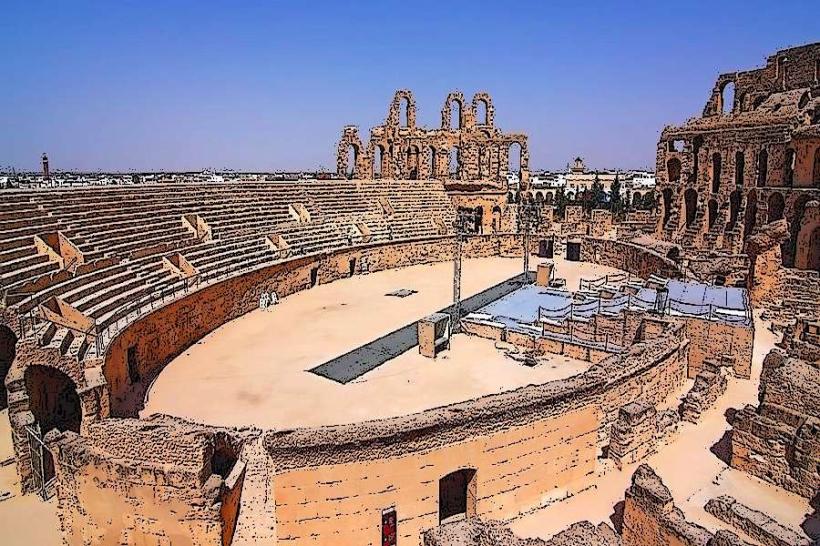
Founded as a Punic settlement, Thysdrus flourished in the 2nd century AD as a global center for olive oil production. The primary event shaping its identity was the construction of the Great Amphitheater in approximately 238 AD, commissioned by Proconsul Gordian. After a failed tax revolt against Rome in the same year, the city was besieged and never fully recovered its former status. The modern town grew around the ruins and was revitalized following the amphitheater's designation as a UNESCO World Heritage site in 1979.
Demographics & Population
The estimated metropolitan population for 2026 is 25,000. The demographics are predominantly Tunisian Arab-Berber. The local economy is driven by tourism, agriculture (olive groves), and small-scale trade. The median age is approximately 30.1 years.
Urban Layout & Key Districts
The town is structured in a circular pattern around the central amphitheater.
The Monument Zone: The immediate area surrounding the colosseum, containing souvenir shops and cafes.
The Residential Core: Densely packed traditional housing extending north and south of the ruins.
The Museum District: Located on the southern outskirts, housing the archaeological museum and the remains of Roman villas.
Top City Landmarks
Amphitheater of El Jem: The third-largest Roman amphitheater in the world, capable of seating 35,000 spectators. It is better preserved than the Colosseum in Rome.
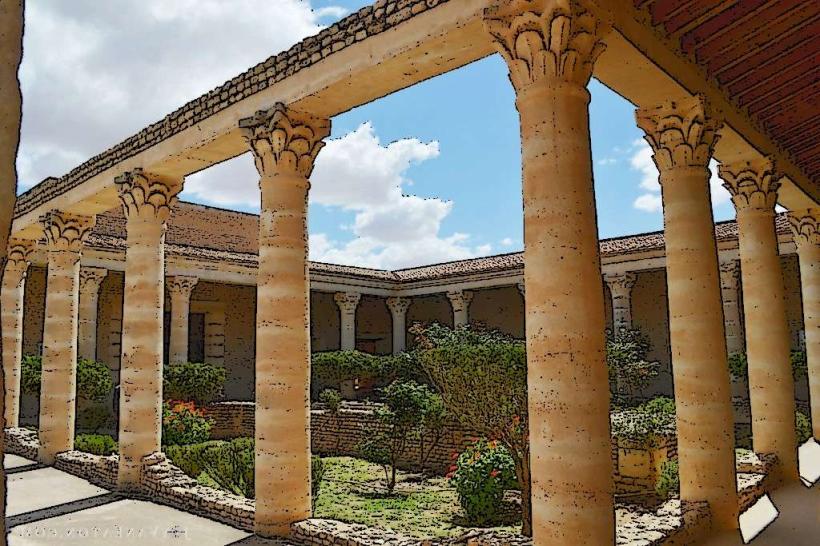
El Jem Archaeological Museum: Features an exceptional collection of mosaics and a reconstructed "House of the Africa," a Roman villa.
The Small Amphitheater: Located across the road from the museum, representing an earlier, less grand stage of the city's development.
Roman Villas: Excavated foundations and floor mosaics located within the museum park.
Transportation Network
Intra-city transit is primarily on foot, as the main sites are within 1 kilometer of each other. El Jem is a major stop on the SNCF national railway line connecting Tunis, Sousse, and Sfax. Louages (shared taxis) provide frequent service to Sousse (70 km) and Mahdia (45 km). There is no local airport; travelers use Monastir (MIR) or Enfidha (NBE).
Safety & "Red Zones"
The safety level is high. As a high-traffic tourist destination, the town center is well-monitored. Petty theft is rare but possible in crowded areas around the amphitheater. There are no "red zones." Travelers should note that the town is quiet after sunset once the day-trip buses depart.
Digital & Financial Infrastructure
Internet speeds average 20–30 Mbps. Main carriers are Tunisie Telecom, Ooredoo, and Orange. The Tunisian Dinar (TND) is required for all local transactions. ATMs are located near the train station and the main road leading to the amphitheater. Credit card acceptance is restricted to the museum entrance and large souvenir emporiums.
Climate & Air Quality
Temperatures range from 7°C in winter to 35°C in summer. The climate is semi-arid. Air quality is high due to the lack of heavy industry and the density of surrounding olive groves. Significant weather risks include extreme midday heat in July and August.
Culture & Social Norms
Arabic is the primary language; French and basic English/German are used by tourism workers. The culture is rural and conservative. Modest dress is expected when moving through residential areas. Tipping is standard at 1–2 TND in cafes.
Accommodation Zones
Town Center: Extremely limited; most visitors stay in Sousse or Mahdia and visit El Jem as a day trip.
Hotel Julius Area: The primary option for those wishing to stay overnight near the ruins.
Local Cost Index
1 Espresso: 2.5 TND ($0.80 USD)
1 Standard Lunch (Brik/Salade Méchouia): 12 TND ($3.90 USD)
1 Train Ticket (from Sousse): 6 TND ($1.95 USD)
Nearby Day Trips
Mahdia: 45 km (Coastal town and historic Fatimid capital).
Sousse: 70 km (UNESCO Medina and beaches).
Kairouan: 70 km (Holy city and Great Mosque).
Facts & Legends
The El Jem amphitheater has no foundations; it is a free-standing structure built entirely of stone blocks. A local legend claims that an underground tunnel connects the amphitheater to the coast at Mahdia (45 km away) to allow for a quick escape. A verified historical oddity is that the amphitheater was used as a fortress by the Berber princess Al-Kahina during her 7th-century resistance against the Arab conquest.