City: Joal Fadiouth
Country: Senegal
Continent: Africa
Joal Fadiouth, Senegal, Africa
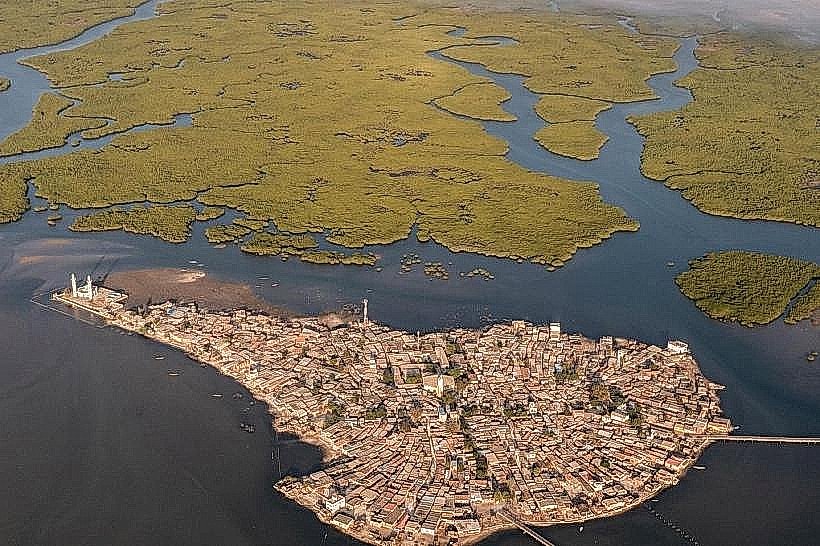
Joal-Fadiouth serves as a major artisanal fishing port and cultural landmark at the southern end of the Petite Côte. It consists of Joal, situated on the mainland, and the island of Fadiouth, connected by a 400-meter wooden pedestrian bridge.
Historical Timeline
Founded as a Serer settlement, Joal became a Portuguese trading post in the 15th century and later a French colonial center. Primary eras of governance include the Serer Kingdom of Sine, French colonial rule (1860s–1960), and the post-independence era. The most significant architectural reconstruction occurred in the late 19th century with the establishment of the Catholic mission and the 2005 renovation of the wooden bridge. The primary event shaping the current urban form was the 1906 birth of Léopold Sédar Senghor, Senegal's first president, which transitioned the village into a site of national political and cultural significance.
Demographics & Population
The total population within the municipality is approximately 46,000. The top three ethnic demographics are the Serer (approx. 70%), Wolof (15%), and Pulaar (10%). The median age of the population is 19.1 years.
Urban Layout & Key Districts
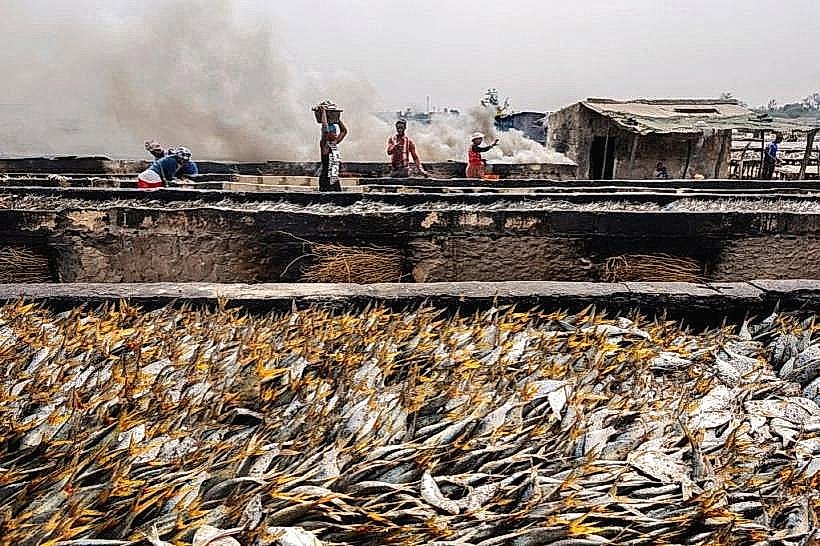
The city is organized into two distinct topographical zones. Joal (Mainland) contains the administrative offices, the primary fish processing centers, and the main road. Fadiouth (Island) is a car-free zone constructed entirely on accumulated clam and cockle shells, located west of the mainland across the bridge. The Cemetery Island is a secondary shell island located further west, connected to Fadiouth by a second bridge.
Top City Landmarks
The Wooden Bridge of Joal-Fadiouth
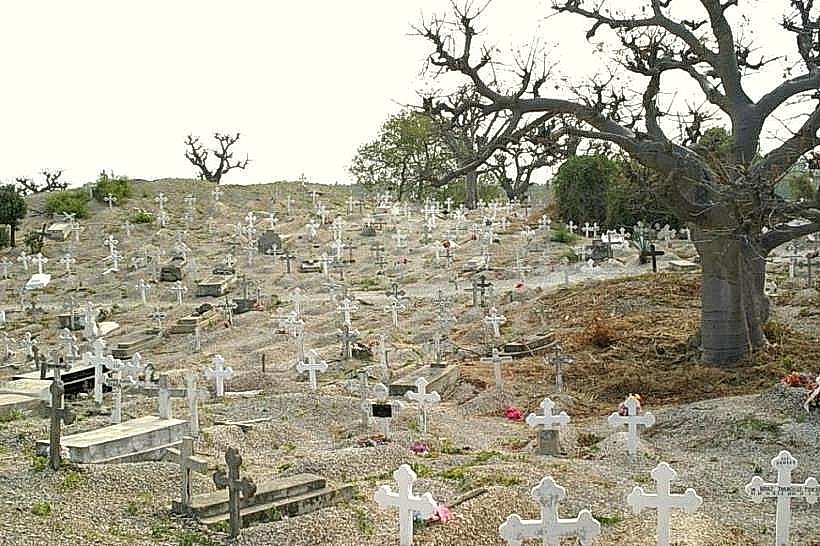
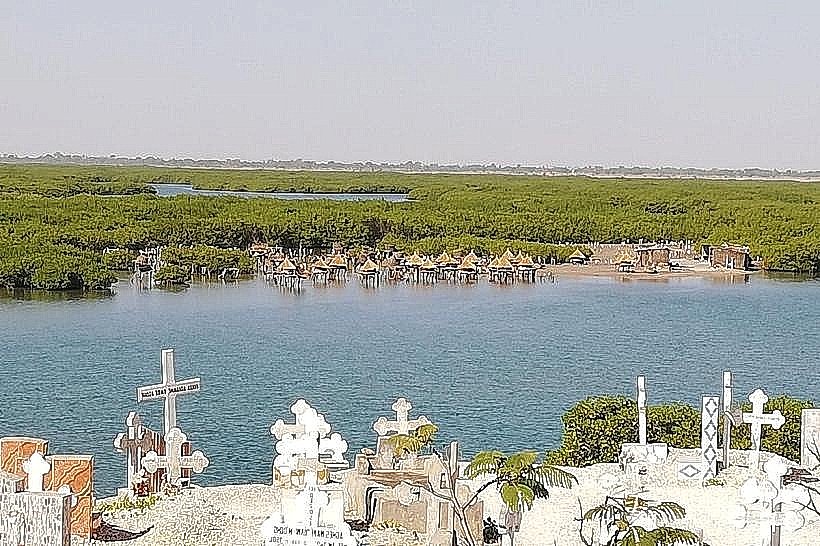
The Mixed Christian-Muslim Shell Cemetery
Birthplace of Léopold Sédar Senghor (Mbind Diogoye)
Granaries on Stilts (in the mangroves)
Church of Saint-François-Xavier
Transportation Network
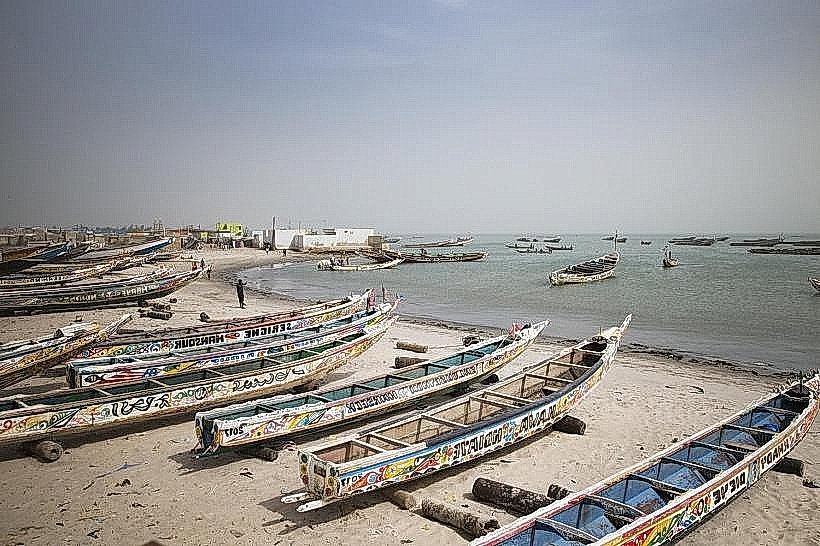
Movement within Joal is conducted via "Jakarta" motorbike taxis and horse-drawn carriages (caleches). Movement within Fadiouth is strictly on foot; motorized vehicles are prohibited on the island. There are no metro or tram systems. Long-distance transit is managed via the "Garage" using "sept-places" taxis connecting to Mbour and Dakar. Traffic density is low, except at the Joal Fish Market during the late afternoon return of the pirogues.
Safety & "Red Zones"
The general safety level is very high. There are no specific "red zones." Common scams involve "unauthorized guides" at the entrance of the wooden bridge who demand exorbitant fees for mandatory tours; visitors should negotiate a fixed price with official guides at the tourism office near the bridge entrance.
Digital & Financial Infrastructure
Average fixed broadband speed is 10–20 Mbps. Main mobile carriers are Orange and Free. Card acceptance is nearly non-existent outside of 1-2 major hotels; cash (XOF) is mandatory for all local transactions. ATMs are limited to one or two branches (CBAO or SGBS) on the main Joal road.
Climate & Air Quality
Temperatures range from 19°C to 32°C. The city benefits from constant Atlantic breezes, maintaining lower temperatures than the interior. Significant weather risks include tidal flooding and coastal erosion affecting the shell islands. Air quality is high, though the smell of drying fish is pervasive near the Joal waterfront.
Culture & Social Norms
Tipping is not mandatory but 500–1,000 XOF is appreciated for guides and servers. Handshakes are the standard greeting. Joal-Fadiouth is unique in Senegal for its high Catholic population (approx. 90% on Fadiouth island); social norms are defined by religious tolerance, evidenced by the shared cemetery. Modest dress is expected when visiting the cemetery or the church.
Accommodation Zones
Joal Waterfront: Stay here for logistical proximity to the fish market and transport hubs.
Fadiouth Perimeter: Stay in guesthouses near the bridge entrance for quick pedestrian access to the island and quieter surroundings.
Local Cost Index
1 Espresso: 1,200 XOF (2.00 USD)
1 Standard Lunch: 2,500 XOF (4.15 USD)
1 Metro/Bus Ticket: 200 XOF (0.35 USD) - local shared transport fare.
Nearby Day Trips
Palmarin: 30 km (45 mins)
Djifer: 45 km (1 hour)
Sambadia Forest: 20 km
Mbour: 35 km (50 mins)
Facts & Legends
The cemetery of Fadiouth is constructed entirely of sea shells and is one of the few places in the world where Christians and Muslims are buried side-by-side in the same ground, symbolizing local religious harmony. A local historical oddity is the "Granaries on Stilts," located in the surrounding mangroves; these were historically used to store grain to protect it from fire and rodents, and today they remain a protected architectural feature of the Serer maritime culture.