City: Kaolack
Country: Senegal
Continent: Africa
Kaolack, Senegal, Africa
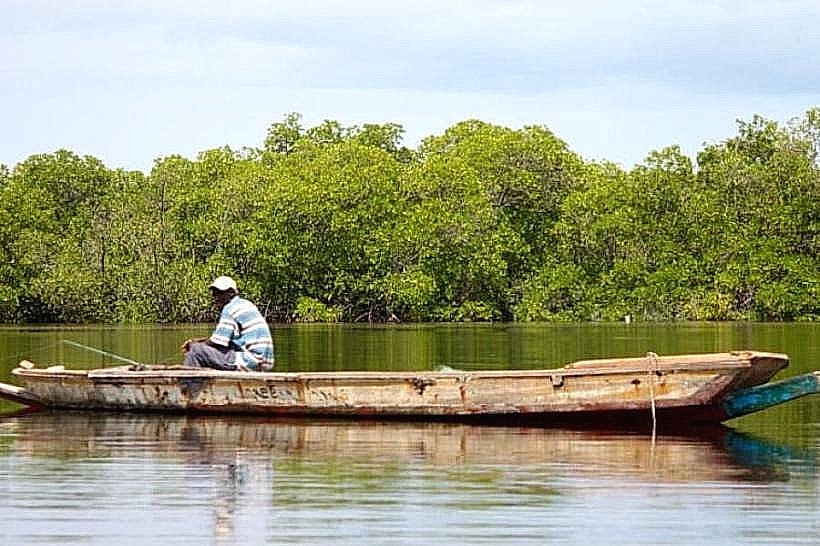
Kaolack serves as the primary hub for Senegal’s peanut industry and a critical transit node connecting Dakar to the southern regions and neighboring countries. Situated on the north bank of the Saloum River, its inland port and intersection of national highways make it a vital center for regional trade and Islamic scholarship.
Historical Timeline
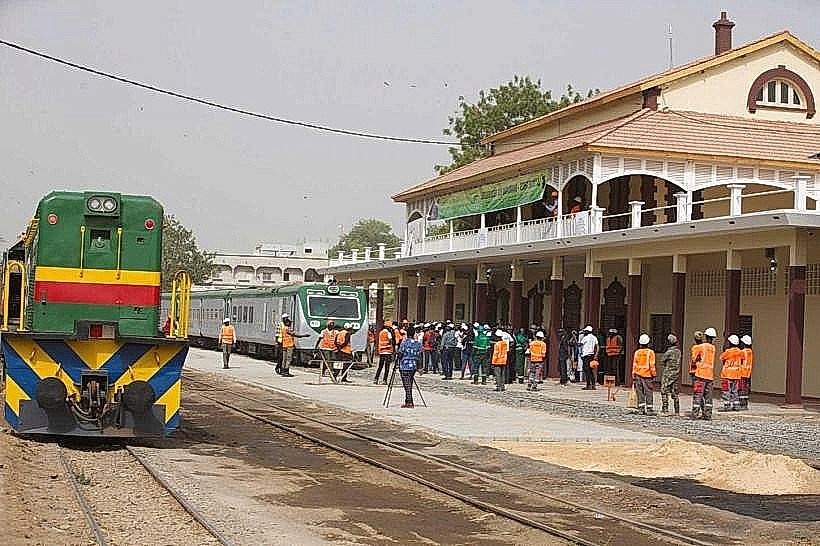
Founded in 1911 as a colonial administrative center and port, Kaolack succeeded the ancient town of Kahone, the historic capital of the Kingdom of Saloum. The city’s primary eras of governance include the pre-colonial Saloum monarchy, the French colonial administration, and the post-independence era marked by the rise of the Niassene Tijaniyya Sufi order. The most significant architectural reconstruction occurred in the mid-20th century with the completion of the Medina Baye Mosque complex. The primary event shaping the current urban form was the expansion of the Dakar-Niger railway branch and the N1 highway, which solidified Kaolack as a central logistics crossroads.
Demographics & Population
The total population within the city limits is approximately 300,000, while the greater metropolitan area is estimated at 650,000 residents. The top three ethnic demographics are the Wolof, Serer, and Pulaar. The median age of the population is approximately 18.5 years.
Urban Layout & Key Districts
The city is organized along a central axis formed by the N1 highway and the Saloum River waterfront. Medina Baye (North) is the most significant district for visitors, serving as the international spiritual heart of the Tijaniyya order; Escale (Central) functions as the historic colonial and commercial core; and Leona Niassene (Central-East) is another major religious and residential hub.
Top City Landmarks
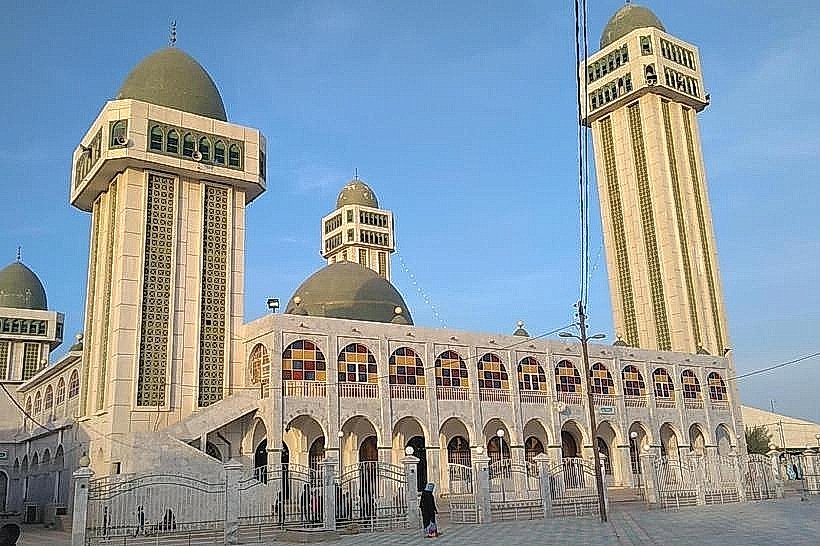
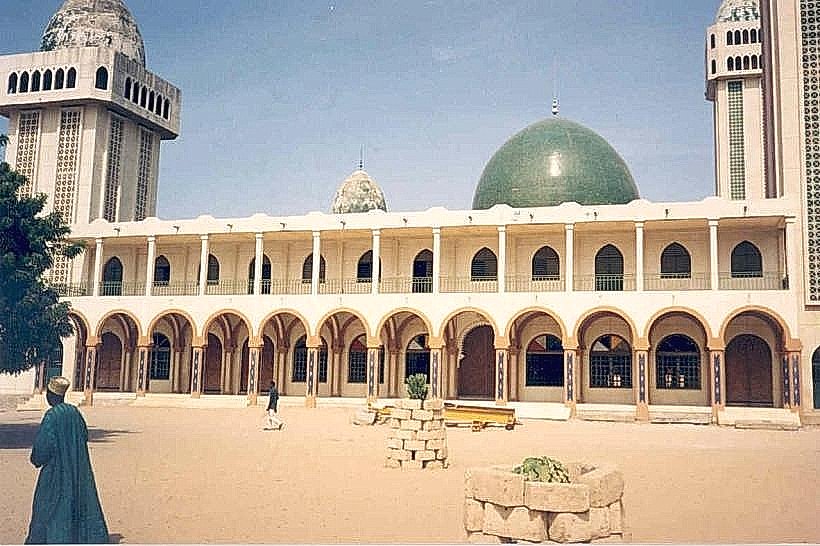
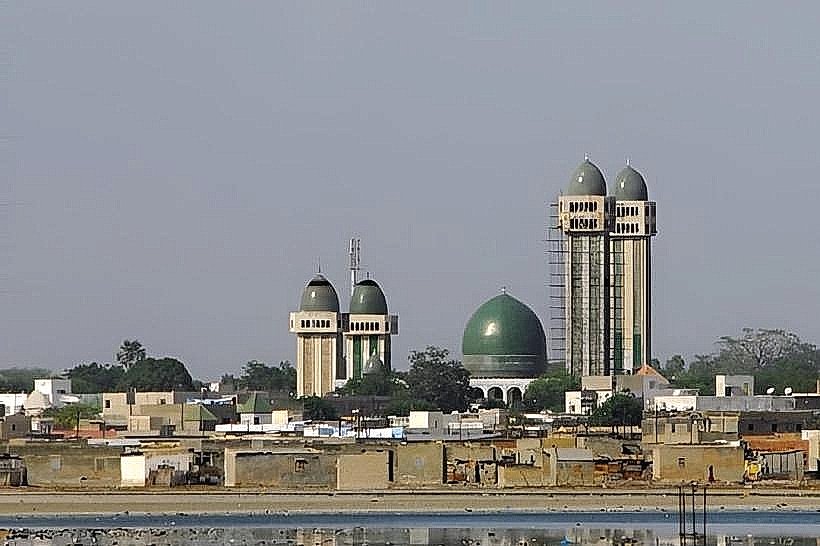
Great Mosque of Medina Baye
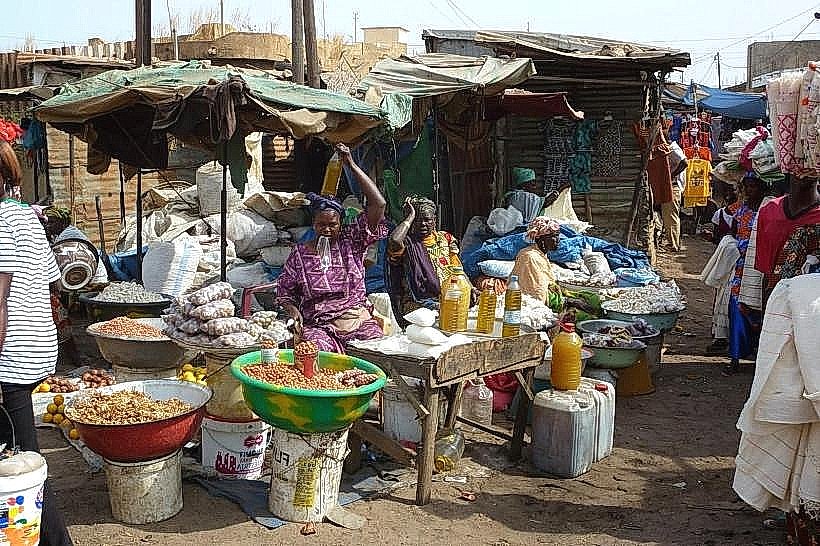
Kaolack Central Market (one of the largest in West Africa)
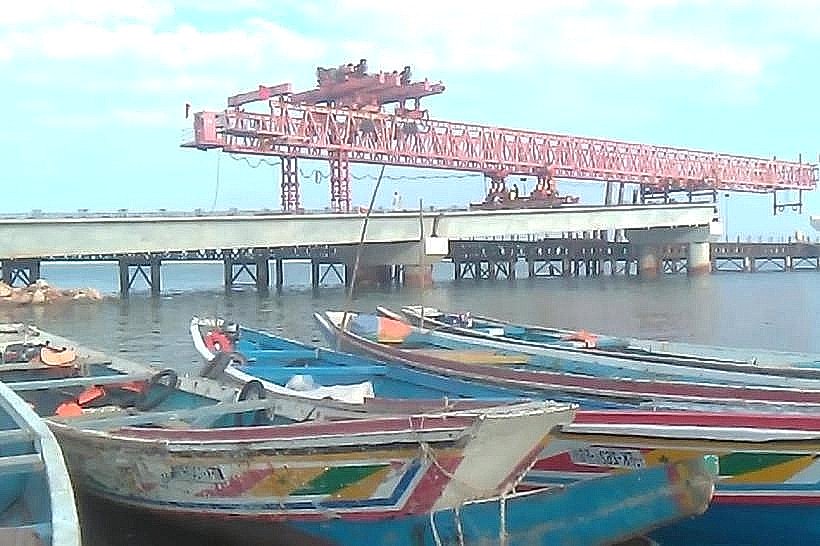
The Saloum River Port
Leona Niassene Mosque
The ancient sacred tree of Kahone (nearby)
Transportation Network
Movement within the city is conducted via "Jakarta" motorbike taxis and yellow-and-black unmetered taxis. There are no metro or tram systems. Ride-sharing apps like Yango have limited or inconsistent availability. Long-distance transit is managed through the "Gare Routière," where "sept-places" (seven-seat taxis) and buses connect to all major Senegalese cities. Traffic density is high, particularly at the central market and the "Pont de Kaolack" (Kaolack Bridge), which is a major bottleneck for north-south transit.
Safety & "Red Zones"
The general safety level is moderate. Avoid walking in the vicinity of the Central Market and the main bus station (Gare Routière) after dark due to a high frequency of pickpocketing. The "Garage" area is known for aggressive touts. Common scams involve "intermediaries" attempting to charge "tourist taxes" for luggage or boarding assistance at transport hubs.
Digital & Financial Infrastructure
Average fixed broadband speed is 20-30 Mbps. Main mobile carriers are Orange and Free. Card acceptance is low; cash is the primary medium for all local transactions, including markets and smaller hotels. ATMs are concentrated in the Escale district near the N1 highway.
Climate & Air Quality
Temperatures are extreme, typically ranging from 20°C to 40°C. The "hot season" (March to June) frequently sees peaks above 42°C. The city faces significant air quality issues due to its role as a salt-processing center and the presence of peanut oil refineries. Dust from the Harmattan wind is prevalent from December to February, and seasonal flooding occurs during the monsoon (July to September).
Culture & Social Norms
Tipping is not mandatory but 500-1,000 XOF is common in sit-down restaurants. Handshakes are the standard greeting. Conservatism is very high; modest dress (covering shoulders and knees) is strictly required, especially in the Medina Baye and Leona Niassene districts. Alcohol is not sold or consumed openly in religious neighborhoods. Smoking in public near mosques is considered highly disrespectful.
Accommodation Zones
Medina Baye: Stay here for logistics related to religious tourism and proximity to the Great Mosque.
Escale: Stay here for walking access to banks, administrative offices, and the central market.
Local Cost Index
1 Espresso: 1,000 XOF (1.65 USD)
1 Standard Lunch: 2,000 XOF (3.30 USD)
1 Metro/Bus Ticket: 150 XOF (0.25 USD) - local shared taxi or minibus fare.
Nearby Day Trips
Kahone (Ancient Capital): 8 km (15 mins)
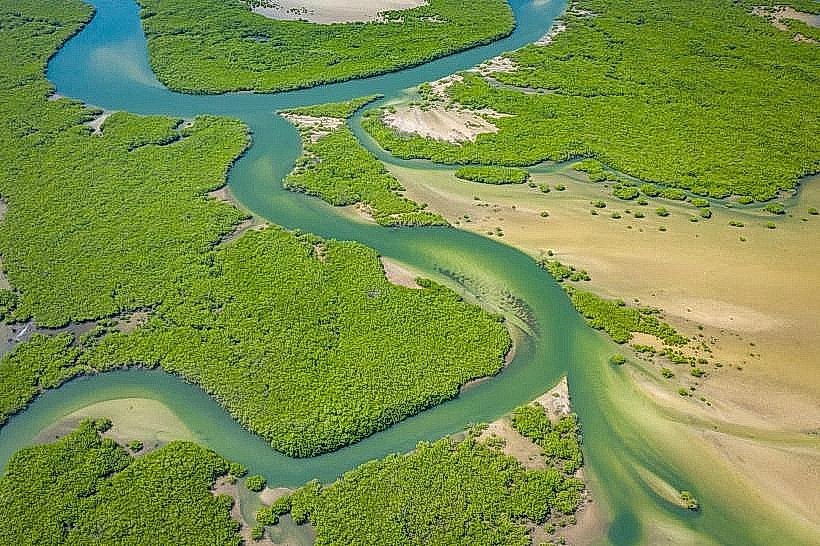
Saloum Delta National Park: 60 km (1 hour 15 mins)
Kaffrine: 65 km (1 hour)
Toubacouta: 85 km (1 hour 45 mins)
Facts & Legends
Kaolack is often referred to as the "Salt Capital" because of the massive salt flats (salins) surrounding the city, which produce much of West Africa's salt. A local historical oddity is the city’s identity as a "melting pot" of the Tijaniyya order; during the Grand Magal of Kaolack, the city hosts hundreds of thousands of pilgrims from as far as Nigeria, Sudan, and the United States, creating a unique multilingual and multicultural environment centered around the teachings of Ibrahim Niass.