
City: Lobamba
Country: Eswatini
Continent: Africa
Lobamba, Eswatini, Africa
Lobamba is the traditional, spiritual, and legislative capital of Eswatini, serving as the seat of the Parliament and the residence of the Queen Mother (Indlovukazi). The town is situated in the Ezulwini Valley within the Hhohho region, positioned 16 kilometers south of the executive capital, Mbabane.
Historical Timeline
1750s: Initial establishment of the early royal homesteads by the Dlamini clan in the southern regions of modern Eswatini.
1899: Royal capital relocated to the current site of Lobamba during the reign of King Ngwane V and Queen Labotsibeni.
1968: Designated as the permanent legislative and traditional capital upon Eswatini gaining independence from British rule.
2018: Rapid expansion of the national infrastructure network under King Mswati III, integrating the traditional village with modern administrative buildings.
Primary Urban Event: The construction of the Somhlolo National Stadium and the adjacent Houses of Parliament transformed a rural traditional homestead network into a structured civic and ceremonial complex.
Demographics & Population
Town Limits Population: 11,000
Metropolitan Area Population (Ezulwini-Lobamba corridor): 34,000
Top Three Demographics: Swazi (97.8%), Zulu (0.9%), Mozambican (0.8%).
Median Age: 21.2 years
Urban Layout & Key Districts
Lobamba is characterized by a low-density layout that transitions directly from institutional structures to traditional rural homesteads.
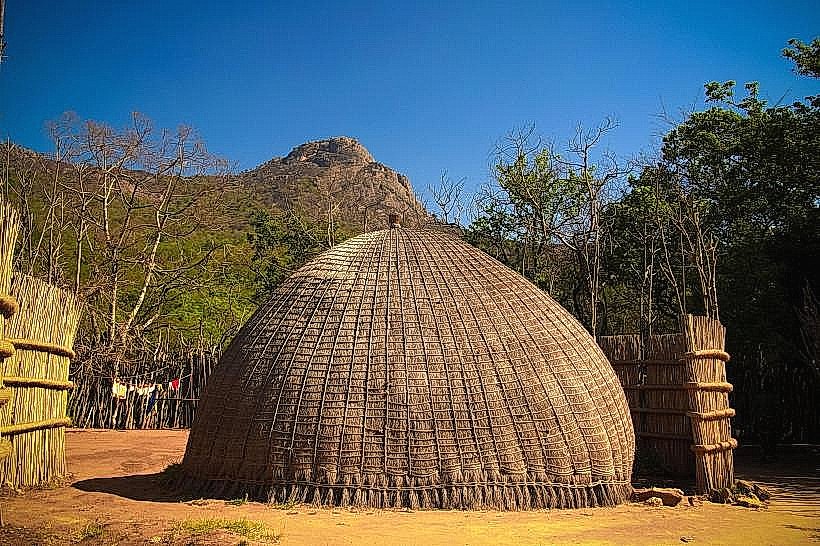
The Royal Enclave: The historical center containing the Ludzidzini Royal Village, a restricted sector of traditional beehive huts where national rituals take place.
The Legislative Quarter: Located immediately west of the Royal Enclave, housing the Parliament buildings and national monuments.
Ezulwini Strip: The commercial and hospitality corridor extending north from Lobamba, containing hotels, shopping centers, and entertainment facilities.
Top City Landmarks
Houses of Parliament: The legislative headquarters of Eswatini, featuring a distinct copper-domed tower visible across the valley.
Ludzidzini Royal Village: The traditional capital and official residence of the Queen Mother, serving as the staging ground for the annual Umhlanga (Reed Dance).
King Sobhuza II Memorial Park: A manicured historical site containing a museum dedicated to the long-reigning monarch and the mausoleum where he was laid to rest.
National Museum (Eswatini National Trust Commission): A cultural repository housing exhibits on Swazi ethnography, natural history, and colonial-era documentation.
Somhlolo National Stadium: The country’s primary open-air arena, used for international sporting events, independence celebrations, and state funerals.
Transportation Network
Public transportation within Lobamba relies entirely on local minibuses (kombis) running along the MR3 and MR103 highways, connecting the town directly to Mbabane and Manzini. No passenger rail system exists. Private metered taxis operate out of the nearby Gables Shopping Center in Ezulwini, but there are no app-based ride-hailing services. Traffic density is generally low, except during major national festivals or soccer matches at Somhlolo Stadium, when the two-lane access roads become congested.
Safety & "Red Zones"
Lobamba maintains a high safety profile due to a consistent police and royal guard presence. Casual walking during daylight hours is safe. After dark, unlit rural paths around the periphery of the royal village and the edges of the MR103 highway should be avoided due to pedestrian accidents and occasional opportunistic theft. No systemic scams target international travelers in this area.
Digital & Financial Infrastructure
Average Internet Speed: 18 Mbps fixed broadband; 12 Mbps mobile.
Main Mobile Carriers: MTN Eswatini, Eswatini Mobile.
Card Acceptance: Low in the immediate traditional village; High in the adjacent Ezulwini commercial zone where major retailers operate.
ATMs: Absent within the traditional core; multiple bank terminals (Nedbank, Standard Bank, FNB) are located 3 kilometers north at the Gables Shopping Center. Transactions use the Lilangeni (SZL), which trades interchangeably with the South African Rand (ZAR).
Climate & Air Quality
Lobamba sits at a lower altitude than Mbabane, resulting in a warmer, subtropical climate.
Winter (Jun–Aug): 9°C to 23°C; mild days with clear skies. Air quality remains excellent due to continuous valley breezes.
Summer (Dec–Feb): 17°C to 29°C; humid and hot, with intense late-afternoon thundershowers that cause brief localized flooding.
Weather Risks: Strong lightning strikes are frequent during summer afternoon storms.
Culture & Social Norms
Tipping: 10% is customary at sit-down establishments in the surrounding valley; no tipping is expected at informal food stalls.
Greeting: Respectful protocols require greeting elders or officials with a slight bow and a soft handshake using both hands (the left hand supporting the right elbow).
Dress Code: Exceptionally conservative. Revealing clothing is considered disrespectful; when entering traditional areas or the Royal Enclave, women are expected to wear long skirts and men must wear long trousers.
Alcohol & Smoking: Consumption of alcohol is prohibited in public spaces outside licensed commercial properties. Smoking in proximity to the Royal Enclave or public gathering zones is highly discouraged.
Accommodation Zones
Ezulwini Valley Corridor (North): Recommended for proximity to Lobamba's landmarks combined with western-style amenities, international hotels, and dining options.
Mantenga Area (West): Recommended for travelers seeking eco-lodges, nature reserves, and quieter environments within a 5-minute drive of the Parliament buildings.
Local Cost Index
1 Espresso: 32 SZL ($1.78 USD)
1 Standard Lunch (Traditional braai/barbecue plate): 95 SZL ($5.30 USD)
1 Kombi Transit Ticket (To Mbabane or Manzini): 18 SZL ($1.00 USD)
Nearby Day Trips
Mantenga Cultural Village & Nature Reserve: A living museum displaying 1850s Swazi lifestyle alongside the Mantenga Falls waterfall; 5 km west, reachable via the MR103 in 10 minutes.
Mlilwane Wildlife Sanctuary: A flat valley reserve ideal for horseback safaris and self-guided mountain biking among plains game; 4 km southwest, accessible via a dirt access road in 8 minutes.
Malkerns Valley: A rich agricultural zone famous for handicraft centers, pottery workshops, and pineapple plantations; 12 km south, reachable via the MR103 in 15 minutes.
Facts & Legends
The annual Umhlanga, or Reed Dance, held at the Ludzidzini Royal Village in late August or early September, is tied to deep-rooted spiritual beliefs about national renewal. According to local legend, the long reeds cut by tens of thousands of young women from across the country must remain perfectly straight and unbroken during their journey back to the Queen Mother's palace. If a participant carries a reed that breaks before being presented, oral tradition holds it as an omen of bad luck or dishonesty, requiring the immediate replacement of the stalk to preserve the protective spiritual energy of the kingdom.


