City: Mahdia
Country: Tunisia
Continent: Africa
Mahdia, Tunisia, Africa
Mahdia is a coastal city located on a narrow peninsula in eastern Tunisia, approximately 200 kilometers south of Tunis. It is historically significant as the first capital of the Fatimid Caliphate and remains one of Tunisia’s most picturesque maritime towns, known for its silk weaving, traditional fishing, and white-sand beaches.
Historical Timeline
Mahdia was founded in 921 AD by the first Fatimid caliph, Abdallah al-Mahdi Billah, who chose the location for its strategic defensive position. It served as the capital of Ifrīqiya until the mid-12th century when the role shifted to Tunis. The city was a major target during the Crusades and was later occupied by the Spanish (Charles V) and the Ottomans. Much of its current fortifications were rebuilt by the Turks in the late 16th century.
Demographics & Population
The estimated population for 2026 is 60,000. The demographic is predominantly Arab-Berber. Mahdia is noted for its high concentration of traditional artisans, particularly silk weavers, and a large fishing community that operates one of the most active ports in the country.
Urban Layout & Key Districts
The city extends along a slender rocky peninsula (Cap Afrique).
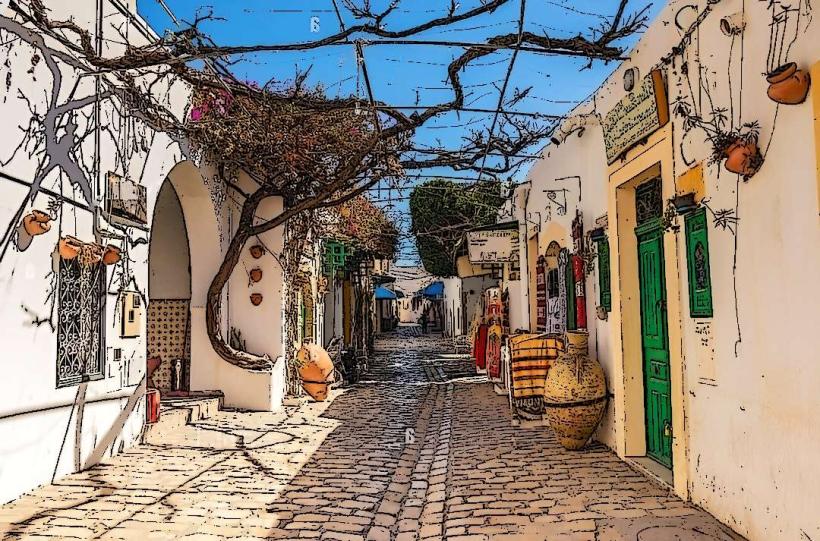
The Medina: Located on the tip of the peninsula, accessible through a single massive gate. It is characterized by whitewashed houses and narrow alleys.
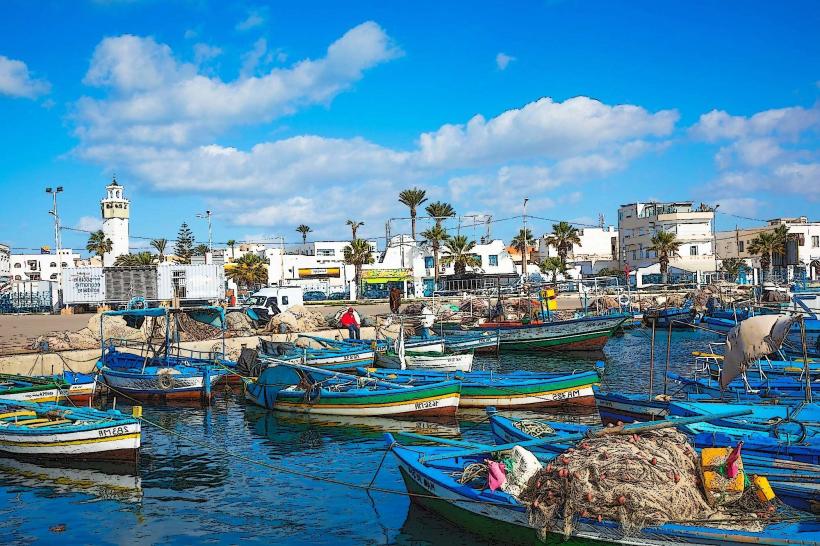
The Port: A bustling area on the southern side of the peninsula, home to the local fishing fleet and fish markets.
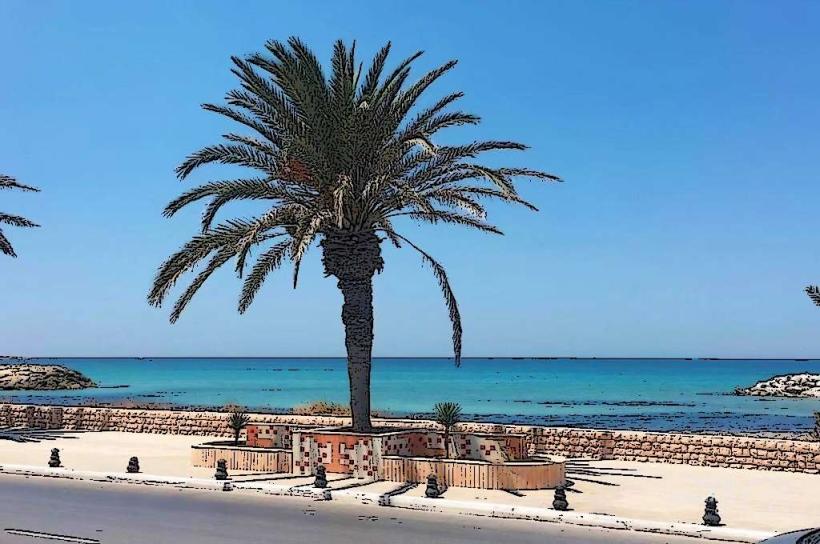
The Zone Touristique: Located to the north along the "Corniche" beach, featuring modern resorts and hotels.
Hiboun: A residential and commercial suburb that has grown as the city expanded inland.
Top City Landmarks
Skifa el Kahla (The Black Gate): A massive 10th-century fortified gate that serves as the only land entrance to the Medina.
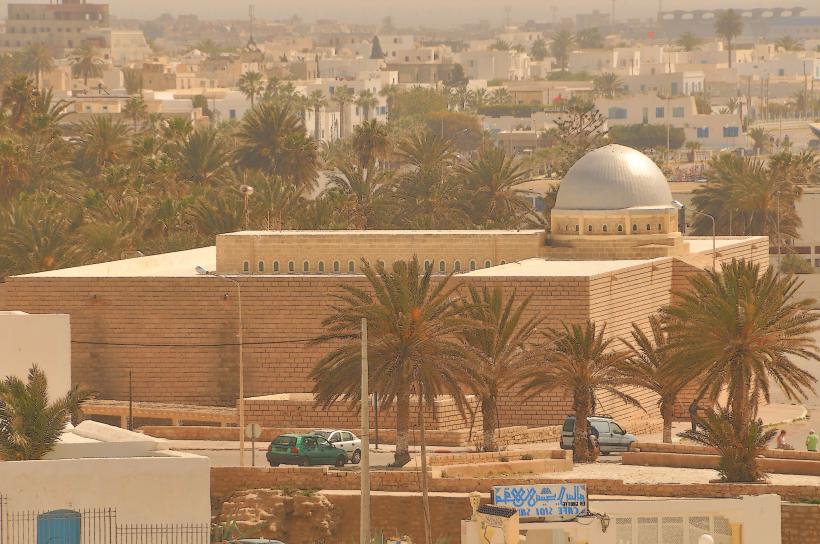
Great Fatimid Mosque: A unique 10th-century mosque with no minaret, designed to resemble a fortress.
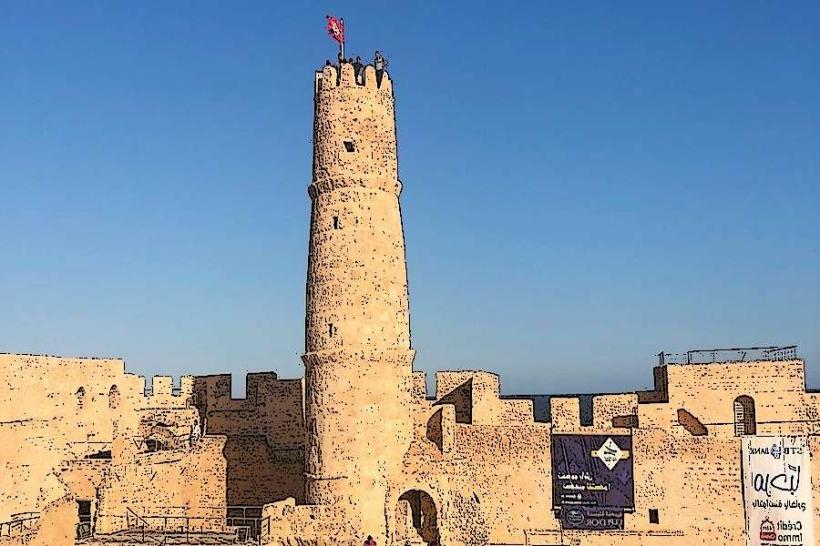
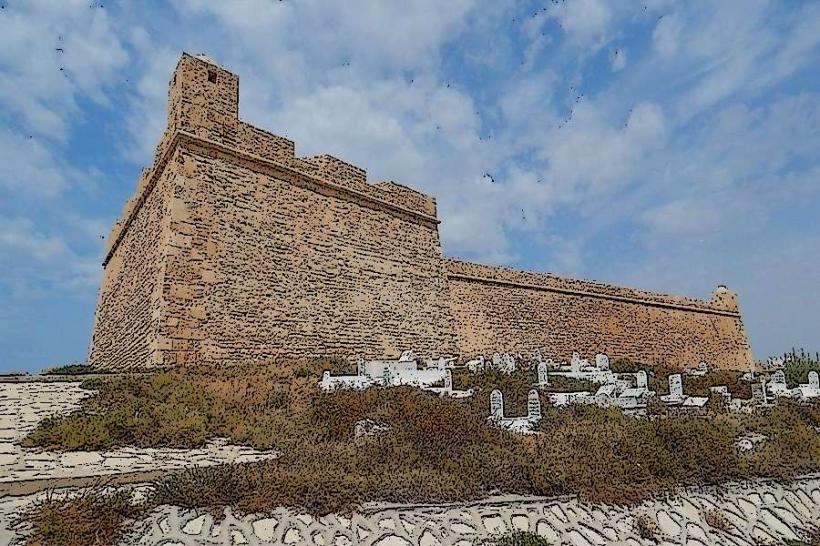
Borj el-Kebir: A large 16th-century Ottoman fortress built on the highest point of the peninsula, offering views of the coastline.
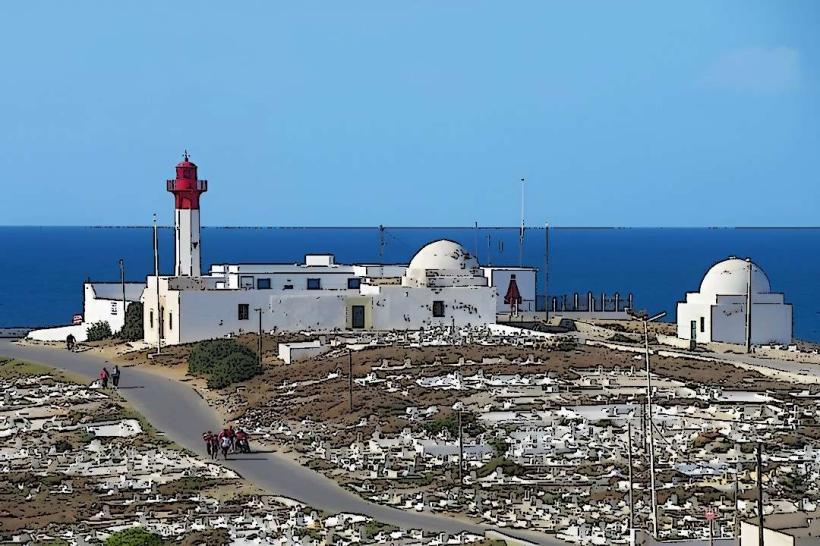
The Marine Cemetery: A striking white cemetery located on the edge of the sea near the lighthouse.
Fatimid Port: The remains of an ancient military harbor carved directly into the rock.
Mahdia Museum: Houses Punic, Roman, and Byzantine artifacts, as well as a section dedicated to the "Mahdia Shipwreck" (a 1st-century BC Greek vessel found off the coast).
Transportation Network
Mahdia is the southern terminus of the Métro du Sahel, a light rail line connecting it to Monastir (45 km) and Sousse (60 km). Yellow Taxis are the standard for city travel. Louages (shared taxis) provide frequent service to Sousse, Sfax, and El Jem. The city does not have its own airport; travelers use Monastir Habib Bourguiba International Airport (MIR), which is approximately 50 minutes away by road.
Safety & "Red Zones"
The safety level is high. Mahdia is significantly quieter and more relaxed than Sousse or Hammamet. Petty crime is minimal. There are no "red zones." The coastal path around the lighthouse can be slippery and windy; caution is advised near the cliff edges.
Digital & Financial Infrastructure
Internet speeds average 25–40 Mbps. Main carriers are Tunisie Telecom, Ooredoo, and Orange. The Tunisian Dinar (TND) is the mandatory currency. ATMs are located near the Skifa el Kahla and along the main administrative boulevard. Credit cards are accepted in major resorts but not in the Medina souks.
Climate & Air Quality
Temperatures range from 9°C in winter to 32°C in summer. The maritime influence keeps the city cooler than the interior during heatwaves. Air quality is excellent due to its peninsular geography and constant sea breezes. Significant weather risks include strong Mediterranean gales in January and February.
Culture & Social Norms
Mahdia is the center of Tunisia’s silk weaving industry; it is common to see traditional looms in the Medina workshops. The city is also famous for its "Blue-Fish" (sardines) festivals. Social norms are conservative; while swimwear is fine on the Corniche, modest dress is required within the Medina and near the Great Mosque. Tipping is standard at 5% in local cafes.
Accommodation Zones
The Corniche: Recommended for all-inclusive resorts and direct beach access.
The Medina: Recommended for traditional "Dars" (guesthouses) like Dar El Mahdia for an authentic historical stay.
Local Cost Index
1 Espresso: 2.5 TND ($0.80 USD)
1 Standard Lunch (Fresh Grilled Fish): 22 TND ($7.10 USD)
1 Train Ticket (Métro du Sahel to Sousse): 5 TND ($1.60 USD)
Nearby Day Trips
El Jem: 45 km (World-class Roman Amphitheater).
Monastir: 45 km (Ribat and Bourguiba Mausoleum).
Salakta: 15 km (Small coastal village with ancient Punic ruins and a museum).
Facts & Legends
Mahdia is often called the "City of Two Seas" because the peninsula is surrounded by water on three sides. A local legend says that the Fatimid founder, Al-Mahdi, chose the site after seeing a lion standing on the rocks, symbolizing the strength of his future empire. A verified historical oddity: the "Mahdia Shipwreck," discovered by sponge divers in 1907, was the first major underwater archaeological find in history and yielded the largest collection of Greek art ever found at sea.