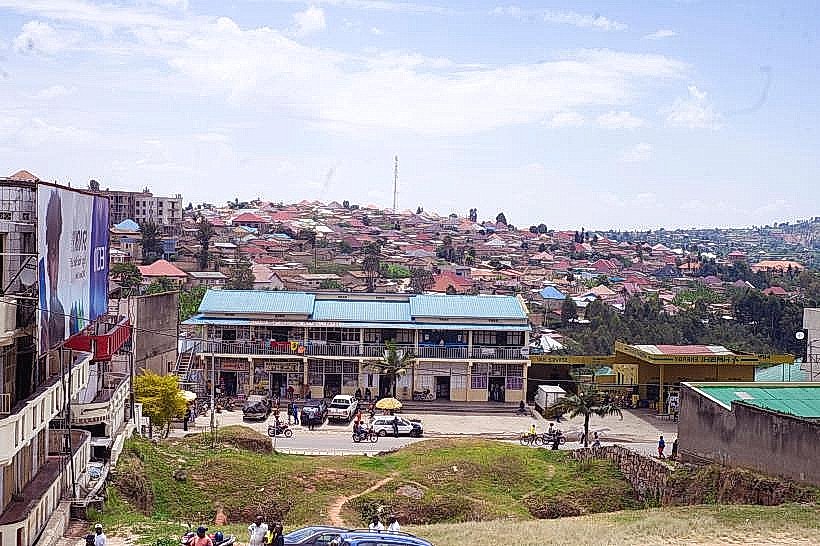
City: Muhanga
Country: Rwanda
Continent: Africa
Muhanga, Rwanda, Africa
Muhanga serves as a critical logistics and transit hub in central Rwanda, acting as the primary gateway between the capital and the western and southern provinces. The city is situated at an elevation of approximately 1,800 meters within the rolling highlands of the Southern Province.
Historical Timeline
Muhanga was established as a central trading and administrative post during the Belgian colonial period under the name Gitarama. It gained significant political prominence in 1961 as the site of the "Gitarama Conference," which led to the abolition of the Rwandan monarchy and the declaration of the Republic. The city underwent its most substantial reconstruction and expansion following the 2006 administrative reforms, which rebranded the district as Muhanga and designated it as a strategic "satellite city" to decongest Kigali. The primary event shaping its current urban form is its development as a secondary city under the Rwanda National Land Use Master Plan.
Demographics & Population
The population of the Muhanga district is approximately 358,433 (2022 Census), with the urban center housing roughly 75,500 residents. The demographic consists almost entirely of Rwandan nationals, with a median age of 20.2 years.
Urban Layout & Key Districts
The city is organized along the primary RN1 highway, which functions as its central spine. The Commercial Core is centered around the main bus terminal and the central market. Kabgayi, located 2km south of the center, is the historical religious and educational district, home to one of the oldest Catholic missions in Rwanda. Shyogwe serves as a secondary administrative and Anglican religious hub to the east.
Top City Landmarks
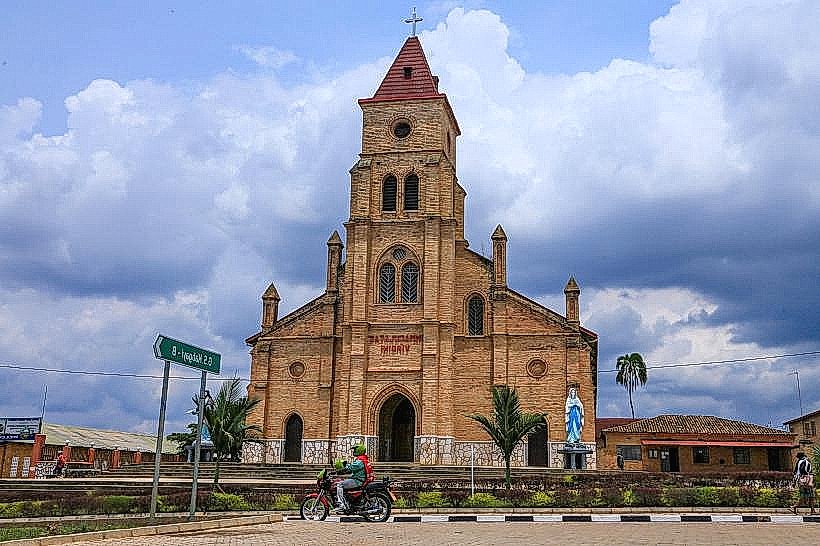
Kabgayi Basilica: A massive red-brick cathedral built in 1923, serving as the oldest and largest Catholic site in Rwanda.
Kabgayi Genocide Memorial: A significant site of remembrance located within the church grounds.
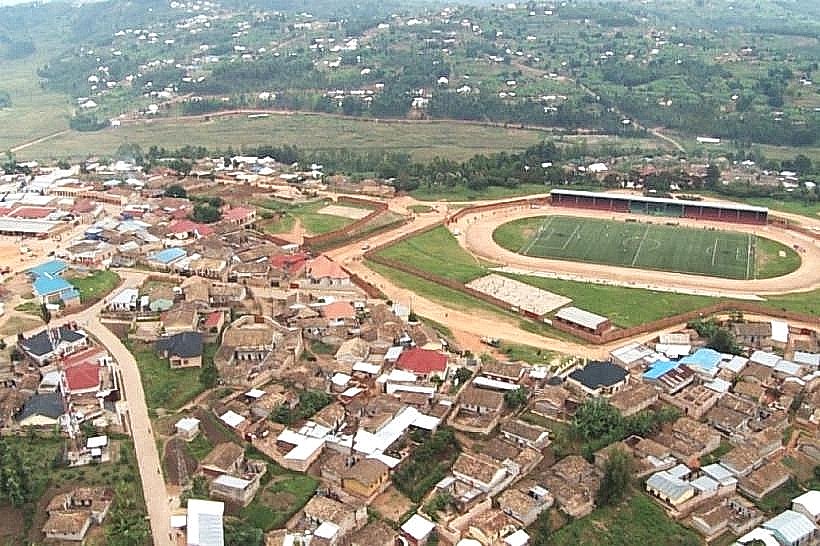
Muhanga Regional Stadium: A primary venue for regional athletic events and public ceremonies.
National Museum of Kabgayi: A specialized collection focusing on the history of the Catholic Church and its early influence on Rwandan education.
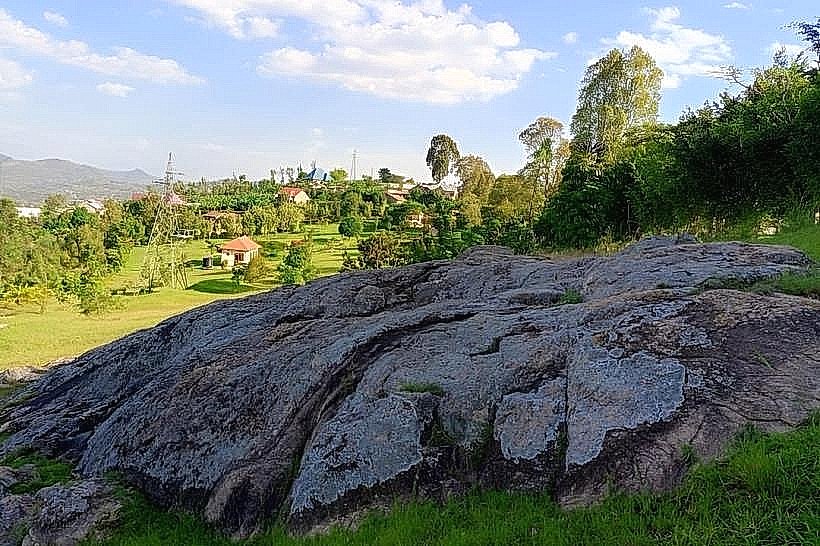
Ancient Royal Court Site: Remnants of historical residences used by the Rwandan monarchs during transit between Nyanza and the northern provinces.
Transportation Network
Intra-city transit is dominated by Moto-taxis, with drivers wearing green or yellow vests. Standard white taxis with orange stripes are available but less common. The city is the central junction for Horizon Express, Volcano Express, and Ritco bus lines, facilitating 1-hour transit to Kigali and 2-hour transit to Karongi or Huye. Traffic density is high along the RN1 highway due to international freight trucks traveling from Tanzania to the DRC.
Safety & "Red Zones"
Muhanga maintains a high safety rating, consistent with Rwanda's national average. There are no designated "red zones" or neighborhoods to avoid. Pedestrian caution is advised in the Commercial Core after dark due to limited street lighting and heavy truck traffic. Pickpocketing is a minor risk in the crowded Muhanga Central Market.
Digital & Financial Infrastructure
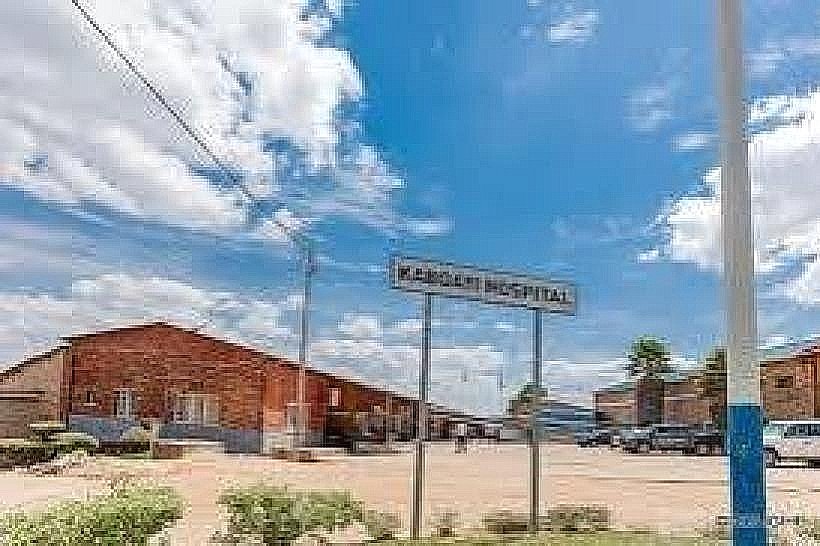
Average internet speed is 20-30 Mbps, with reliable 4G coverage from MTN and Airtel. Card acceptance is moderate in hotels and the Kabgayi Hospital area but nearly non-existent in local retail. Bank of Kigali and I&M Bank maintain the primary international ATMs in the town center.
Climate & Air Quality
The climate is tropical highland with temperatures ranging from 16°C to 27°C. Air quality is generally good, though the city can experience localized "unhealthy" PM2.5 levels during the dry season (June–August) due to dust and vehicle emissions trapped in the valley. Seasonal heavy rains occur from March to May.
Culture & Social Norms
Tipping is not standard; 1,000 RWF is appreciated for porters. Greetings are formal and usually begin with a handshake. Dress code is conservative, especially in the religious district of Kabgayi, where modest attire covering knees and shoulders is expected. Public smoking and alcohol consumption outside of licensed bars is socially discouraged.
Accommodation Zones
Stay in the Town Center for immediate access to inter-city transport, restaurants, and banks.
Stay in Kabgayi for a quieter, park-like environment with historical architectural surroundings.
Local Cost Index
1 Espresso: 1,800 RWF ($1.40 USD)
1 Standard Lunch: 3,500 RWF ($2.70 USD)
1 Bus Ticket (to Kigali): 1,500 RWF ($1.15 USD)
Nearby Day Trips
Kigali: 50 km (1 hour) for metropolitan services.
Nyanza (King's Palace): 35 km (45 mins) for royal history.
Huye (Ethnographic Museum): 70 km (1.5 hours) for academic cultural exhibits.
Lake Kivu (Karongi): 85 km (2 hours) via the scenic mountain pass.
Facts & Legends
A local historical oddity is that Muhanga (as Gitarama) served as the de facto capital of Rwanda for several weeks during the 1994 conflict before the seat of government moved. Additionally, local folklore suggests the surrounding hills were formed by the "Giant Ngunda," a mythical figure of unmatched strength whose intensive cultivation of the land supposedly carved the deep valleys seen around the city today.