
City: Ohonua
Country: Tonga
Continent: Australia
Ohonua, Tonga, Australia
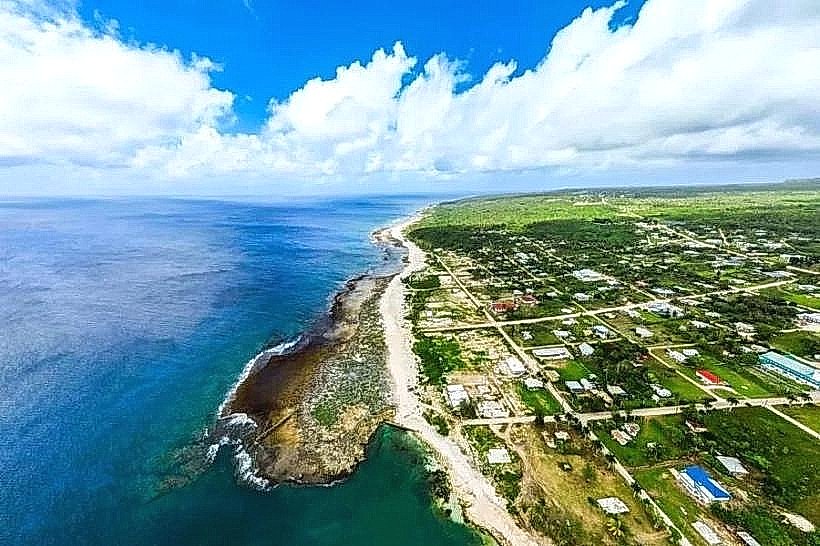
'Ohonua serves as the administrative capital and primary commercial center of the 'Eua district in Tonga, located on the western coast of 'Eua Island. The coastal town contains the island's main ferry port, government offices, and regional service infrastructure connecting the island to Tongatapu.
Historical Timeline
'Eua was initially populated by Lapita and Polynesian navigators around 1000 BCE, with 'Ohonua developing as a primary landing site on the island's western lee. Dutch explorer Abel Tasman made European contact with the island in 1643, naming it Middelburg Island. In 1863, King George Tupou I resettled the entire population of 'Ata Island to 'Eua following Peruvian slave raids, expanding local settlement zones. The present urban form was reshaped in 1946 when residents evacuated from the volcanic eruption on Niuafo'ou were permanently relocated to newly allocated land tracts directly adjacent to 'Ohonua.
Demographics & Population
The population of 'Ohonua is approximately 1,300 residents within the town limits, while 'Eua Island as a whole supports roughly 4,900 people. Indigenous Tongans form the vast majority of the population at 98%, with small numbers of Chinese merchant families and Euro-Pacific expatriates comprising the remaining 2%. The median age of the population is 21.2 years.
Urban Layout & Key Districts
'Ohonua is oriented along the mouth of the Anahulu Stream and the western coastline facing the 'Eua Channel. The Port Area along the waterfront contains the inter-island ferry wharf, primary storage facilities, and fuel depots. The Central Commercial Zone stretches inland along Main Road, housing the district administration offices, police station, and market grounds, while residential settlements fan out north and south along the coastal road.
Top City Landmarks
'Ohonua Wharf: The island's primary maritime terminal handling passenger ferries, cargo vessels, and local fishing fleets.
Taufalahi Market: The central community market serving as the distribution point for agricultural produce, timber products, and local seafood.
'Eua District Administration Building: The municipal seat housing local government offices, court facilities, and postal services.
Centenary Church 'Ohonua: A central Free Wesleyan place of worship that serves as a landmark for regional civic gatherings.
Anahulu Stream Estuary: The natural watercourse dividing northern and southern 'Ohonua, serving as a historic anchorage point for small craft.
Transportation Network
Public transit in 'Ohonua is limited to informal, unscheduled minivans operating between the wharf and outer villages. There are no metro, tram, or light rail systems. Taxis are privately owned, unmetered, and marked with a "T" prefix on license plates. Ride-sharing applications like Uber, Grab, or Bolt do not operate on 'Eua Island. Road traffic density is minimal, with no traffic congestion.
Safety & "Red Zones"
'Ohonua exhibits a low crime rate with negligible violent crime. Standard safety measures regarding personal property and unlit roads apply. Free-roaming domestic dogs are common along village paths and can pose a hazard to pedestrians at night.
Digital & Financial Infrastructure
Average fixed internet speeds range from 15 to 40 Mbps, supplied via wireless backhaul from Tongatapu. Mobile network coverage is provided by Digicel Tonga and Tonga Communications Corporation (TCC / U-Call) on 4G networks. Card acceptance is virtually non-existent; transactions are conducted strictly in cash. A single Bank South Pacific (BSP) ATM operates in central 'Ohonua, though cash reserves can run out during weekends or ferry delays.
Climate & Air Quality
'Ohonua has a tropical climate moderated by ocean trade winds, featuring a wet season from November to April and a cooler dry season from May to October. Average daily temperatures range from 20°C in August to 27°C in February. Air quality is pristine year-round. Seasonal weather risks include tropical cyclones and coastal swells during summer months.
Culture & Social Norms
Local conduct is dictated by traditional Tongan custom (anga faka-Tonga) and Christian principles. Tipping is not practiced or expected. Standard greetings consist of a handshake or a polite head nod. Public attire is conservative; swimsuits are restricted to beach areas, and men are legally required to wear shirts in public places. Sunday is legally enforced as a strict day of rest, during which commercial activity, public transport, and labor are suspended.
Accommodation Zones
Central Wharf District: Recommended for immediate access to the ferry terminal, market, government services, and local stores.
Angaha Boundary Area: Recommended for quieter guesthouse options situated slightly inland along the road toward the airport.
Local Cost Index
1 Espresso: 5.50 TOP ($2.30 USD)
1 Standard Lunch: 15.00 TOP ($6.30 USD)
1 Bus Ticket: 2.00 TOP ($0.84 USD)
Nearby Day Trips
'Eua National Park: A protected rainforest reserve spanning 2,400 hectares along the eastern ridge, located 10 kilometers east of 'Ohonua.
Fangatave Caves: A complex system of coastal limestone caves located 12 kilometers northeast, accessible via guided cliff hikes.
Lianga Huo 'a Maui: A natural rock archway carved into the southern coastal limestone cliffs, situated 14 kilometers south near Lokupo.
Big 'Ovava Tree: An ancient, massive banyan tree located in the central forest reserve, approximately 8 kilometers southeast.
Facts & Legends
According to Tongan oral tradition, 'Eua was one of the first islands created by the sky god Tangaloa. Legend states that Tangaloa dropped giant stepping stones from the heavens into the ocean to form the island's high elevation cliffs and plateau structure, giving 'Eua a distinctly higher, non-coral topography compared to neighboring Tongatapu.


