
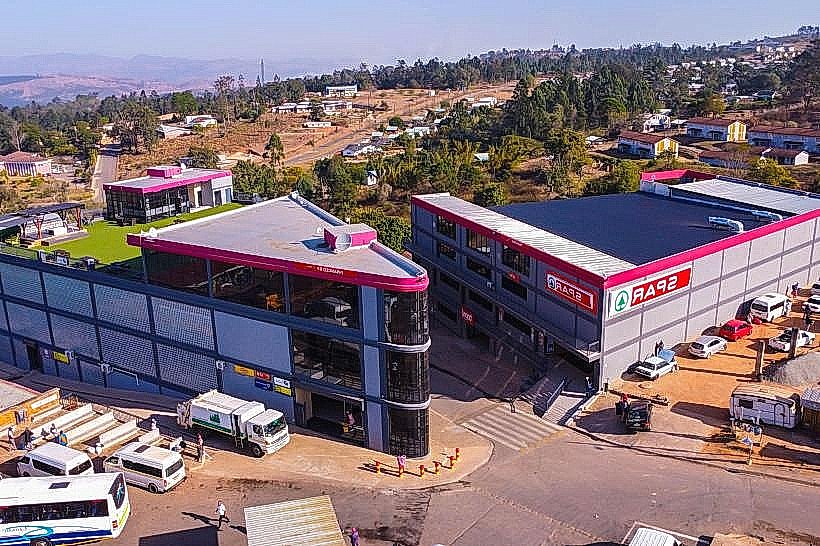
City: Piggs Peak
Country: Eswatini
Continent: Africa
Piggs Peak, Eswatini, Africa
Pigg's Peak is a primary mining, forestry, and agricultural town located in the mountainous Highveld region of northern Eswatini. It serves as the administrative headquarters of the northern sector of the Hhohho Region, positioned 70 kilometers north of the executive capital, Mbabane, along the MR1 highway.
Historical Timeline
1884: Founded as a gold mining settlement following the discovery of a major reef by French prospector William Pigg.
1954: Closure of the primary gold mining operations due to depleted yields, triggering a shift toward large-scale commercial forestry.
1970s: Establishment of the Peak Timber plantations, creating one of the largest man-made pine and eucalyptus forests in Africa.
2001: Completion of the Maguga Dam on the Komati River nearby, shifting the local economy toward tourism and irrigated agriculture.
Primary Urban Event: The depletion of the gold reserves structurally forced the town to transition from a subterranean extraction economy to an expansive surface timber and silviculture industry, dictating its modern layout around sawmills and processing plants.
Demographics & Population
Town Limits Population: 4,500
Metropolitan Area Population (Forestry District): 10,000
Top Three Demographics: Swazi (97.4%), South African (1.3%), Mozambican (0.8%).
Median Age: 20.9 years
Urban Layout & Key Districts
Pigg's Peak is arranged linearly along a mountain ridge bisected by the main MR1 highway.
Town Center / Commercial Strip: The core retail zone running along the MR1, hosting the local market, banks, and primary transport depots.
The Plantation Sector: The expansive industrial zone on the northern and western flanks, containing timber yards, sawmills, and worker housing.
Highlands / Rocklands: Located on the upper elevations above the commercial strip, a lower-density residential zone holding administrative buildings and guesthouses.
Top City Landmarks
Pigg's Peak Hotel and Casino: A prominent mountaintop resort and entertainment complex located 3 kilometers north of the town center.
Phophonyane Falls Nature Reserve: A protected valley ecosystem featuring dramatic waterfalls, ancient exposed granite, and indigenous forests on the town's northern boundary.
The Piggs Peak Craft Centre: A dedicated artisanal market specializing in woven sisal baskets, traditional pottery, and local mohair textiles.
Maguga Dam Wall: A massive 115-meter-high clay-core rockfill dam located 12 kilometers south of the town, serving as a regional engineering landmark.
The Old Gold Mine Workings: The historical, restricted ruins of the original 19th-century shafts situated on the slopes overlooking the modern town grid.
Transportation Network
Internal transport within the mountain core relies on 15-seater public minibuses (kombis) that run along the MR1 highway, connecting Pigg's Peak to Mbabane and the South African border at Matsamo. No rail or tram infrastructure exists. Private metered taxis operate from the central marketplace but require negotiated pricing before departure. No app-based ride-sharing services are available. Traffic density is generally low, though heavy timber transport trucks regularly slow transit speeds on the steep, winding mountain sections of the MR1.
Safety & "Red Zones"
Pigg's Peak maintains a very low violent crime rate due to its remote location and small population. Petty theft occurs occasionally in crowded areas around the main kombi rank and the informal fruit stalls during weekend market hours. Avoid walking along the isolated forestry dirt roads or unlit sections of the MR1 highway after dark due to extreme lack of visibility and loose livestock. No specialized tourist scams are active in this sector.
Digital & Financial Infrastructure
Average Internet Speed: 15 Mbps fixed broadband; 10 Mbps mobile.
Main Mobile Carriers: MTN Eswatini, Eswatini Mobile.
Card Acceptance: Moderate; accepted at the Pigg's Peak Hotel, formal grocery stores, and fuel stations, but cash is strictly required for craft markets, local transport, and park entry fees.
ATMs: Available along the main commercial strip (Standard Bank, First National Bank). The local currency is the Lilangeni (SZL), which is pegged 1:1 to the South African Rand (ZAR); Rand banknotes are accepted interchangeably at all merchants.
Climate & Air Quality
Pigg's Peak features a subtropical highland climate with high annual rainfall and lower average temperatures than the rest of Eswatini due to its altitude (1,025 meters).
Winter (Jun–Aug): 6°C to 21°C; crisp, dry days with cold nights. Air quality is generally high, though clear days can be impacted by controlled forestry burn-offs.
Summer (Dec–Feb): 16°C to 27°C; humid and rainy, with heavy mist and frequent afternoon thunderstorms.
Weather Risks: Thick, dense mountain fog during summer afternoons can reduce visibility on the MR1 highway to less than 5 meters.
Culture & Social Norms
Tipping: 10% is customary at formal resort restaurants; it is not expected at local town diners or by transport operators.
Greeting: A polite verbal greeting in Siswati ("Sanibona") followed by a standard handshake is expected before initiating any transaction. Showing respect to local elders is a strict social priority.
Dress Code: Practical and conservative. While hiking attire is standard in nature reserves, revealing clothing in the town center is culturally discouraged.
Alcohol & Smoking: Consuming alcohol in public streets is illegal. Smoking is legally banned inside public buildings and is socially avoided in crowded outdoor market areas.
Accommodation Zones
The Ridge / Resort Zone (North): Recommended for travelers seeking full-service amenities, secure parking, and panoramic mountain views at the main hotel complex.
Phophonyane Valley (North-West): Recommended for eco-tourists seeking secluded forest lodges, self-catering cabins, and immediate access to nature trails outside the urban core.
Local Cost Index
1 Espresso: 30 SZL ($1.67 USD)
1 Standard Lunch (Local stew and porridge at the market): 75 SZL ($4.18 USD)
1 Kombi Transit Ticket (To executive capital Mbabane): 45 SZL ($2.51 USD)
Nearby Day Trips
Maguga Dam: A scenic reservoir offering boat cruises, freshwater fishing, and lakeside dining; 12 km south, reachable via the MR1 in 15 minutes.
Nsangwini Rock Art: The largest collection of ancient San bushman rock paintings in Eswatini, located inside a deep river gorge; 30 km south, accessible via a rugged dirt road in 45 minutes.
Malolotja Nature Reserve: A high-altitude wilderness area featuring deep canyons, rare bird species, and canopy zip-lining; 35 km south, reachable via the MR1 road in 35 minutes.
Facts & Legends
A local legend persists regarding the old gold shafts running underneath the town's western ridge. Local oral history claims that William Pigg did not discover the primary gold reef through geological surveying, but rather followed a unique species of mountain baboon that consistently gathered around a specific rocky outcrop. The myth states that the baboons were scratching at the surface stones to extract salt minerals, unintentionally exposing the glittering gold quartz veins beneath to the prospector.


