
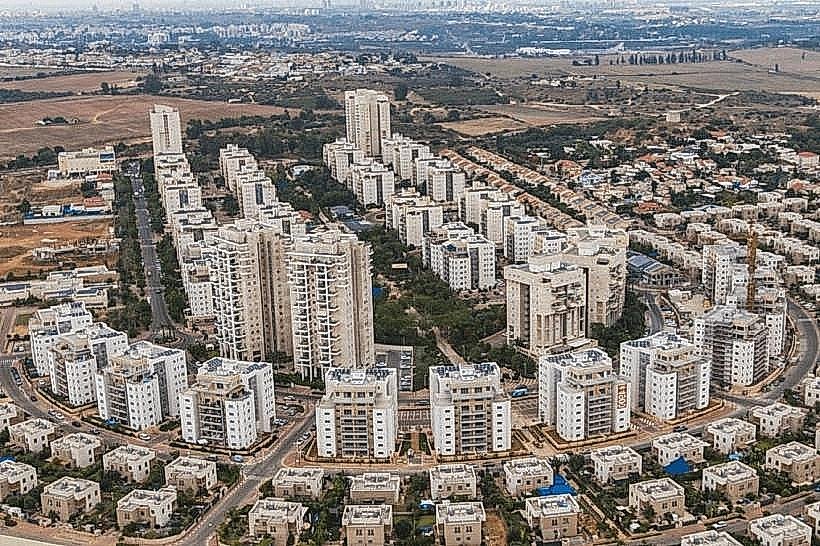
City: Rehovot
Country: Israel
Continent: Asia
Rehovot, Israel, Asia
Rehovot serves as a primary scientific and agricultural research hub in Israel’s Central District. It is situated on the coastal plain, approximately 20 kilometers south of Tel Aviv and 10 kilometers inland from the Mediterranean coast.
Historical Timeline
Rehovot was founded in 1890 by 10 settlers from the First Aliyah and named after a biblical well. Primary eras include Ottoman rule, the British Mandate (1917–1948), and post-independence development. The primary event shaping the current urban form was the 1934 establishment of the Daniel Sieff Research Institute, which became the Weizmann Institute of Science, transforming the city from a citrus-growing colony into a global center for biotechnology and academic research.
Demographics & Population
The total population within city limits is approximately 150,000 residents. The top three demographics are veteran Israeli Jews, immigrants from the former Soviet Union, and a significant Ethiopian-Israeli community. The median age is 33.4 years, reflecting a concentration of research students and young families.
Urban Layout & Key Districts
The city is organized along its primary north-south artery, Herzl Street. The 2-3 most important districts for visitors are the Science Park (North), containing the high-tech and biotech industry; the Weizmann Institute campus (North-Central), housing academic and historical sites; and the City Center (Central), which contains the municipal market and administrative buildings.
Top City Landmarks
Weizmann Institute of Science
Weizmann House (designed by Erich Mendelsohn)
The Clore Garden of Science (Open-air museum)
The Ayalon Institute (Secret underground bullet factory)
Rehovot Great Synagogue
Transportation Network
Internal movement relies on the local bus network operated by Egged. The Rehovot Railway Station is located at the Science Park (North) and provides frequent connections to Tel Aviv and Ashkelon. Ride-sharing via Gett is the primary app; Uber is unavailable. Official taxis are white. Traffic density is high on Herzl Street during business hours and at the Bilu Junction entrance.
Safety & "Red Zones"
Rehovot is generally safe for pedestrians. Avoid the Kiryat Moshe neighborhood late at night due to higher reported rates of petty crime and social tension. Common scams are infrequent, though unauthorized parking attendants sometimes operate near the Bilu Center shopping district on weekends.
Digital & Financial Infrastructure
Average internet speed is 200 Mbps with widespread fiber optic and 5G coverage. Main mobile carriers are Partner, Cellcom, and Pelephone. Card acceptance is universal; contactless payment via mobile devices is standard. ATMs are concentrated in the Science Park and along Herzl Street.
Climate & Air Quality
Summers (June–September) are hot and humid, ranging from 22°C to 31°C. Winters (December–February) are mild and rainy, ranging from 9°C to 18°C. Air quality is moderate, though humidity can trap urban pollutants. High concentrations of citrus pollen in spring can affect allergy sufferers.
Culture & Social Norms
A tipping rate of 12-15% is standard. Handshakes are the common greeting. Dress code is highly casual, even in academic and tech environments. Public transport and most businesses close for Shabbat, though some restaurants and bars in the Science Park and near the Bilu Center remain open on Saturdays.
Accommodation Zones
Stay in the Science Park (North) for proximity to high-tech offices, the train station, and the best choice of modern hotels and nightlife.
Stay near the Weizmann Institute for access to academic facilities and the historical Weizmann House.
Local Cost Index
1 Espresso: 12 ILS ($3.25 USD)
1 Standard Lunch (Salad/Pasta): 65 ILS ($17.50 USD)
1 Metro/Bus Ticket: 5.50 ILS ($1.50 USD)
Nearby Day Trips
Tel Aviv-Yafo (20 km)
Palmachim Beach (15 km)
Jerusalem (50 km)
Hulda Forest (15 km)
Facts & Legends
A historical oddity involves the "Secret Under the Laundry." During the British Mandate, the Ayalon Institute bullet factory was hidden 8 meters underground beneath a functioning kibbutz laundry and bakery. The 45 workers kept the operation secret from the British and even their fellow kibbutz members for three years by using a tanning machine to mimic the sound of heavy machinery and UV lamps to maintain their suntans so as not to appear as though they worked underground.


