
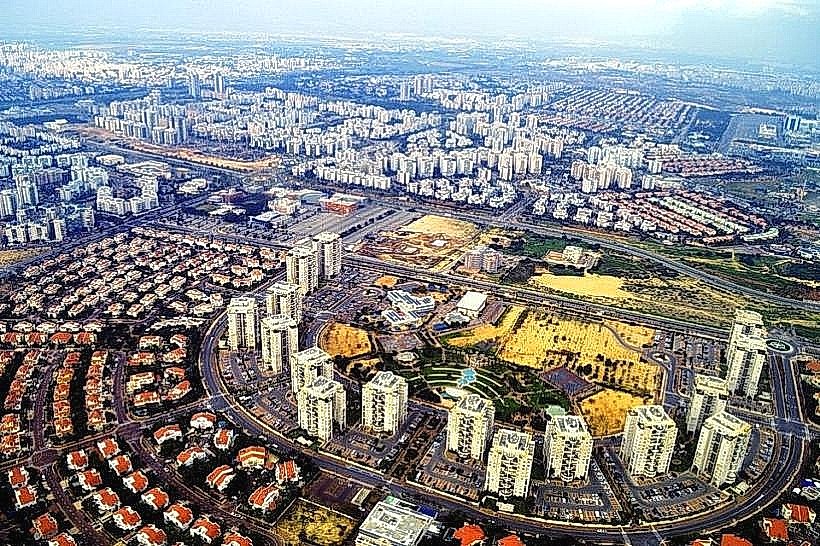
City: Rishon Lezion
Country: Israel
Continent: Asia
Rishon Lezion, Israel, Asia
Rishon LeZion serves as a major industrial and commercial hub in the Center District and is Israel's fourth-largest city. It is located on the central coastal plain, approximately 12 kilometers south of Tel Aviv and bordering the Mediterranean Sea to the west.
Historical Timeline
Rishon LeZion was founded on July 31, 1882, by ten pioneers from the First Aliyah. Primary eras include Ottoman administration, the British Mandate (1917–1948), and rapid post-statehood expansion. The primary event shaping the current urban form was the 1980s westward expansion toward the coastline, which shifted the city’s center of gravity from the historic agricultural core to a modern, grid-based residential and commercial western sector.
Demographics & Population
The total population within city limits is approximately 260,000 residents. The top three demographics are veteran Israeli Jews, immigrants from the former Soviet Union, and a growing community of young professionals relocating from Tel Aviv. The median age is 35.8 years.
Urban Layout & Key Districts
The city is divided into two primary sections by Highway 4. The 2-3 most important districts for visitors are the Old City (East), containing the historical winery and founding sites; the New West (West), featuring large-scale shopping malls and cinemas; and the Beach District (West), which serves as the coastal leisure zone. The industrial zones are located in the northern and southern cardinal directions.
Top City Landmarks
Carmel Mizrahi Winery (Historic Founders' Winery)
The Great Synagogue (Built 1885)
Rishon LeZion Museum (Founders' Quarter)
Superland (Major amusement park)
Agam Museum (Kinetic Art)
Transportation Network
Internal movement is facilitated by the Egged bus network. The city is served by two railway stations: Rishon LeZion HaRishonim (East) and Rishon LeZion Moshe Dayan (West). Ride-sharing via Gett is the primary app; Uber is not operational. Official taxis are white. Traffic density is extreme during rush hours on the Ayalon Highway (Highway 20) and Highway 4.
Safety & "Red Zones"
Rishon LeZion is generally safe for pedestrians. Avoid the area surrounding the old central bus station late at night due to higher reported rates of petty crime and loitering. Common scams are infrequent, though unregulated parking "attendants" may appear near the beach promenade during peak summer weekends.
Digital & Financial Infrastructure
Average internet speed is 200–500 Mbps with widespread fiber optic and 5G coverage. Main mobile carriers are Partner, Cellcom, and Pelephone. Card acceptance is universal; contactless payment via mobile devices is standard. ATMs are concentrated in the "Zahav" and "Cinema City" commercial areas and along Herzl Street.
Climate & Air Quality
Summers (June–September) are hot and humid, ranging from 23°C to 31°C. Winters (December–February) are mild and rainy, ranging from 10°C to 18°C. Air quality is moderate, though the density of highways surrounding the city can lead to localized increases in nitrogen dioxide during traffic peaks.
Culture & Social Norms
A tipping rate of 12–15% is standard. Handshakes are the standard greeting. Dress code is casual. Public transport and most businesses in the Old City close for Shabbat, while major entertainment complexes in the West (like Cinema City) and many beachfront restaurants remain open on Saturdays.
Accommodation Zones
Stay in Rishon West for proximity to major shopping centers, the beach, and the Moshe Dayan train station.
Stay in the Old City (Center) for walking access to historical sites, the municipal market, and boutique dining.
Local Cost Index
1 Espresso: 12 ILS ($3.25 USD)
1 Standard Lunch: 65 ILS ($17.50 USD)
1 Metro/Bus Ticket: 5.50 ILS ($1.50 USD)
Nearby Day Trips
Tel Aviv-Yafo (12 km)
Rehovot / Weizmann Institute (10 km)
Palmachim Beach (8 km)
Ashdod Port (20 km)
Facts & Legends
Rishon LeZion is known as the "City of Firsts" because it was the site where the modern Hebrew language was first taught in schools and where the Israeli national anthem, Hatikvah, was composed and first sung. An urban legend persists that a secret underground tunnel connects the historic winery to the Great Synagogue, allegedly built to smuggle defense supplies during the British Mandate, though only wine cellars have been formally documented.


