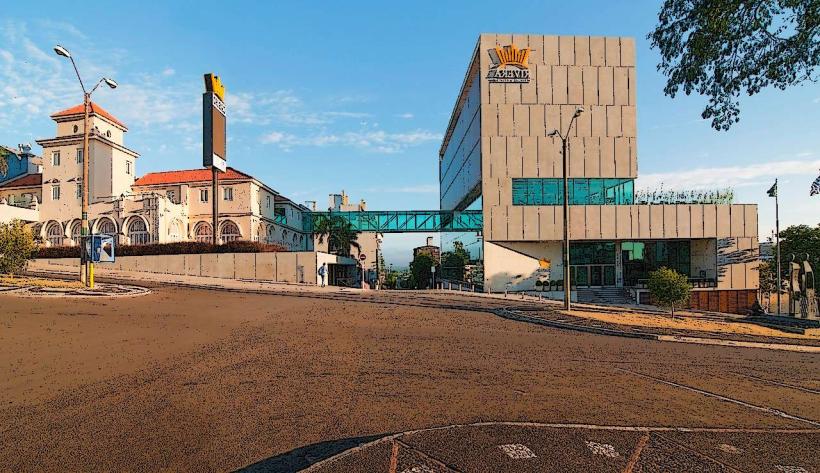
City: Rivera
Country: Uruguay
Continent: South America
Rivera, Uruguay, South America
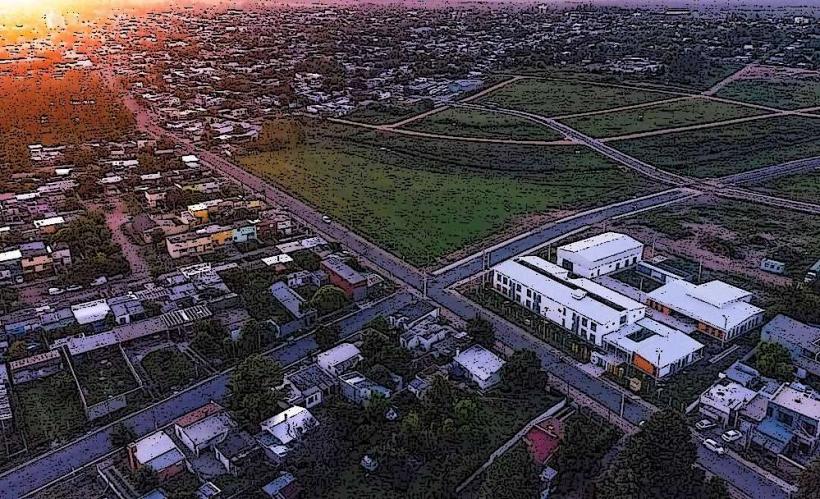
Rivera serves as the administrative capital of the Rivera Department and the primary commercial hub for cross-border trade with Brazil. It is situated on the northern frontier of Uruguay, directly contiguous with the Brazilian city of Santana do Livramento. The two cities are separated only by an international street, forming a unified urban area known as "The Border of Peace."
Historical Timeline
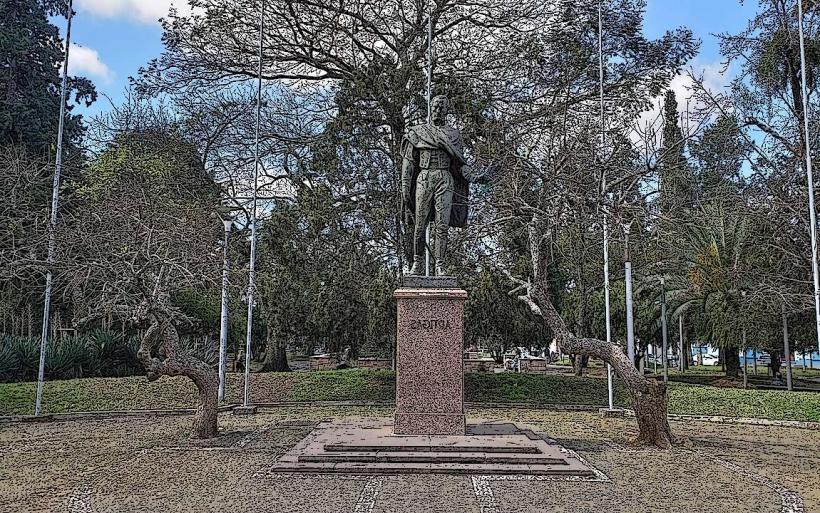
The city was founded on July 20, 1862, as Pueblo de Ceballos, but was renamed Rivera in 1867 in honor of Fructuoso Rivera, the country's first president. Its governance evolved from a strategic frontier outpost to a major duty-free shopping center in the late 20th century. The most significant architectural and economic shift occurred in the 1980s with the legalization and expansion of Free Shops, which transformed the city from a remote agricultural town into a high-traffic retail destination. The primary event shaping its identity remains the peaceful coexistence with its Brazilian neighbor, established through mid-century binational agreements.
Demographics & Population
The estimated 2026 population within the city limits is 72,300. The demographics are uniquely diverse, featuring a significant percentage of residents with dual citizenship (Uruguayan-Brazilian) and a linguistic blend known as "Portuñol." The median age is approximately 33.4 years.
Urban Layout & Key Districts
Rivera’s layout is defined by its symbiotic relationship with Santana do Livramento.
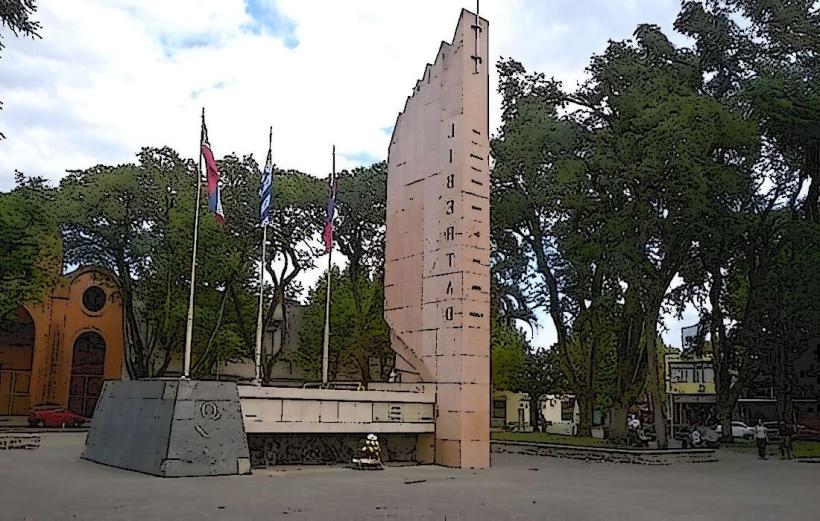
The International Plaza (Plaza Internacional): A shared park marking the exact border between the two nations, containing monuments and the binational fountain.
Commercial Core (Avenida Sarandí): The main pedestrian and retail artery where the majority of international Free Shops and duty-free malls are located.
Cerro del Marco: A historical lookout point and residential area overlooking the binational urban sprawl.
Top City Landmarks
Plaza Internacional: The only binational square in the world where visitors can cross the border freely.
Free Shops (Duty-Free Zone): Large-scale retail complexes like Siñeriz and Melancia Mall.
Parque Gran Bretaña: A 100-hectare nature reserve located 7 km from the city center, featuring forests and streams.
Rivera Casino & Resort: A modern landmark providing entertainment and regional gaming.
Mina de Oro (Minas de Corrales): Located 95 km away, this historic gold mining village offers tours of 19th-century tunnels.
Transportation Network
There are no metro or tram systems. Transit is managed through a local bus network and a high volume of cross-border taxi services. Rivera is connected to Montevideo by National Route 5. The city features a binational airport (Rivera International) and is a key node for the national railway cargo system. Ride-sharing via Uber is active but less common than in the south. Official taxis are white and frequently operate between both sides of the border. Traffic density is high in the commercial center during weekends and holidays.
Safety & "Red Zones"
Rivera is generally safe for tourists, though petty theft and vehicle break-ins are risks in crowded shopping areas. There are no designated "red zones," but standard caution is advised in peripheral neighborhoods like Barrio Rampla at night. Scams often involve unauthorized "currency exchangers" on the street; travelers should use official exchange houses (Casas de Cambio).
Digital & Financial Infrastructure
Average internet speed is 80-120 Mbps via Antel fiber. Main mobile carriers are Antel, Movistar, and Claro, with Brazilian signals (Vivo, Claro BR) often overlapping. Card acceptance is universal in Free Shops and hotels. ATMs (RedBROU and Banred) are abundant along Avenida Sarandí and in shopping malls. Both Uruguayan Pesos and Brazilian Reais are accepted in most commercial establishments.
Climate & Air Quality
Temperatures range from 19°C to 31°C in summer (December–March) and 7°C to 17°C in winter (June–August). Air quality is high due to the lack of heavy industrial plants. A specific weather risk is the high humidity and occasional severe thunderstorms common to the northern interior.
Culture & Social Norms
Tipping: 10% is standard in restaurants.
Greeting: A single kiss on the cheek is the social norm.
Language: "Portuñol" is the unofficial dialect; knowledge of basic Spanish or Portuguese is sufficient.
Dress Code: Casual and practical, dictated by the commercial nature of the city.
Schedule: Unlike the rest of Uruguay, many shops do not observe a midday siesta to accommodate Brazilian shoppers.
Accommodation Zones
Avenida Sarandí / City Center: Stay here for walking access to duty-free shopping and the International Plaza.
Paso de la Estiva / Outskirts: Stay here for larger resort-style hotels and quieter environments.
Local Cost Index
1 Espresso: 150 UYU ($3.85 USD)
1 Standard Lunch: 520 UYU ($13.40 USD)
1 Bus Ticket (Local): 45 UYU ($1.15 USD)
Nearby Day Trips
Minas de Corrales: 95 km (Historical gold mining and rural heritage).
Valle del Lunarejo: 70 km (Trekking and canyon landscapes in a protected area).
Santana do Livramento (Brazil): 0 km (Direct access to Brazilian steakhouses and wineries).
Facts & Legends
Rivera is famous for its "Dialecto Fronterizo" (Fronterizo dialect), which is the only place in the world where two languages have merged so thoroughly into everyday speech. A local legend concerns the "Cerro del Marco," where it is said that the stones of the original border markers were blessed to ensure that no war would ever break out between the two cities, a belief that underpins the region's "Peace of the Border" identity.