City: Tataouine
Country: Tunisia
Continent: Africa
Tataouine, Tunisia, Africa
Tataouine is a desert city in far southern Tunisia, situated at an elevation of 250 meters. It is the capital of Tunisia’s largest governorate and serves as the primary gateway for exploring the "Ksar" (fortified granary) country and the Saharan interior.
Historical Timeline
Tataouine gained notoriety in the early 20th century as the site of a notorious French military penal colony known as the "Bat’ d’Af" (Battalion of Light Infantry of Africa), which operated until 1951. Before this, the region was a series of vital Berber strongholds. In 1931, a rare green meteorite (diogenite type) impacted nearby, leaving fragments still sought by collectors. In the late 1970s, its unique name and landscapes inspired George Lucas to name the fictional planet "Tatooine" in the Star Wars saga.
Demographics & Population
The estimated population for the city of Tataouine in 2026 is approximately 72,000, while the broader governorate exceeds 150,000. The population is a blend of Arab and Berber (Amazigh) descent; Tataouine remains one of the few regions in Tunisia where Berber dialects are still spoken in daily life, particularly in the mountain villages of Chenini and Douiret.
Urban Layout & Key Districts
The modern city serves as a hub for the surrounding ancient hilltop villages.
City Center: A bustling grid focused on the Souk and administrative offices.
Foum Tataouine: The "mouth" of the springs where the original settlement began.
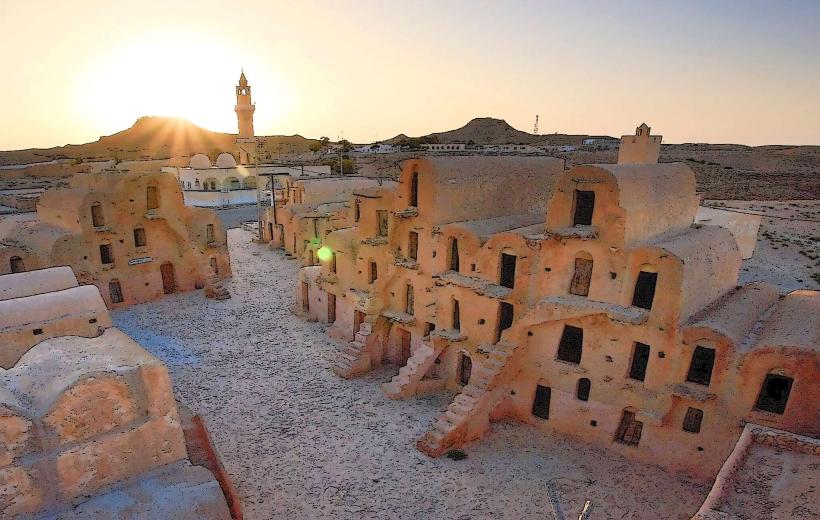
The Ksour Belt: A ring of fortified granaries and troglodyte villages (Chenini, Douiret, Ghomrassen) located 10–20 km from the city core.
Top City Landmarks
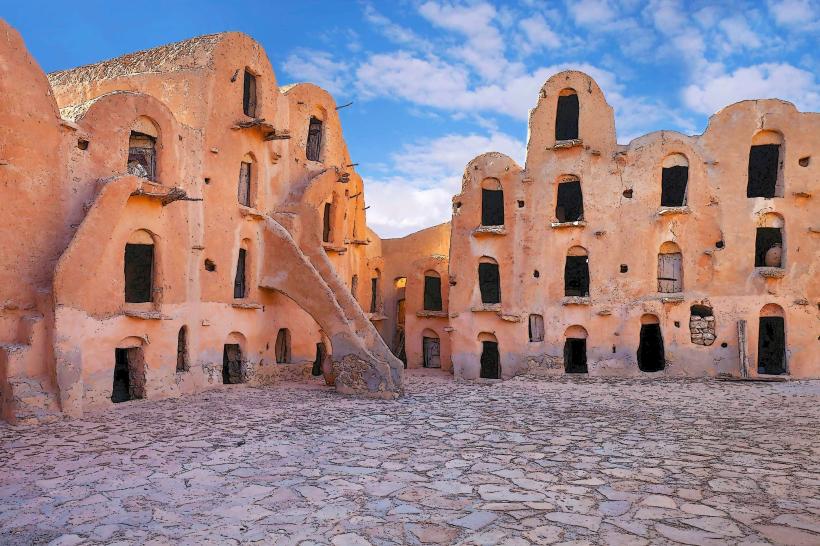
Ksar Ouled Soltane: One of the most spectacular and well-preserved ksour, featuring multiple levels of vaulted storage cells (ghorfas).
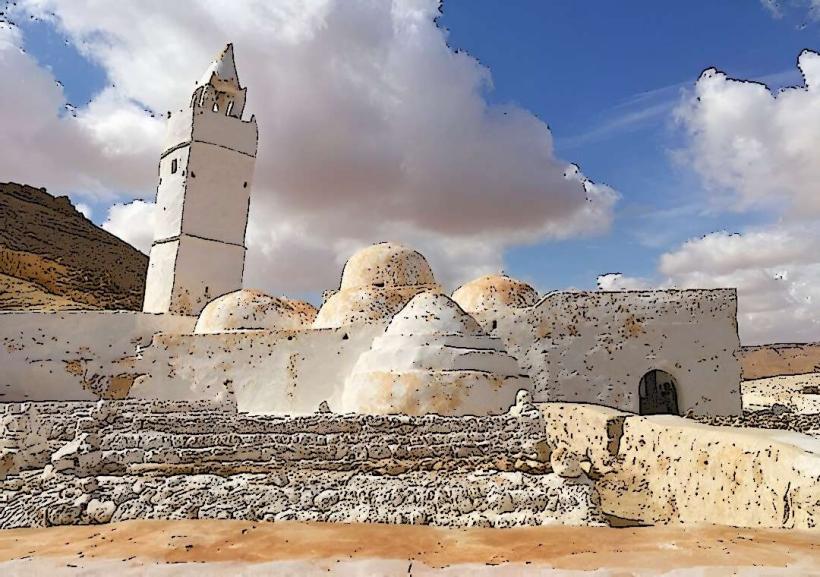
Chenini: A spectacular troglodyte village perched on a ridge, featuring a white mosque and homes carved into the rock.
Ksar Hadada: A filming location for Star Wars: Episode I, now partially converted into a hotel.
The Earth Memory Museum: Houses dinosaur fossils found in the region, including the Tataouinea hannibalis.
The Monday/Thursday Souk: One of the most authentic and colorful markets in southern Tunisia.
Transportation Network
Tataouine is the terminus of the P19 highway from Medenine. Louages (shared taxis) are the primary link to Medenine (50 km) and Gabès. There is no rail service or commercial airport in the city; most travelers arrive via Djerba (DJE) or Gabès and continue by road. Yellow Taxis and local pick-up trucks (clandestins) handle transit to the remote hilltop ksars.
Safety & "Red Zones"
The safety level for the city itself is stable but requires increased caution.
Red Zone (Do Not Travel): The militarized zone south of Remada (approx. 80 km south of Tataouine) and the areas within 50 km of the Libyan border are strictly off-limits to tourists without special military authorization.
Orange Zone (Essential Travel Only): Travel to the desert deep south (beyond the main tourist ksar circuit) is discouraged due to proximity to volatile border regions.
Digital & Financial Infrastructure
Internet (4G/5G) is reliable in the city center but vanishes quickly in the mountain canyons of Chenini or Douiret. Main carriers are Tunisie Telecom and Ooredoo. The Tunisian Dinar (TND) is the only currency used. ATMs are available in the city center near the post office. Credit card usage is extremely rare outside of the few large hotels.
Climate & Air Quality
Tataouine has a hot desert climate (BWh).
Summer: Extremely hot, with highs reaching 40°C–45°C.
Winter: Mild days (16°C) but significantly cold nights, often dropping to 4°C.
Air Quality: Excellent, though sandstorms are common in spring, turning the sky orange and reducing visibility to near zero.
Culture & Social Norms
The region is more traditional and conservative than coastal Tunisia. Respectful, modest dress is mandatory. The local economy is tied to agriculture (olives and asparagus) and remittances from workers in Europe. The "Corne de Gazelle" (honey and almond pastry) is the city's culinary signature.
Accommodation Zones
Tataouine Center: Standard hotels for transit and business.
Ksar Gîte / Douiret: Recommended for staying in converted troglodyte caves for a unique "Star Wars" or Berber experience.
Local Cost Index
1 Espresso: 2 TND ($0.65 USD)
1 "Corne de Gazelle" pastry: 1.5 TND ($0.50 USD)
1 Guided tour of Chenini: 30–50 TND ($10–16 USD)
Nearby Day Trips
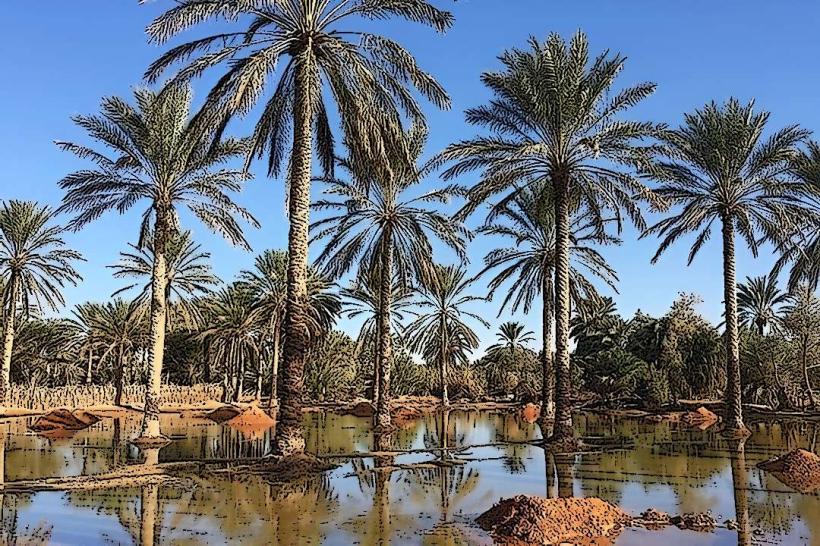
Ksar Ghilane: 150 km (Saharan oasis with a thermal spring).
Douiret: 20 km (Abandoned Berber hilltop village).
Ghomrassen: 25 km (Town known for its unique caves and prehistoric paintings).
Facts & Legends
While the city inspired the name of the planet Tatooine, George Lucas actually filmed most of the desert scenes in nearby Matmata and Tozeur, not in the city of Tataouine itself. A local legend claims the "Seven Sleepers" (early Christians fleeing Roman persecution) are buried in a mosque near Chenini, where their graves are allegedly five meters long because they grew into giants during their centuries of sleep.