Landmark: Banco National Park
City: Abidjan
Country: Cote d-Ivoire
Continent: Africa
Banco National Park, Abidjan, Cote d-Ivoire, Africa
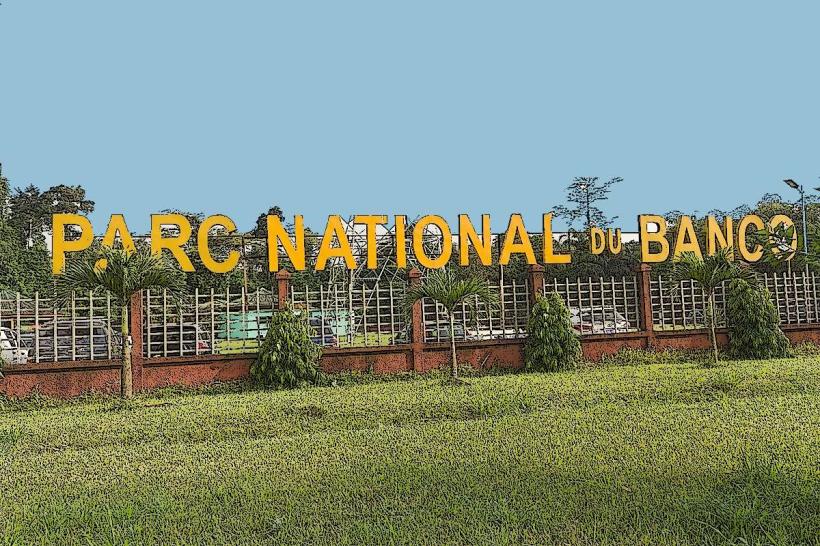
Banco National Park is a protected forest reserve situated within the city limits of Abidjan, Côte d'Ivoire. It functions as an urban rainforest, preserving a significant area of natural habitat amidst a metropolitan environment.
Visual Characteristics
The park is characterized by dense tropical rainforest vegetation. Dominant tree species include Ceiba pentandra (fromager) and various palm varieties. The forest canopy is thick, resulting in limited direct sunlight reaching the forest floor in many areas. Several small streams and a central lagoon are present within the park boundaries. The terrain is generally undulating with some steeper inclines.
Location & Access Logistics
Banco National Park is located approximately 10 kilometers northwest of Abidjan's city center. Access is primarily via Boulevard Nangui Abrogoua, which leads to the park's main entrance. The park is accessible by private vehicle, with a designated parking area near the entrance. Public transport options include local bus lines that stop near the park's perimeter, requiring a short walk to the entrance. Specific bus lines serving this route include the 07 and 12.
Historical & Ecological Origin
Banco National Park was established in 1953. Its primary purpose was to protect the remaining forest ecosystem within the rapidly expanding urban area of Abidjan and to serve as a scientific research site. Ecologically, it represents a remnant of the coastal rainforest that once covered this region.
Key Highlights & Activities
Visitors can engage in hiking on marked trails, such as the 2km "Sentier des Singes" (Monkey Trail) and the 3km "Sentier des Papillons" (Butterfly Trail). Birdwatching is a common activity due to the diverse avian population. Observation of primate species, including Mona monkeys and Diana monkeys, is possible. Photography of flora and fauna is permitted.
Infrastructure & Amenities
Basic amenities are available at the park entrance, including a small visitor center and restrooms. Shaded areas are abundant due to the dense tree cover. Cell phone signal (4G) is generally available within the park, though it may be intermittent in deeper sections. No food vendors operate within the park; visitors are advised to bring their own provisions.
Best Time to Visit
The best time of day for wildlife observation is typically early morning (07:00-10:00) and late afternoon (16:00-18:00) when animals are most active. The dry season, from November to March, offers more comfortable conditions with less rainfall. The wet season (April to October) can result in muddy trails.
Facts & Legends
A local belief suggests that the park is inhabited by forest spirits, and visitors are sometimes advised to show respect to the natural environment to avoid misfortune. The park's lagoon is said to be fed by underground springs, contributing to its consistent water levels.
Nearby Landmarks
- Musée National d'Abidjan (5.2km Southeast)
- Cathédrale Saint-Paul du Plateau (6.1km Southeast)
- Grand Marché de Treichville (7.5km Southeast)
- Palais de la Culture Bernard Binlin Dadié (6.8km Southeast)