Information
Landmark: Cementerio de Santa IfigeniaCity: Santiago de Cuba
Country: Cuba
Continent: North America
Cementerio de Santa Ifigenia, Santiago de Cuba, Cuba, North America
The Cementerio de Santa Ifigenia is a historic cemetery located in Santiago de Cuba, Cuba. It serves as the final resting place for many prominent Cuban figures.
Visual Characteristics
The cemetery features a grid layout with wide, paved avenues. Mausoleums and tombs are constructed from marble, granite, and concrete, varying in size and architectural complexity, from simple obelisks to elaborate neoclassical structures. The dominant colors are white marble, grey granite, and the occasional painted facade. The central mausoleum, housing the remains of José Martí, is a prominent cylindrical structure topped with a spire.
Location & Access Logistics
The Cementerio de Santa Ifigenia is situated approximately 5 kilometers west of the Santiago de Cuba city center. Access is via Carretera del Morro. Public transportation options include local bus lines that run along Carretera del Morro. Limited parking is available at the main entrance. Taxis are readily available from the city center.
Historical & Ecological Origin
Established in 1868, the cemetery was designed by architect Francisco Javier de la Torre. Its original purpose was to provide a formal burial ground for the city's elite and notable citizens. It is a man-made structure, not of ecological origin.
Key Highlights & Activities
Visitors can observe the mausoleums of national heroes, including José Martí, Fidel Castro, and Carlos Manuel de Céspedes. The changing of the guard ceremony at José Martí's mausoleum occurs daily at specific times. Walking tours are available, focusing on the historical significance of the interred individuals.
Infrastructure & Amenities
Restrooms are located near the main entrance. Limited shaded areas are present along the main avenues. Cell phone signal (3G/4G) is generally available within the cemetery grounds. No food vendors are located within the cemetery; however, vendors are present outside the main gate.
Best Time to Visit
The best time of day for photography is mid-morning or late afternoon to avoid harsh shadows. The weather is generally pleasant year-round, but the dry season (November to April) offers the most comfortable conditions. No tide considerations apply.
Facts & Legends
A unique aspect of the cemetery is the perpetual flame burning at the tomb of José Martí, symbolizing his enduring legacy. It is a common practice for visitors to observe a moment of silence at his tomb.
Nearby Landmarks
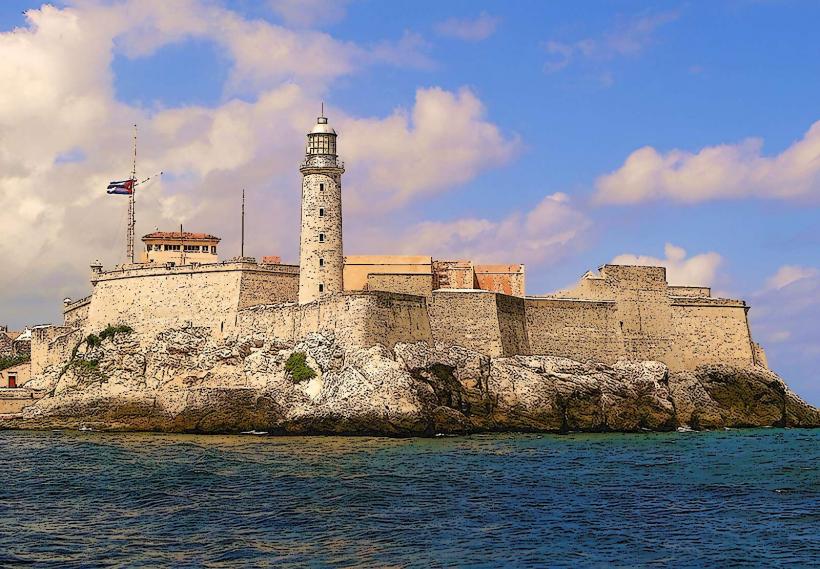
- Castillo del Morro (1.5km Southeast)
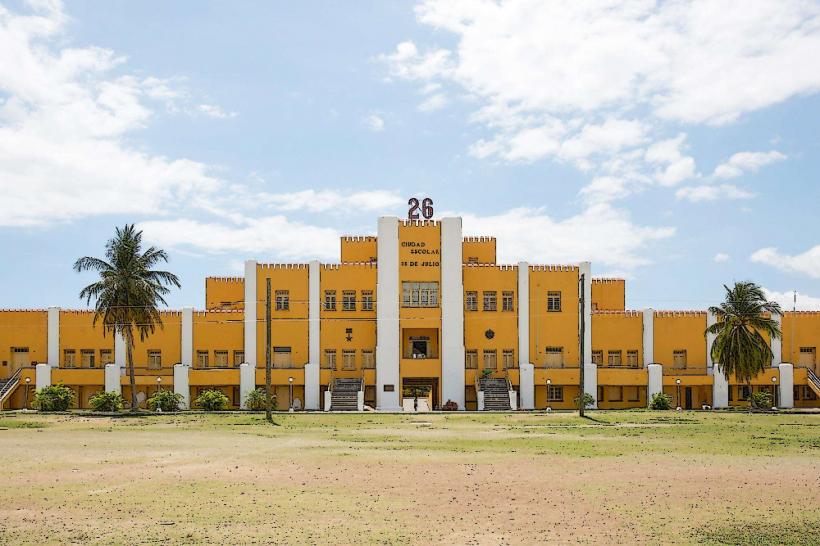
- Museo Histórico 26 de Julio (3.0km East)
- Parque de las Enramadas (4.5km East)
- Catedral de Santiago de Cuba (4.8km East)