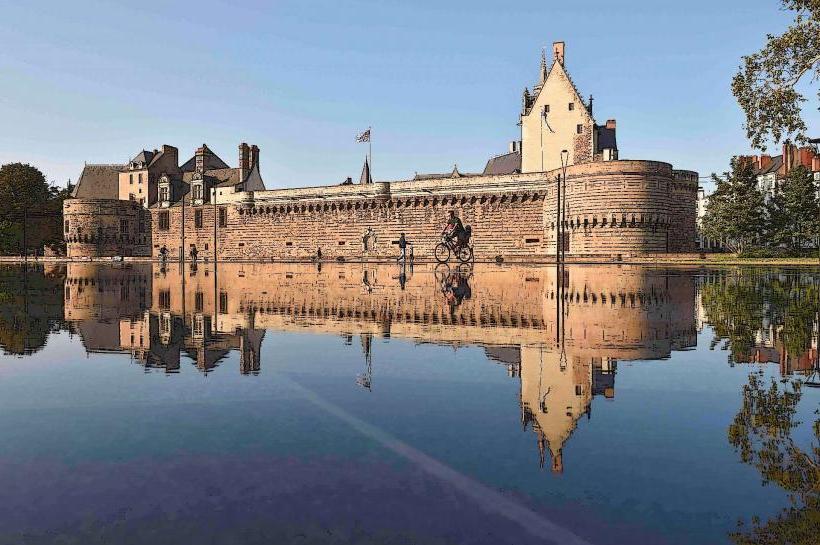
Landmark: Chateau des Ducs de Bretagne
City: Nantes
Country: France
Continent: Europe
Chateau des Ducs de Bretagne, Nantes, France, Europe
The Château des Ducs de Bretagne (Castle of the Dukes of Brittany) is a medieval-renaissance fortress located in the historic center of Nantes. Built between the 13th and 18th centuries, it served as the primary residence of the Dukes of Brittany before the duchy’s integration into the Kingdom of France.
Visual Characteristics
The structure is defined by the contrast between its defensive exterior and residential interior. The outer perimeter consists of a massive granite and slate fortress wall with seven towers and a moat. Inside, the Grand Logis features a refined white limestone (tuffeau) facade in the Flamboyant Gothic and Renaissance styles, characterized by ornate loggias and sculpted dormer windows.
Location & Access Logistics
Address: 4 Place Marc Elder, 44000 Nantes.
Public Transit: Directly served by Tram Line 1 at the "Duchesse Anne-Château" station.
Access: Entry to the courtyard, the ramparts, and the moat gardens is free. Entrance to the Nantes History Museum and temporary exhibitions located inside the palace requires a ticket.
Hours: Ramparts and courtyard open daily 08:30–19:00 (winter) or 20:00 (summer). The museum is closed on Mondays.
Historical & Ecological Origin
The current fortress was largely commissioned by Francis II, the last Duke of Brittany, and completed by his daughter, Anne of Brittany, twice Queen of France. The site was strategically positioned on the banks of the Loire (the river was diverted in the 20th century) to control trade and defend the Breton border. In 1862, it was classified as a Monument Historique.
Key Highlights & Activities
Nantes History Museum: 32 rooms detailing the city's evolution, including its role in the Atlantic slave trade and the industrial revolution.
The Rampart Walk: A 500-meter circuit atop the walls offering panoramic views of the city and the nearby Lieu Unique.
The Slide: A modern artistic installation (part of Le Voyage à Nantes) attached to the exterior wall that allows visitors to slide down into the dry moat.
Grand Logis: The ducal residence housing the main museum collections and showcasing 15th-century royal architecture.
Infrastructure & Amenities
The site includes a bookstore-gift shop and a restaurant/crêperie (La Fraiseraie) located within the courtyard. The museum is fully accessible via elevators. Public restrooms are available near the reception area. 5G signal is robust throughout the central district.
Best Time to Visit
Evening visits are recommended to view the fortress under architectural floodlighting. For museum exploration, weekday mornings are optimal to avoid school groups.
Facts & Legends
The Edict of Nantes, which granted religious freedoms to Protestants, was signed here by King Henry IV in 1598. A technical fact: the fortress was one of the last "water castles" in France before the 1930s urban projects filled in the neighboring branches of the Loire.
Nearby Landmarks
Cathédrale Saint-Pierre-et-Saint-Paul – 0.2km North
Le Lieu Unique (former LU factory) – 0.3km Southeast
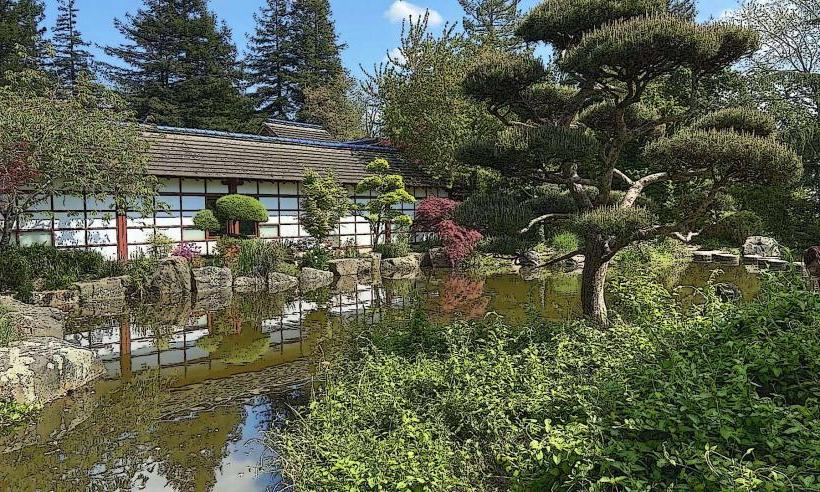
Jardin des Plantes – 0.4km East
Machines de l’Île – 1.5km West (via Tram Line 1)
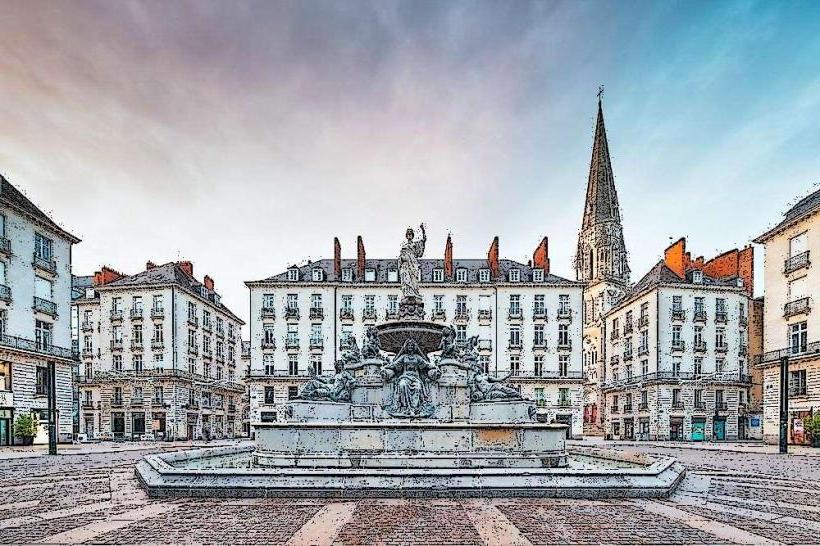
Place Royale – 0.7km West