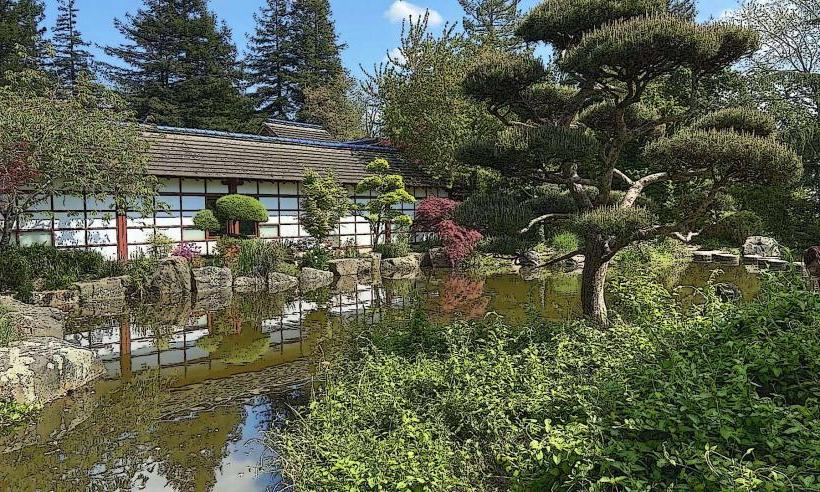
Landmark: Vannes Old Town
City: Nantes
Country: France
Continent: Europe
Vannes Old Town, Nantes, France, Europe
The Vannes Old Town (Vieille Ville) is the historic center of the city of Vannes, located in the Morbihan department of Brittany. While frequently visited by travelers from Nantes, it is situated approximately 110 kilometers northwest of Nantes (roughly a 1 hour 15 minute drive).
Visual Characteristics
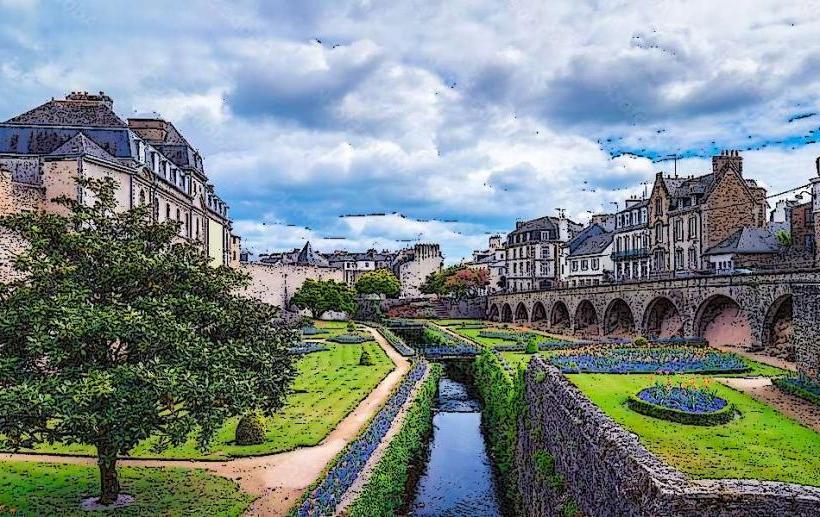
The district is defined by its exceptionally well-preserved medieval and Renaissance architecture. It features over 170 timber-framed houses (maisons à pans de bois) painted in vibrant colors, particularly around the Place Henri-IV. The area is enclosed by massive granite defensive walls (remparts) and features manicured French-style gardens at their base, following the course of the Marle River.
Location & Access Logistics
Address: Centre-Ville, 56000 Vannes.
From Nantes: Take the N165 expressway toward Vannes/Lorient. By train, direct TER or TGV services run from Gare de Nantes to Gare de Vannes (approx. 1 hour).
Access: The old town is largely pedestrianized. Entry is typically through historical gates such as the Porte Saint-Vincent.
Parking: Use the Parking des Remparts or Parking Port de Vannes for immediate access to the historic core.
Historical & Ecological Origin
Vannes originated as the Roman city of Darioritum in the 1st century BC. The current old town follows the medieval footprint established when Vannes became the capital of the Dukes of Brittany. The ramparts were constructed between the 3rd and 17th centuries. The town sits at the northern tip of the Gulf of Morbihan, a vast inland sea characterized by a unique microclimate and tidal marshes.
Key Highlights & Activities
Vannes Cathedral (Saint-Pierre): A Gothic cathedral containing the tomb of Saint Vincent Ferrer.
"Vannes and his Wife": A famous 16th-century painted granite sculpture of a smiling couple on the corner of Rue Bienheureux-Pierre-René-Rogue.
The Ramparts Gardens: A 15,000 $m^2$ green space offering the best perspective of the city's fortifications.
La Cohue (Musée des Beaux-Arts): A medieval market hall converted into a fine arts museum.
The Port: A lively marina lined with cafes, located just south of the Porte Saint-Vincent.
Infrastructure & Amenities
The district is densely packed with creperies, artisan boutiques, and traditional Breton shops selling salted-butter caramel and cider. Public restrooms are available at the Place de la République. The terrain consists of uneven cobblestones and some steep inclines, posing moderate challenges for wheelchairs. 5G coverage is excellent throughout the center.
Best Time to Visit
Wednesdays and Saturdays are market days in the Place des Lices, offering the most authentic atmosphere. The Fêtes d'Arvor in mid-August is a major Breton cultural festival featuring traditional costumes and music within the old town walls.
Facts & Legends
A verified historical oddity is that the "Vannes and his Wife" sculpture was likely a 16th-century commercial sign for a local tavern. Local legend suggests that the city’s laundry maids (lavandières) used to communicate secrets across the Marle River, and their wash-houses (lavoirs) can still be seen perfectly preserved at the foot of the ramparts.
Nearby Landmarks
Port de Vannes: 0.1km South
Saint-Pierre Cathedral: 0.2km (Central)
Gulf of Morbihan (Boat Tours): 0.5km South
Jardin des Remparts: 0.1km East
Château de l'Hermine: 0.2km East