Landmark: Chavín de Huantar
City: Huaraz
Country: Peru
Continent: South America
Chavín de Huantar, Huaraz, Peru, South America
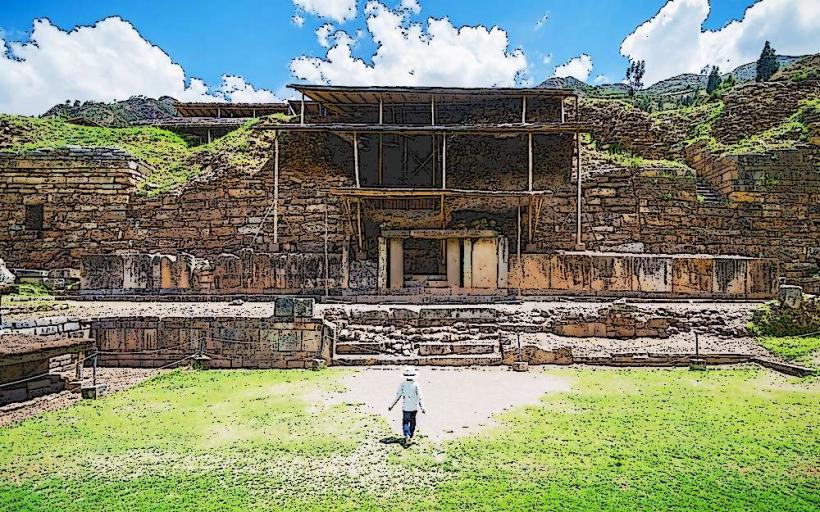
Chavín de Huantar is an archaeological complex located in the Ancash Region of Peru, approximately 3,000 meters above sea level.
Visual Characteristics
The complex is constructed primarily from granite and sandstone. Key structures include the Old Temple and the New Temple, characterized by their stepped platforms and internal galleries. The site features carved stone stelae, obelisks, and lintels depicting zoomorphic and anthropomorphic figures. Notable elements include the Lanzón monolith and the Raimondi stela. The overall color palette is dominated by the natural grey and beige tones of the stone.
Location & Access Logistics
Chavín de Huantar is situated 108 kilometers southeast of Huaraz. Access is via the Huaraz-Chacas-Chavín de Huantar highway (PE-16). The journey from Huaraz typically takes 3 to 4 hours by car or bus. Public transport options include interprovincial buses departing from Huaraz to Chavín. Parking is available at the site entrance. The nearest major airport is in Lima, from which travelers can take a bus or domestic flight to Huaraz.
Historical & Ecological Origin
Chavín de Huantar was the ceremonial and administrative center of the Chavín culture, which flourished between 900 BCE and 200 BCE. The site's construction began around 1000 BCE. It served as a major religious pilgrimage site and a hub for cultural exchange in the Andean highlands. The complex is situated in a valley where the Mosna and Huachecsa rivers converge.
Key Highlights & Activities
Exploration of the internal galleries and chambers, including the main gallery housing the Lanzón monolith. Observation of the carved stone artwork, such as the heads on the Old Temple's walls. Viewing the convergence of the Mosna and Huachecsa rivers. Participation in guided tours that explain the site's history and architecture. Observing the water channels and acoustic features within the complex.
Infrastructure & Amenities
Restrooms are available at the visitor center. Limited shade is present within the excavated galleries. Cell phone signal is generally weak or absent within the archaeological site itself, though it may be available in the nearby town. Food vendors and small restaurants are located in the town of Chavín de Huantar, adjacent to the archaeological complex.
Best Time to Visit
The dry season, from May to October, offers the most favorable weather conditions with less rainfall. Mornings, between 9:00 AM and 11:00 AM, provide good lighting for photography of the stone carvings. The site is accessible year-round, but road conditions can be affected by heavy rains outside the dry season.
Facts & Legends
The Lanzón monolith, a 4.53-meter-tall carved granite blade, is believed to represent a supreme deity or oracle. Legends suggest that the complex's underground passages were designed to disorient pilgrims and enhance the mystical experience. The Chavín culture is credited with developing sophisticated agricultural techniques and early forms of metallurgy.
Nearby Landmarks
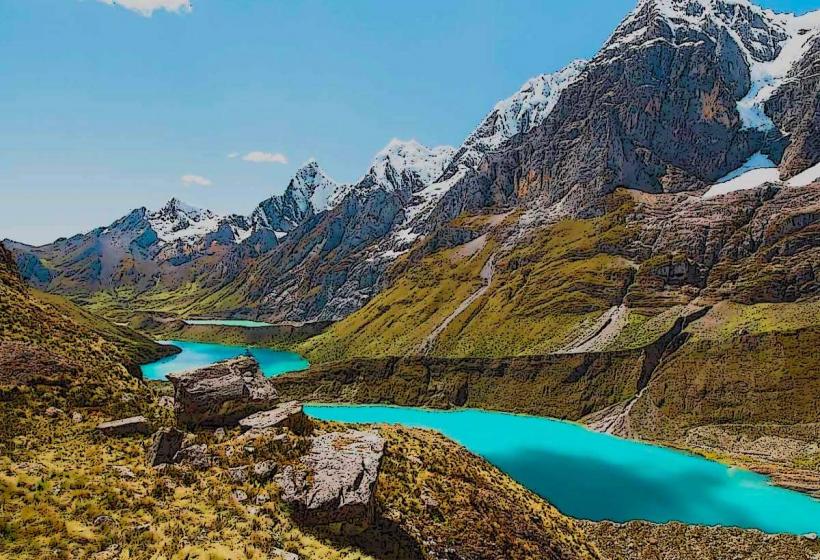
- Laguna 69 (45km Northwest)
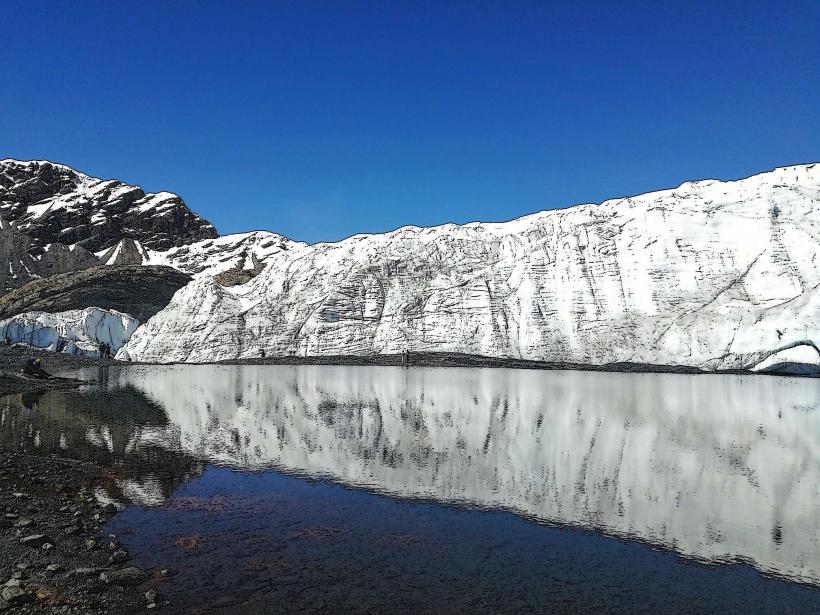
- Pastoruri Glacier (60km Northwest)
- Huaraz City Center (108km Northwest)
- Wilcahuain Archaeological Site (115km Northwest)
- Pueblo de Huari (30km Southeast)