Landmark: Coroa Crater
City: Ribeira Grande
Country: Cabo Verde
Continent: Africa
Coroa Crater, Ribeira Grande, Cabo Verde, Africa
Coroa Crater is a volcanic formation located on the island of São Miguel in the Azores archipelago, Portugal. It is situated within the municipality of Ribeira Grande.
Visual Characteristics
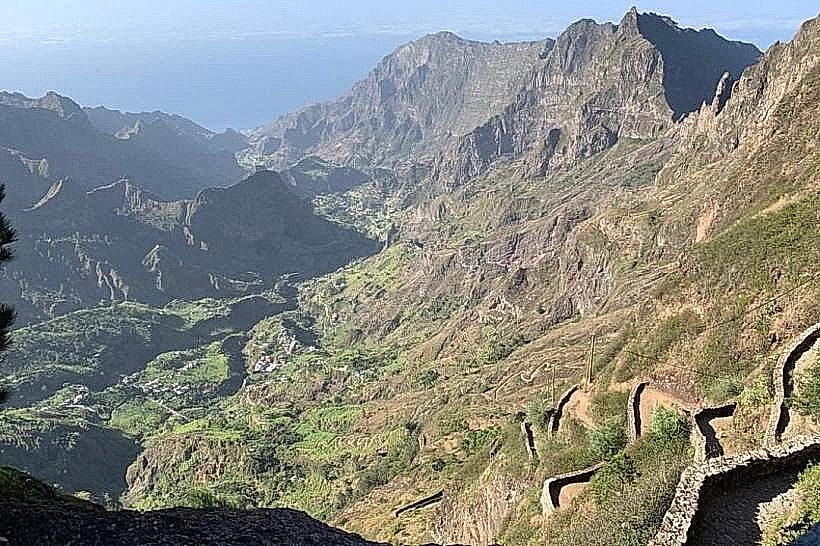
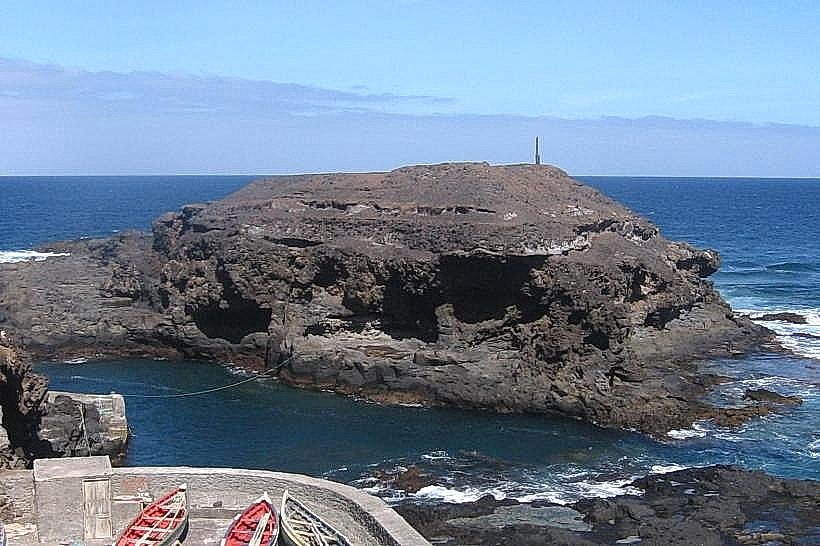
The crater rim is composed of dark, vesicular basalt. The interior of the crater is a depression, often filled with vegetation, primarily grasses and low shrubs. The outer slopes are characterized by volcanic ash and scoria. The overall shape is roughly circular with a diameter of approximately 500 meters.
Location & Access Logistics
Coroa Crater is located 3 kilometers southwest of the city center of Ribeira Grande. Access is via the Regional Road EN1-1A, turning onto the local road leading towards the crater. Parking is available at a designated pull-off area at the base of the crater's eastern slope. Public transport options are limited; bus line 7 from Ribeira Grande stops approximately 1.5 kilometers from the crater, requiring a walk.
Historical & Ecological Origin
Coroa Crater is a scoria cone, a type of volcanic cone produced by the eruption of pyroclastic material. It is part of the Sete Cidades volcanic complex, formed by basaltic eruptions. The precise date of its formation is not definitively recorded but is considered geologically recent within the complex's history.
Key Highlights & Activities
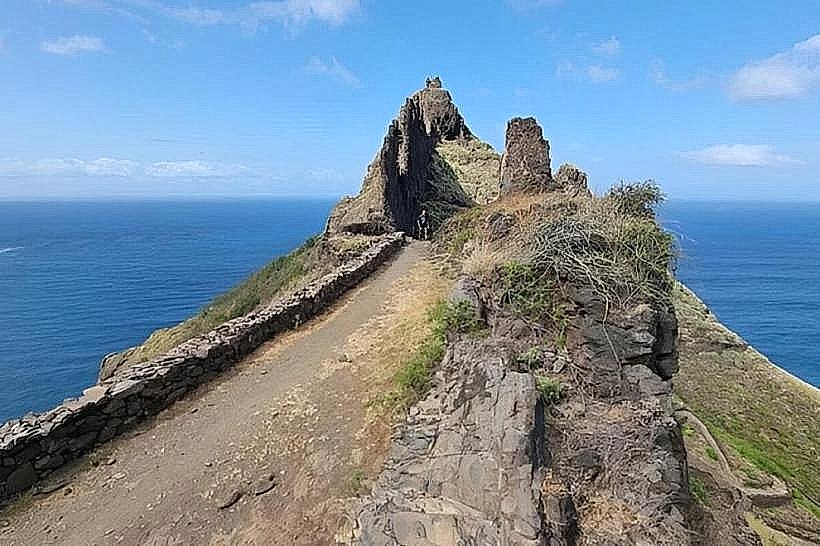
Hiking to the crater rim is the primary activity. A marked trail ascends the eastern slope. Observation of the crater's internal structure and surrounding volcanic landscape is possible from the rim. Birdwatching is also a potential activity due to the local flora.
Infrastructure & Amenities
There are no permanent structures or amenities at Coroa Crater. Restrooms are not available. Shade is minimal, primarily provided by sparse vegetation on the slopes. Cell phone signal (4G/5G) is generally available at the parking area and along the access road, but may be intermittent on the crater slopes.
Best Time to Visit
The best time of day for photography is late afternoon, when the sun casts shadows that define the crater's topography. The months of May through September offer the most stable weather conditions with lower rainfall. There are no tidal considerations.
Facts & Legends
Local folklore suggests that the crater was formed by a giant's footprint. Geologically, it is a classic example of a monogenetic volcano, meaning it erupted only once.
Nearby Landmarks
- Miradouro da Lagoa do Fogo (4.5km Northwest)
- Ribeira Grande City Center (3km Northeast)
- Caldeira Velha Natural Monument (2.8km Southeast)
- Salto do Cabrito Waterfall (3.2km East)