Landmark: Cristo Rei de Lubango (Christ the King Statue)
City: Lubango
Country: Angola
Continent: Africa
Cristo Rei de Lubango (Christ the King Statue), Lubango, Angola, Africa
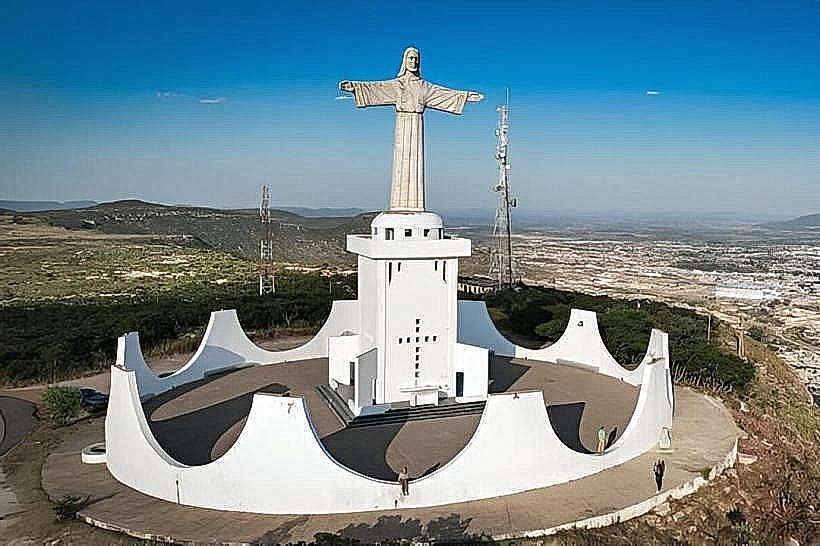
The Cristo Rei de Lubango is a large statue of Jesus Christ situated on a prominent hill overlooking the city of Lubango, Angola.
Visual Characteristics
The statue stands 30 meters tall, constructed from reinforced concrete and clad in white ceramic tiles. It depicts Jesus Christ with arms outstretched. The statue is mounted on a pedestal that measures 10 meters in height. The overall structure is situated at an elevation of 1,800 meters above sea level.
Location & Access Logistics
The statue is located approximately 5 kilometers west of Lubango's city center. Access is via the N100 national road, turning onto a paved access road leading directly to the site. Ample parking is available at the base of the monument. Public transport options to the vicinity include local taxis and shared minibuses (candongueiros) that service the route towards the statue's access road.
Historical & Ecological Origin
Construction of the Cristo Rei statue began in 1958 and was completed in 1960. It was designed by Portuguese architect Francisco Franco de Sousa. The original purpose was to serve as a religious monument and a symbol of peace. The site itself is a granite outcrop, part of the Huíla Plateau.
Key Highlights & Activities
Visitors can ascend to the base of the statue for panoramic views of Lubango and the surrounding landscape. Observation decks are accessible. Photography of the statue and the cityscape is a primary activity. The site is suitable for quiet contemplation.
Infrastructure & Amenities
Restrooms are available at the base of the monument. Limited shade is provided by the statue itself and a few strategically placed trees. Cell phone signal (4G) is generally reliable at the site. No on-site food vendors are present, but small establishments are located in the nearby town.
Best Time to Visit
The best time of day for photography is in the late afternoon, approximately 16:00 to 18:00, when the sun is lower and casts longer shadows, illuminating the statue from the west. The dry season, from May to September, offers clearer skies and more comfortable temperatures for visiting.
Facts & Legends
A local anecdote suggests that during construction, a rare species of bird was observed nesting near the site, which was interpreted by some as a sign of divine approval for the monument.
Nearby Landmarks
- Serra da Leba (15km Northwest)
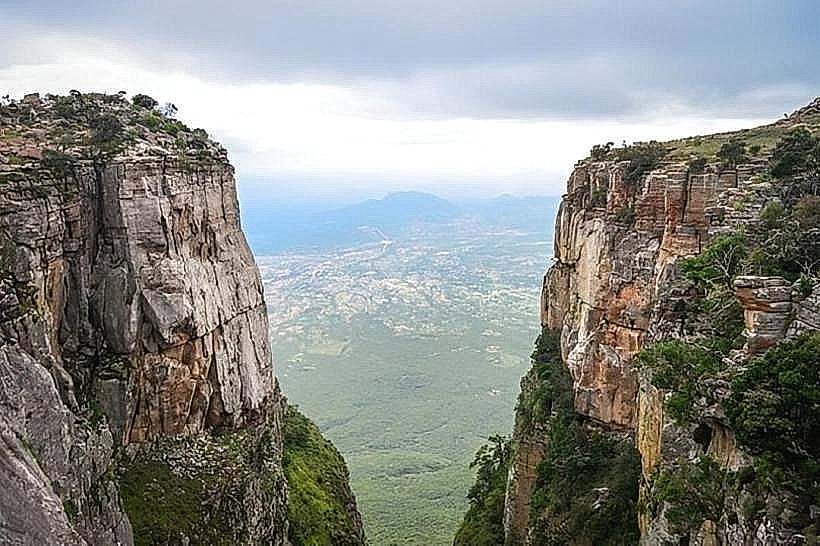
- Tundavala Fissure (20km West)
- Lubango Cathedral (5km East)
- Old Lubango Railway Station (6km East)