Landmark: Dambulla Cave Temple
City: Dambulla
Country: Sri Lanka
Continent: Asia
Dambulla Cave Temple, Dambulla, Sri Lanka, Asia
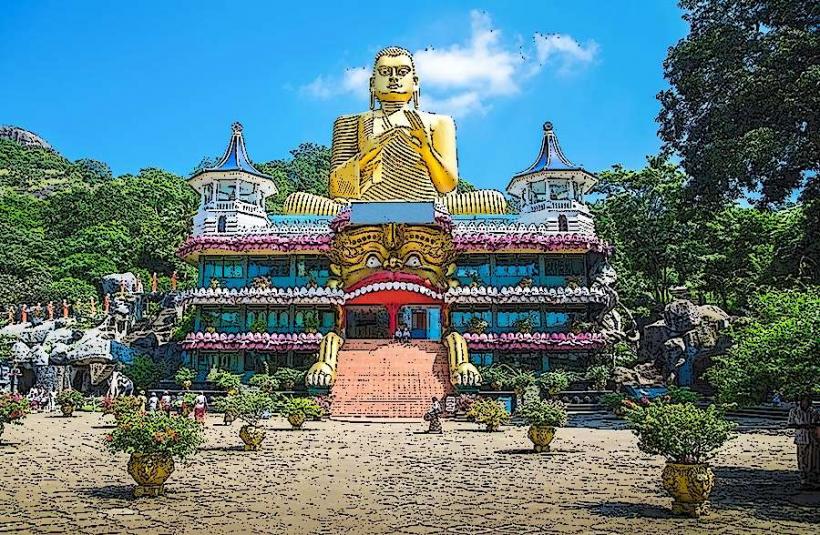
The Dambulla Cave Temple is a Buddhist temple complex located in the central part of Sri Lanka, near the city of Dambulla.
Visual Characteristics
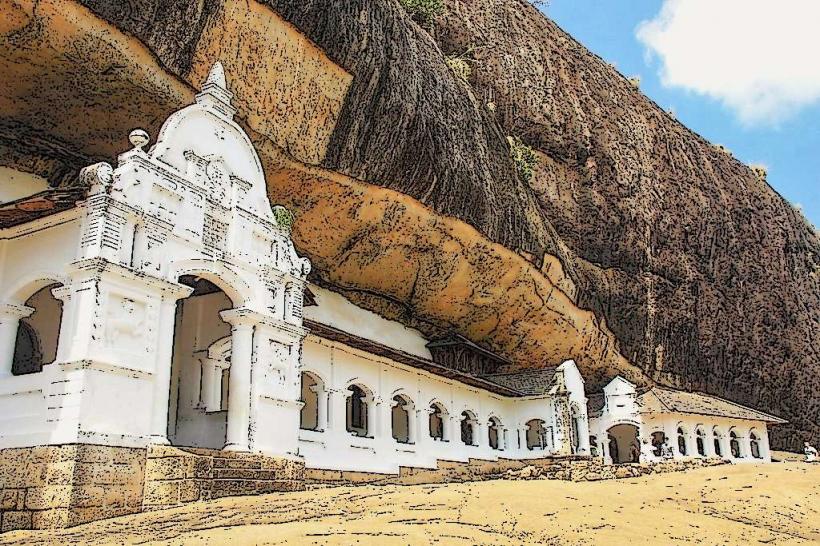
The complex consists of five main caves carved into a rock face. The cave interiors are adorned with approximately 150 Buddha statues of varying sizes and poses, as well as murals depicting scenes from Buddhist mythology and the life of Buddha. The rock itself is granite, with the caves opening outwards. The largest cave measures approximately 52 meters long and 16 meters high.
Location & Access Logistics
The Dambulla Cave Temple is situated approximately 160 kilometers northeast of Colombo. Access is via the A6 highway. From the city of Dambulla, the temple is approximately 4 kilometers to the south. Parking is available at the base of the rock. Public bus services operate frequently between Dambulla town and the temple entrance. The climb to the caves involves a series of stone steps, approximately 300 in number.
Historical & Ecological Origin
The caves were first inhabited by monks in the 3rd century BCE. The current structures and extensive artwork date primarily from the 1st century BCE to the 18th century CE. King Valagamba is credited with converting the caves into a temple in the 1st century BCE. The rock formation is part of the Sri Lankan highlands, composed of metamorphic rock.
Key Highlights & Activities
Exploration of the five main caves: Cave of the Divine King, Cave of the Great Kings, Great New Monastery, Western Temple, and the Monk's Cave. Observation of the Buddha statues and the detailed wall paintings. Walking the pathways connecting the caves.
Infrastructure & Amenities
Restrooms are available at the base of the rock. Limited shaded areas are present along the pathways. Cell phone signal (4G) is generally available. Food vendors and small shops are located at the base of the temple complex.
Best Time to Visit
The best time of day for photography is generally in the morning or late afternoon to avoid harsh overhead light. The dry season, from December to March, offers the most favorable weather conditions. No specific tide requirements apply.
Facts & Legends
Legend states that King Valagamba, fleeing from South Indian invaders, hid in these caves and vowed to build temples if he regained his throne. The largest statue in the temple, a reclining Buddha, is carved directly from the rock and measures 15 meters in length.
Nearby Landmarks
- Sigiriya Rock Fortress: 18km Northeast
- Pidurangala Rock: 19km Northeast
- Ancient City of Polonnaruwa: 70km East
- Kaudulla National Park: 45km Northeast
- Minneriya National Park: 40km Northeast