Landmark: Golden Temple of Dambulla
City: Dambulla
Country: Sri Lanka
Continent: Asia
Golden Temple of Dambulla, Dambulla, Sri Lanka, Asia
The Golden Temple of Dambulla, also known as the Dambulla Royal Cave Temple and Golden Temple, is a UNESCO World Heritage Site located in the central part of Sri Lanka, near the city of Dambulla.
Visual Characteristics
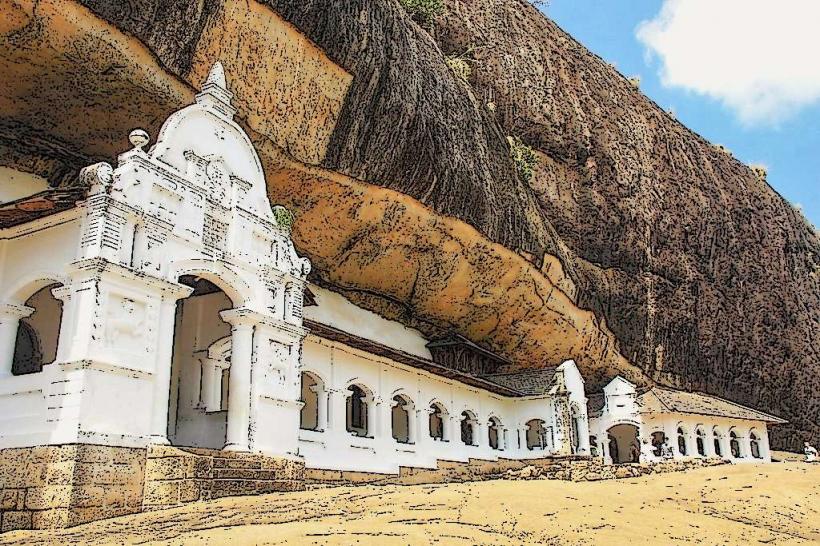
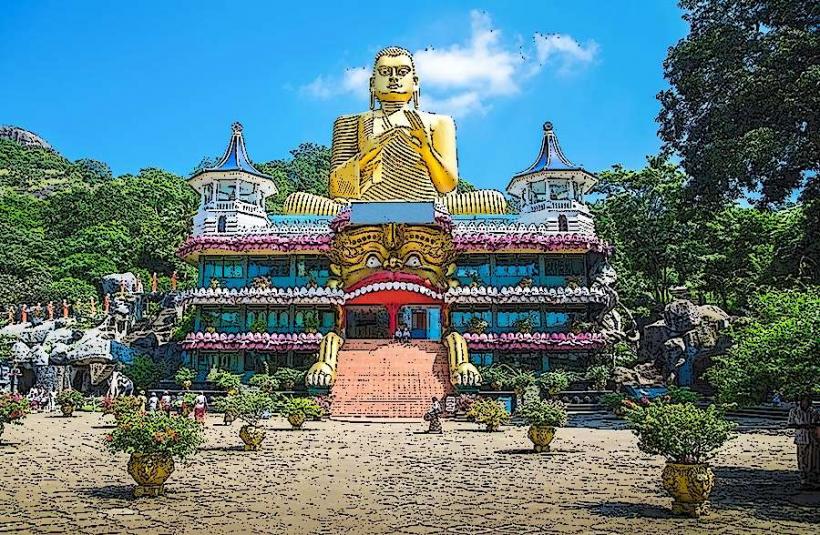
The complex consists of five main cave shrines carved into a large rock outcrop. The facades of the caves are adorned with intricate frescoes and large Buddha statues. The largest statue, a reclining Buddha, measures 15 meters (49 feet) in length. The rock itself is composed of gneiss and quartz. The exterior of the main temple structure, built at the base of the rock, features a gilded roof and walls decorated with Buddhist motifs.
Location & Access Logistics
The site is situated approximately 22 kilometers (14 miles) south of the city of Dambulla. Access is via the A6 highway. From the highway, follow local signage to the temple entrance. Parking is available at the base of the rock. Public bus services operate frequently along the A6, with stops near the temple. The climb to the caves involves approximately 300 steps.
Historical & Ecological Origin
The caves were first used as a refuge by King Valagamba of Anuradhapura in the 1st century BCE. He later converted them into a monastery. The frescoes and statues were added and modified over centuries, with significant contributions during the Kandyan period (18th century). The rock formation is a result of geological weathering and erosion over millions of years.
Key Highlights & Activities
Exploration of the five cave shrines: Cave of the Devas, Cave of the Great Kings, Great New Monastery, Cave of the Second Great King, and the Temple of the Last Buddha. Observation of the wall paintings and numerous Buddha statues. Photography of the architectural elements and surrounding landscape from the upper levels.
Infrastructure & Amenities
Restrooms are available at the base of the rock. Limited shaded areas are present along the pathway and within the cave entrances. Cell phone signal (4G/5G) is generally available. Food vendors and small shops are located at the base of the temple complex.
Best Time to Visit
For optimal lighting on the frescoes, visit in the morning between 9:00 AM and 11:00 AM, or in the late afternoon between 3:00 PM and 5:00 PM. The dry season, from December to March, offers the most favorable weather conditions. The site is accessible year-round.
Facts & Legends
Legend states that King Valagamba, after being exiled for 14 years, took refuge in these caves. Upon reclaiming his throne, he commissioned the conversion of the caves into Buddhist shrines as a gesture of gratitude. A specific detail to note is the presence of a natural pool of water within the largest cave, which is said to never dry up.
Nearby Landmarks
- Sigiriya Rock Fortress: 15km Northwest
- Pidurangala Rock: 16km Northwest
- Ancient City of Polonnaruwa: 60km Northeast
- Kaudulla National Park: 35km North
- Minneriya National Park: 30km North