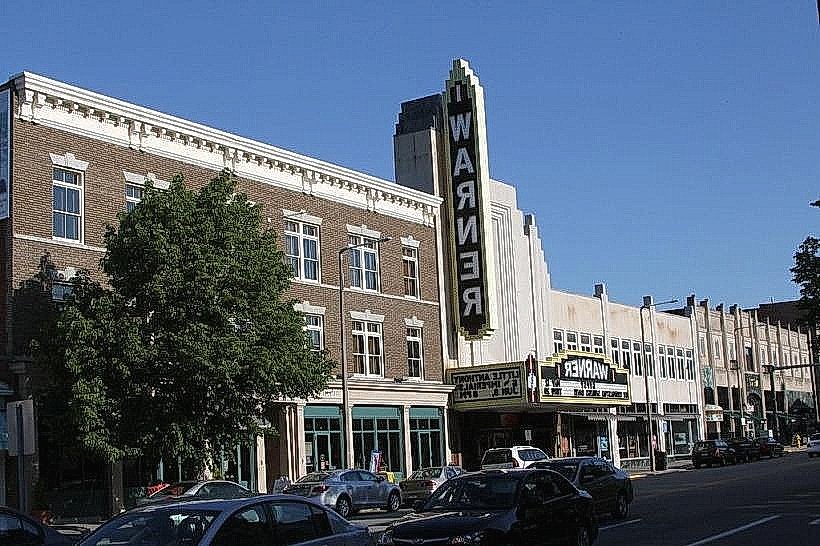
Landmark: East Elm Street Historic District
City: Torrington
Country: USA Connecticut
Continent: North America
East Elm Street Historic District, Torrington, USA Connecticut, North America
The East Elm Street Historic District is a designated area in Torrington, Connecticut, USA, preserving a collection of late 19th and early 20th-century residential architecture.
This district encompasses a specific section of Torrington characterized by its well-preserved homes from a particular era.
Visual Characteristics
The district features primarily wood-frame residential structures, many of which are two or three stories in height. Architectural styles represented include Queen Anne, Colonial Revival, and Shingle Style. Exterior colors range from muted earth tones to brighter pastels. Many homes retain original features such as decorative trim, porches, and dormer windows. Mature trees line the street, providing canopy cover.
Location & Access Logistics
The East Elm Street Historic District is located approximately 1.5 kilometers (0.9 miles) southwest of Torrington's central business district. Access is via Elm Street, which intersects with Main Street (US Route 202). Limited on-street parking is available along Elm Street and adjacent residential streets. Public transport options are limited; the nearest bus stops are located on Main Street, requiring a walk of approximately 15-20 minutes to reach the district.
Historical & Ecological Origin
The district developed primarily between 1880 and 1930, reflecting the growth of Torrington as an industrial center. The homes were constructed for the city's professional and business class. Architects and builders of the period, such as George A. Brown and Walter B. Chamberlin, are associated with some of the properties. The area's ecological origin is typical of the Litchfield Hills region, characterized by glacial till soils and deciduous forestation.
Key Highlights & Activities
Walking tours focusing on architectural styles are self-guided. Photography of the residential exteriors is permitted. Observing the variety of architectural details and landscape design is the primary activity.
Infrastructure & Amenities
Restrooms are not available within the district itself; visitors should utilize facilities in downtown Torrington. Shade is provided by mature trees. Cell phone signal (4G/5G) is generally consistent. Food vendors are not present within the district; dining options are located in the nearby downtown area.
Best Time to Visit
For optimal photography lighting, early morning (7:00 AM - 9:00 AM) or late afternoon (4:00 PM - 6:00 PM) is recommended, particularly during spring and fall when foliage is less dense or displays color. The months of May through October offer the most pleasant weather for walking.
Facts & Legends
One notable residence, the former home of industrialist William B. Thomson, is rumored to have hosted notable figures of the early 20th century, though specific verifiable records are scarce. A local anecdote suggests that the street's mature oak trees were planted in a specific sequence to align with astronomical events, a claim lacking definitive historical proof.
Nearby Landmarks
- Torrington Historical Society Museum (0.8km Northeast)
- Warner Theatre (1.2km Northeast)
- Cooley Street Historic District (1.8km East)
- Northwest Connecticut Arts Council (1.3km Northeast)
- Barlow's Pond (3.5km West)