Landmark: Fossil Sites
City: Merzouga
Country: Morocco
Continent: Africa
Fossil Sites, Merzouga, Morocco, Africa
The Fossil Sites of Merzouga are geological formations containing ancient marine life remnants, located in the Erg Chebbi region of Morocco.
These sites preserve fossils from the Paleozoic era, primarily from the Devonian period.
Visual Characteristics
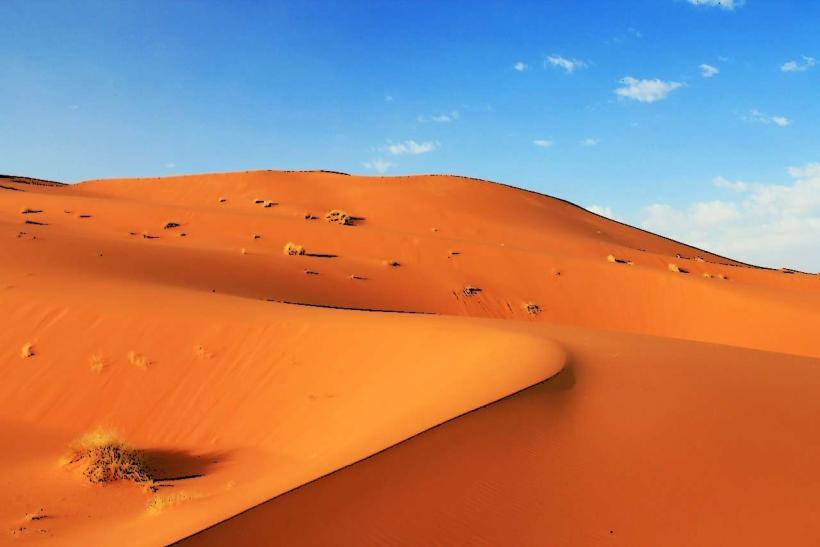
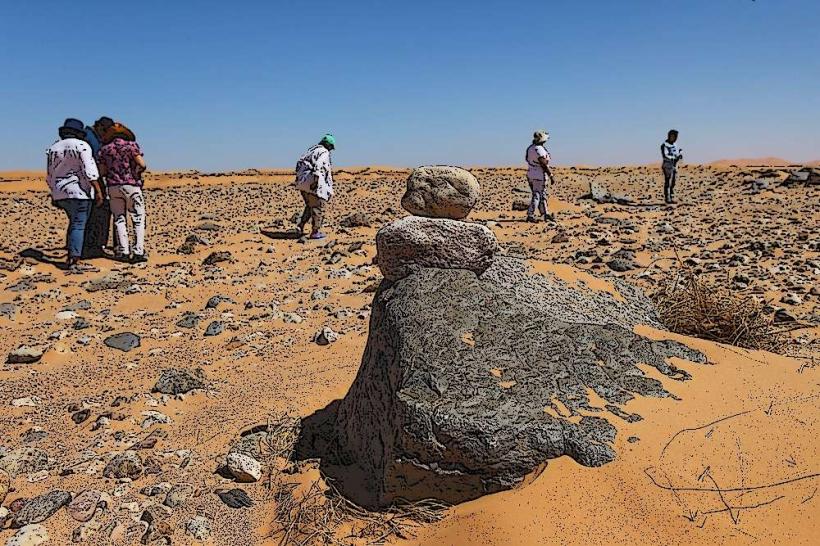
The landscape consists of arid, sandy plains interspersed with exposed rock layers. These rock layers, often appearing as sedimentary strata, contain visible fossilized marine invertebrates such as trilobites, ammonites, and orthoceras. The coloration of the rock varies from ochre and brown to grey, depending on mineral composition. The surrounding terrain is characterized by sand dunes of Erg Chebbi, with sparse desert vegetation.
Location & Access Logistics
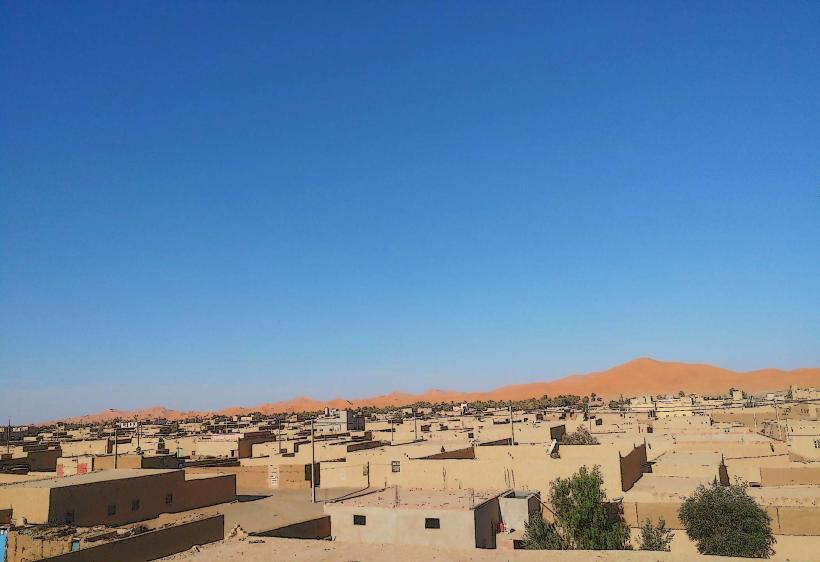
The fossil sites are situated approximately 5 kilometers west of the village of Merzouga. Access is primarily via unpaved desert tracks originating from Merzouga. A 4x4 vehicle is recommended for reaching the more remote fossil beds. Standard vehicles may access areas closer to the village. Parking is available on open ground near the fossil extraction points. Public transport to Merzouga involves buses from major Moroccan cities like Marrakech or Fes, followed by local taxi arrangements.
Historical & Ecological Origin
These fossil deposits originate from a shallow marine environment that existed approximately 360 million years ago during the Devonian period. The area was once part of a large sea that covered much of North Africa. The fossils are preserved within sedimentary rocks formed from accumulated marine sediment. The geological uplift and subsequent erosion of the Atlas Mountains exposed these ancient rock layers.
Key Highlights & Activities
Fossil hunting and collection are the primary activities. Visitors can search for and identify fossilized marine invertebrates. Guided tours are available from Merzouga, often including transportation to specific fossil-rich areas and assistance with identification. Some local guides offer basic excavation techniques. Photography of the fossil specimens and the desert landscape is also common.
Infrastructure & Amenities
Basic amenities are limited at the fossil sites themselves. There are no permanent structures, restrooms, or shade. Visitors should carry their own water and sun protection. Cell phone signal (4G/5G) is generally unreliable in this remote desert location. Food vendors are not present at the sites; provisions should be obtained in Merzouga village.
Best Time to Visit
The optimal time for visiting is during the cooler months, from October to April. Mornings and late afternoons offer softer lighting conditions for photography, avoiding the harsh midday sun. The best time of day is generally between 8:00 AM and 11:00 AM, and again from 3:00 PM to 6:00 PM. There are no tidal considerations as the sites are inland.
Facts & Legends
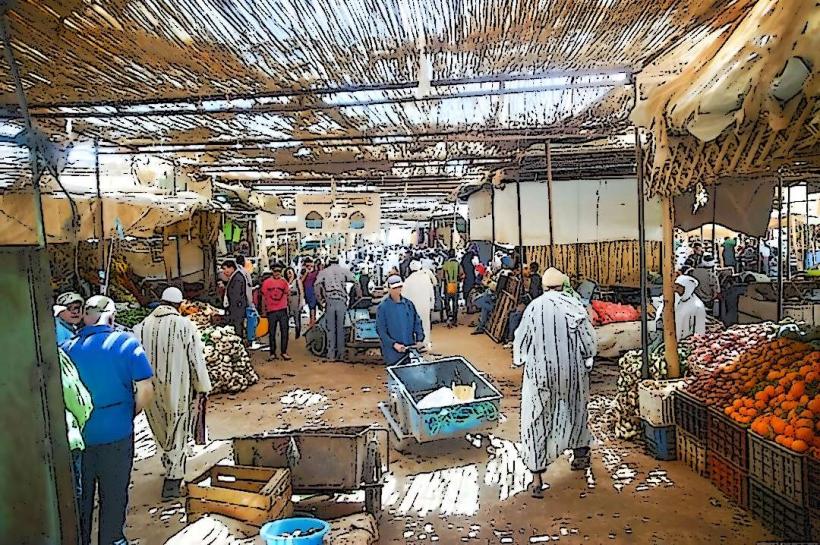
A common practice among local fossil collectors is to polish larger specimens, such as ammonites, to reveal intricate internal structures and patterns. These polished fossils are then often sold in local markets. It is a local tradition to leave smaller, less significant fossil fragments in situ for others to discover.
Nearby Landmarks
- Erg Chebbi Dunes (0.5km East)
- Merzouga Village (5km East)
- Ksar Ghoul (10km South)
- Todra Gorge (70km Northwest)
- Dades Valley (100km Northwest)