Information
Landmark: Green Sand Beach (Papakolea)City: Kailua Kona
Country: USA Hawaii
Continent: North America
Green Sand Beach (Papakolea), Kailua Kona, USA Hawaii, North America
Papakōlea Beach, also known as Green Sand Beach, is a geological formation located on the southern tip of the island of Hawaiʻi, near Nāʻalehu.
Visual Characteristics
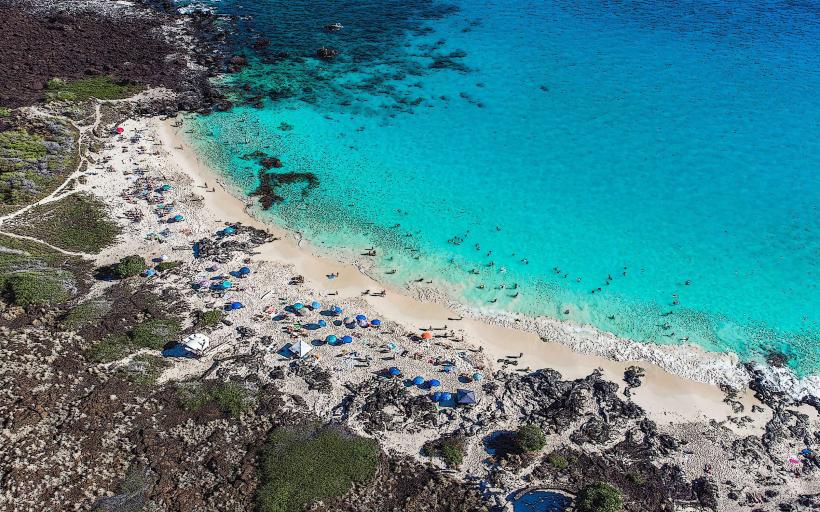
The beach is characterized by its distinct green sand, derived from olivine crystals eroded from the surrounding cinder cone. The sand exhibits a coarse, granular texture. The shoreline is approximately 0.5 kilometers long. The water color is typically a deep blue, contrasting with the green sand. The beach is situated at the base of a cinder cone, with steep, eroded cliffs surrounding the cove.
Location & Access Logistics
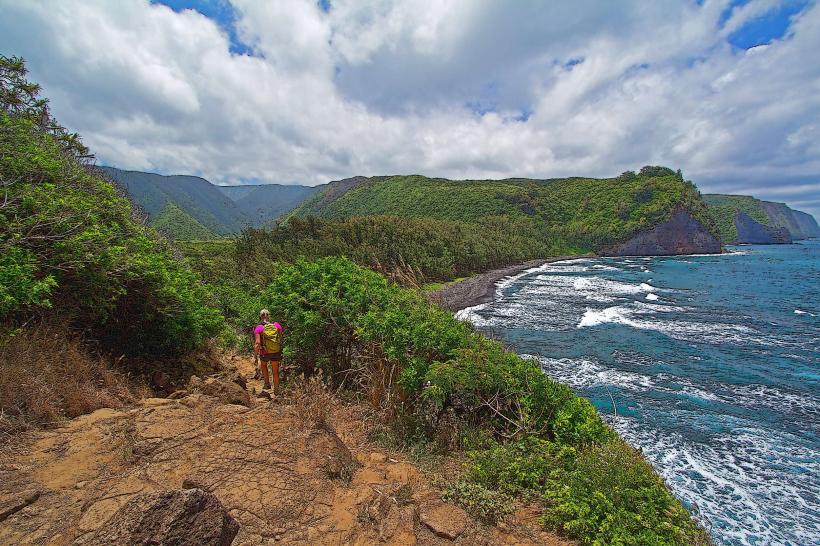
Papakōlea Beach is located approximately 50 kilometers southwest of Kailua-Kona. Access requires a 4-mile (6.4 km) hike each way from the nearest parking area off State Highway 11. The trail is unpaved and crosses rough terrain. No public transportation services reach the beach directly. Parking is available at a designated lot near the trailhead. The hike is considered strenuous due to elevation changes and uneven ground.
Historical & Ecological Origin
The green sand is a result of the erosion of Puʻu Mahana, a cinder cone that formed approximately 50,000 years ago. Olivine, a mineral rich in magnesium and iron, is abundant in the lava rock of Puʻu Mahana. As the cone erodes, these olivine crystals are washed down to the beach, giving it its unique color. Papakōlea is one of the few green sand beaches in the world.
Key Highlights & Activities
Observation of the green sand formation. Swimming is possible, but conditions can be rough due to open ocean exposure. Exploration of the surrounding cinder cone is permitted. Photography of the unique geological features.
Infrastructure & Amenities
There are no developed facilities at Papakōlea Beach. Restrooms, shade structures, food vendors, and cell phone signal are absent. Visitors should bring all necessary supplies, including water and sun protection.
Best Time to Visit
The best time for photography is during the morning or late afternoon when the sun angle provides optimal lighting on the green sand. The months of April through September generally offer drier weather. High tide can affect the visibility of the sand. The hike is best undertaken during cooler parts of the day, early morning or late afternoon, to avoid peak heat.
Facts & Legends
Legend states that the goddess Pele, the volcano deity, resides in the cinder cone and has forbidden people from taking the olivine crystals. It is believed that taking the crystals will bring bad luck. Verified geological data confirms the olivine composition as the source of the green color.
Nearby Landmarks
- Ka Lae (South Point): 1.5km Southwest
- Hōnaunau National Historical Park: 35km Northwest
- Punaluʻu Black Sand Beach: 25km Northeast
- Volcanoes National Park (Kīlauea Caldera): 70km Northeast