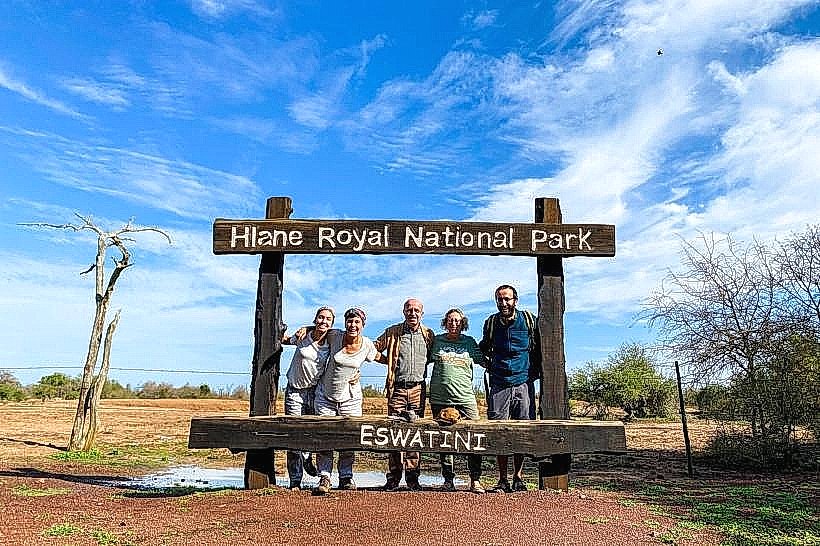
Landmark: Hlane Royal National Park
City: Simunye
Country: Eswatini
Continent: Africa
Hlane Royal National Park, Simunye, Eswatini, Africa
Hlane Royal National Park is Eswatini's largest protected wilderness area, spanning approximately 30,000 hectares of lowveld savannah in the Lubombo Region. Functioning as a flagship conservation area managed by Big Game Parks, the sanctuary holds vast herds of game and serves as the country's primary site for viewing megafauna.
Visual Characteristics
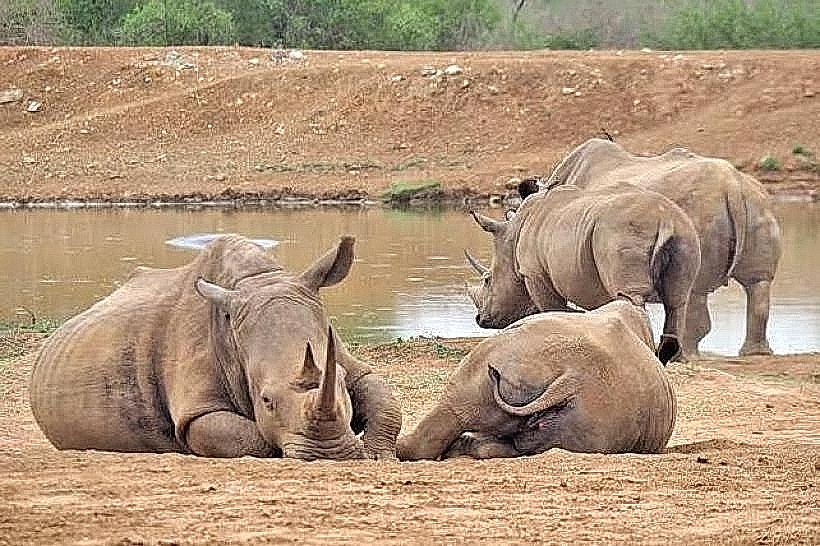
The landscape is characterized by flat, dry hardwood savannah dominated by knobthorn, leadwood, and tambuti trees, interspersed with open grasslands and shallow mud pans. The southern boundary is anchored by Ndlovu Camp, which centers around an un-fenced open waterhole frequently visited by white rhinos, elephants, and hippos. High game-fencing partitions the park into distinct zones-specifically isolating the top predators, such as lions, into managed enclosures to protect surrounding herbivore populations and local livestock.
Location & Access Logistics
The main entrance gate to Ndlovu Camp is located directly off the paved MR3 highway, roughly 4 kilometers south of Simunye and 67 kilometers northeast of Manzini. The park is fully accessible by standard sedan cars via the main highway. Self-drive commuters traveling from Manzini or the Lomahasha/Mozambique border can take any regional bus or kombi running the MR3 route and disembark directly at the park's main entrance gates. While primary internal transit tracks near Ndlovu Camp are navigable by 2WD vehicles during dry weather, navigating the northern tracks toward Bhubesi Camp requires a high-clearance vehicle. Secure parking is provided inside the camp perimeters.
Historical & Ecological Origin
Formerly the private hunting grounds of the Swazi monarchy, the land was officially proclaimed a national park in 1967 under King Sobhuza II to prevent the total extinction of regional wildlife from agricultural encroachment. The name "Hlane" translates to "Wilderness" in siSwati. Ecologically, the park protects a crucial lowveld ecosystem and anchors a regional conservation corridor linked to the adjacent Mlawula and Mbuluzi reserves. It holds Africa’s highest density of nesting white-backed vultures and hosts the southernmost nesting colony of marabou storks.
Key Highlights & Activities
Guided Rhino Trail Walks: Ranger-led tracking expeditions on foot that allow visitors to approach white rhinos at close range outside vehicle enclosures.
Guided Sunset & Lion Game Drives: Open 4x4 Land Rover safaris into the restricted lion enclosure zone, as self-drive vehicles are prohibited in predator sectors.
Self-Drive Game Viewing: Navigating the public 50km dirt loop network around Mahlindza Dam to observe giraffes, zebras, wildebeest, and impalas.
Bird-Watching: Observing over 350 recorded species from hides overlooking key waterholes.
Infrastructure & Amenities
Ndlovu Camp provides an open-air restaurant and a shaded viewing deck directly overlooking the main waterhole. Accommodation includes thatch-roofed self-catering cottages and traditional rondavels. To preserve the wilderness environment, the main camp operates without grid electricity, utilizing paraffin lanterns, solar power, and gas appliances for basic lighting and refrigeration. Public restrooms, braai (barbecue) sites, and a small curio shop are available on site. Mobile network reception is stable across the southern gate area but fades deeper within the bush tracks.
Best Time to Visit
The park gates open daily from sunrise to sunset (06:00 to 18:00). The optimal window for game viewing is during the dry winter season from May to September, when thinning vegetation improves visibility and animals concentrate around permanent waterholes like Mahlindza Dam. Mid-morning (08:30 to 10:30) and late afternoon (15:30 to 17:30) provide optimal lighting for photography around the Ndlovu waterhole. The summer rainy season (November to March) brings lush greenery and migratory birds, though high temperatures (often exceeding 35°C) and muddy tracks can make driving challenging.
Facts & Legends
Hlane remains tied to Swazi royal heritage, with traditional royal hunts (Butimba) historically held on these grounds under the command of the King. A notable conservation achievement of the park was its role in reintroducing white rhinos and lions back into Eswatini after both species were locally eradicated during the early 20th century, re-establishing Big Five territory within the kingdom.
Nearby Landmarks
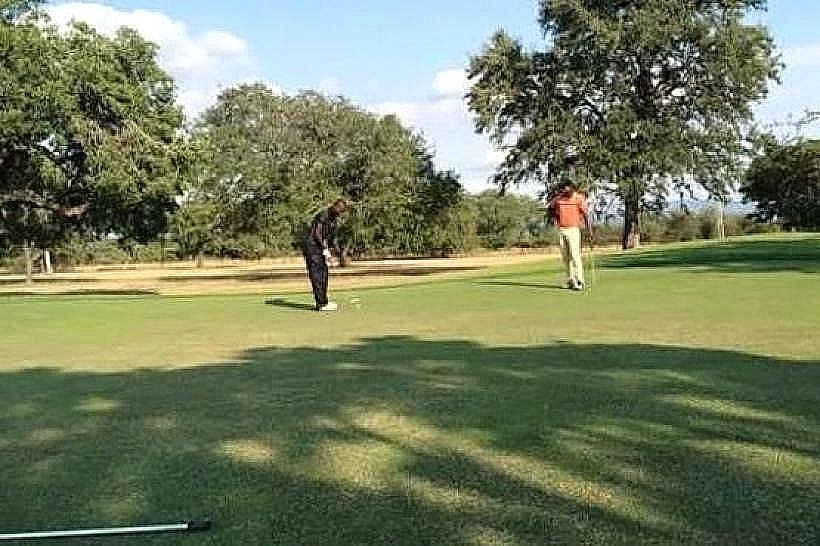
Simunye Country Club: 4.5km North
Mlawula Nature Reserve: 22.0km East
Mbuluzi Game Reserve: 24.0km Northeast
Shewula Mountain Camp: 28.0km Northeast
Manzini Town Center: 67.0km Southwest