Landmark: Indiana Dunes National Park
City: Gary
Country: USA Indiana
Continent: North America
Indiana Dunes National Park, Gary, USA Indiana, North America
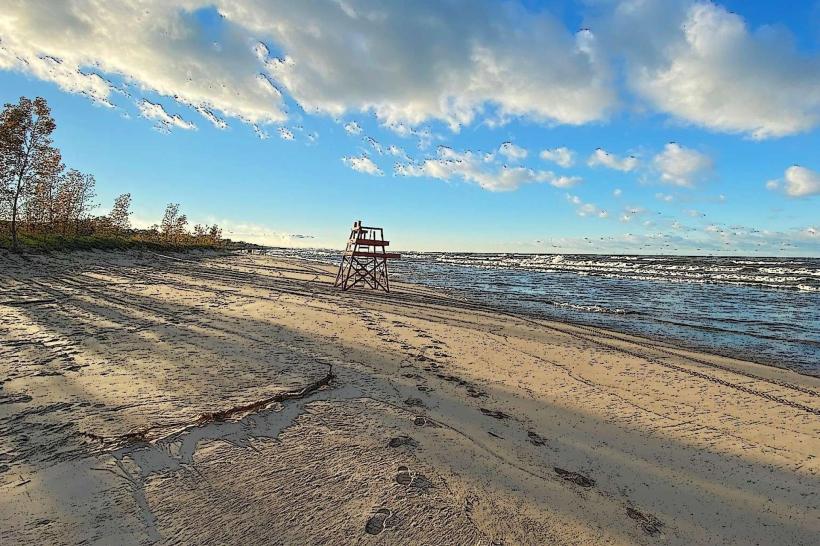
Indiana Dunes National Park is a protected area located along the southern shore of Lake Michigan in northwestern Indiana, USA. It encompasses a diverse landscape of sand dunes, beaches, forests, and wetlands.
Visual Characteristics
The park features extensive sand dunes, some reaching over 200 feet in height, composed of fine, light-colored sand. These dunes transition into oak savannas, deciduous forests, and marshy wetlands. Lake Michigan's shoreline consists of sandy beaches with varying water clarity depending on weather conditions.
Location & Access Logistics
The park is situated approximately 50 miles east of Chicago, accessible via Interstate 90 and Indiana State Road 20. Major entrances are located near the cities of Gary, Portage, and Chesterton. Parking is available at designated lots within the park, with fees often required. Public transportation options are limited; the South Shore Line commuter train stops in nearby towns like Dune Park, requiring a short taxi or rideshare to park entrances.
Historical & Ecological Origin
The dunes are geologically formed from sand blown from the lakebed over thousands of years, shaped by prevailing winds and lake levels. The park was established in 1966 to preserve this unique lacustrine dune environment and its associated ecosystems. The area also holds historical significance related to early industrial development and conservation efforts.
Key Highlights & Activities
Activities include hiking on over 50 miles of trails, such as the 3-Loop Trail at West Beach or the Cowles Bog Trail. Swimming and sunbathing are permitted on the park's beaches. Birdwatching is a popular activity, with over 350 species recorded. Ranger-led programs are offered seasonally. Climbing the larger dunes is permitted in designated areas.
Infrastructure & Amenities
Restrooms are available at major beach access points and visitor centers. Shaded picnic areas are present in several locations. Cell phone signal strength varies significantly throughout the park, with better reception near developed areas. Food vendors are typically located near the main entrances or in adjacent towns; limited concessions may be available seasonally within the park.
Best Time to Visit
For beach activities and swimming, the months of June through August offer the warmest water temperatures. Spring (April-May) and Fall (September-October) provide optimal conditions for hiking and birdwatching due to cooler temperatures and fall foliage. Early morning or late afternoon light is best for photographing the dunes. High tide can reduce beach area; low tide exposes more shoreline.
Facts & Legends
The "Singing Sands" phenomenon, where sand grains emit a squeaking sound when walked upon, can be experienced on some of the drier, steeper dunes. This sound is caused by the friction between uniformly sized sand grains. The park is also home to the rare Pitcher's Thistle, a plant adapted to the harsh dune environment.
Nearby Landmarks
- 3.2km West: Marquette Park (Gary)
- 4.1km Southwest: Gary Aquatorium
- 4.8km Northeast: Indiana Dunes State Park
- 4.9km Southeast: Bailly Homestead National Historic Site