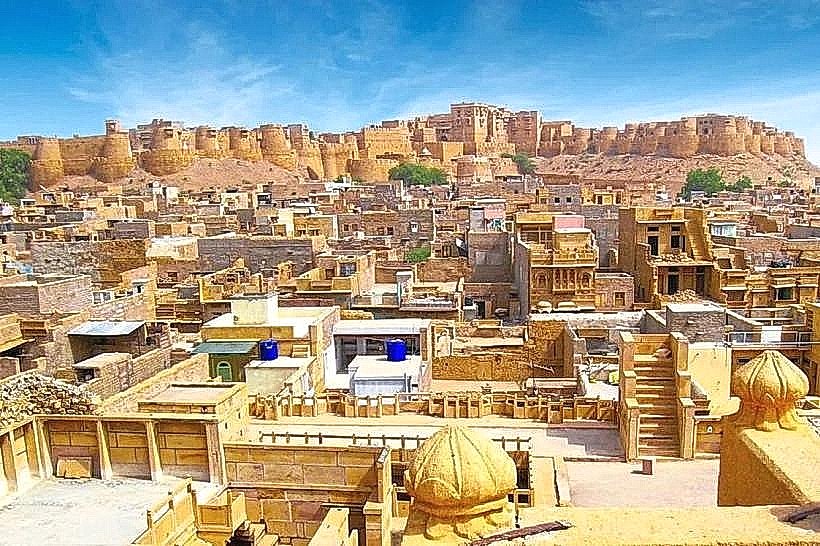
Landmark: Jaisalmer Fort
City: Jaisalmer
Country: India
Continent: Asia
Jaisalmer Fort, Jaisalmer, India, Asia
Jaisalmer Fort is a large medieval fort situated in the city of Jaisalmer, Rajasthan, India.
It is a UNESCO World Heritage Site and one of the largest fully preserved fortified cities in the world.
Visual Characteristics
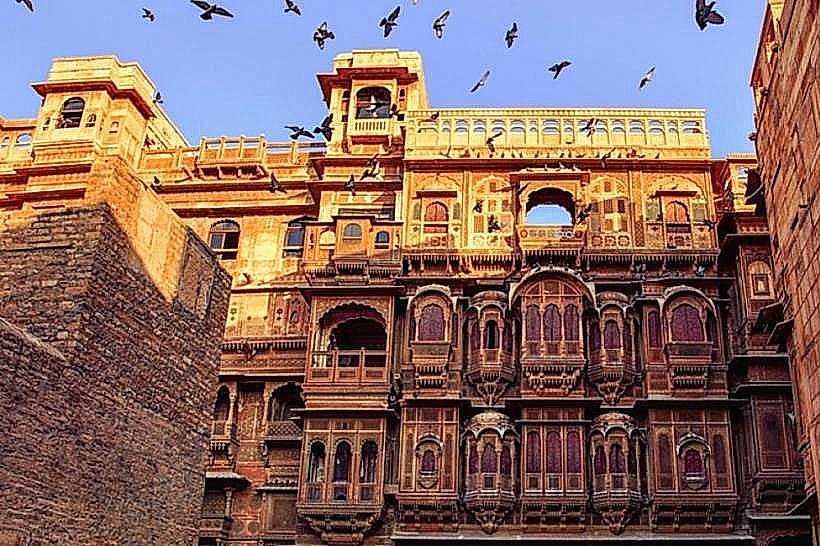
Constructed primarily from yellow sandstone, the fort exhibits a golden hue, particularly at sunrise and sunset. Its walls stand approximately 460 meters long and 150 meters wide, with bastions reaching up to 30 meters in height. The architectural style is a blend of Rajput and Islamic influences, featuring intricate carvings, balconies, and numerous temples and dwellings within its ramparts.
Location & Access Logistics
Jaisalmer Fort is located in the heart of Jaisalmer city. It is approximately 565 kilometers west of Jaipur. Access to the fort is via the main city roads, with several entry gates including the Gopaal Dwar, Akshya Pol, and Ganesh Pol. Parking is available in designated areas outside the fort walls, with some limited parking within the fort for residents and authorized vehicles. Public buses operate frequently to Jaisalmer from major cities in Rajasthan. Auto-rickshaws and taxis are readily available within the city to reach the fort entrance.
Historical & Ecological Origin
Construction of Jaisalmer Fort began in 1156 AD under the rule of Rawal Jaisal, the founder of Jaisalmer. It was built on Trikuta Hill, a rocky outcrop. The fort served as a defensive structure and a residential complex for the ruling clan and their subjects. The primary material used is local yellow sandstone, quarried from the surrounding desert region.
Key Highlights & Activities
Exploration of the fort's narrow lanes and alleys. Visiting the various Jain temples (Parshvanath Temple, Rishabhnath Temple) and the Hindu temples (Laxminath Temple). Touring the Jaisalmer Fort Palace Museum, which displays artifacts from the royal era. Observing the fort's architecture and the city panorama from the ramparts. Engaging with local artisans selling handicrafts.
Infrastructure & Amenities
Within the fort, there are numerous shops, guesthouses, and restaurants. Public restrooms are available at various points. Shade is provided by the fort's structures and the narrowness of the lanes. Cell phone signal (4G/5G) is generally available within the fort complex. Food vendors and small eateries are present throughout the fort.
Best Time to Visit
The optimal time for visiting Jaisalmer Fort is during the cooler months, from October to March. The best time of day for photography is early morning or late afternoon to capture the golden light on the sandstone. High tide or low tide is not applicable to this landlocked fort.
Facts & Legends
A local legend states that the fort was built by a Rajput ruler, Jaisal, with the assistance of a hermit named Trikut. Another account suggests that the fort has been attacked numerous times, and during sieges, the women of the fort committed Jauhar (mass self-immolation) to avoid capture. A practical tip for visitors is to wear comfortable footwear suitable for walking on uneven surfaces and inclines.
Nearby Landmarks
- Patwon Ki Haveli (0.3km South-West)
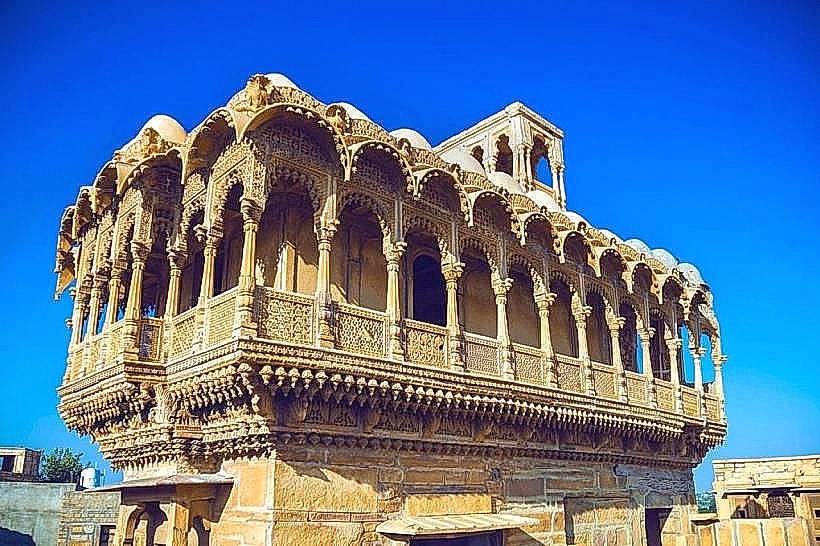
- Salim Singh Ki Haveli (0.4km South-West)
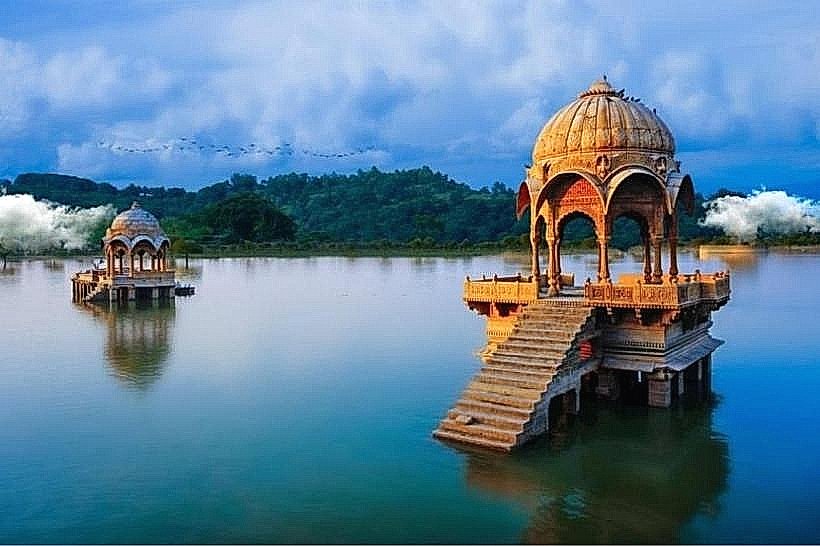
- Gadisar Lake (1.2km South)
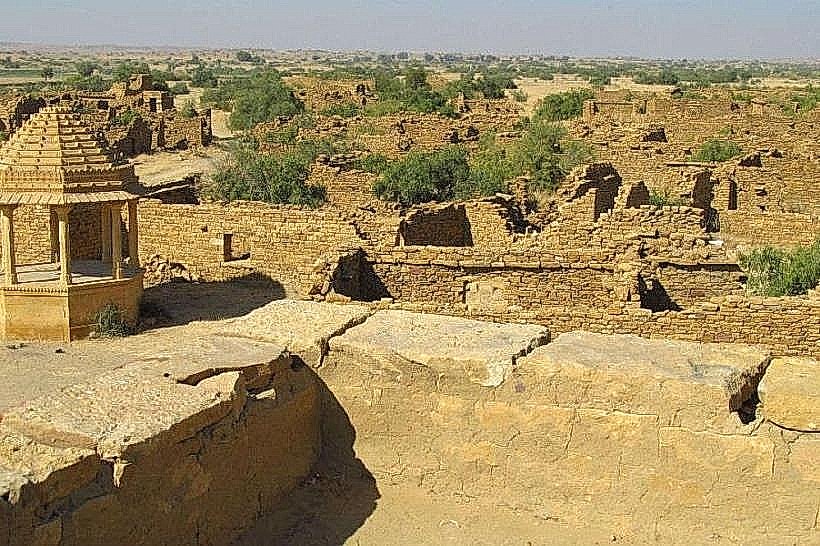
- Kuldhara Abandoned Village (18km West)