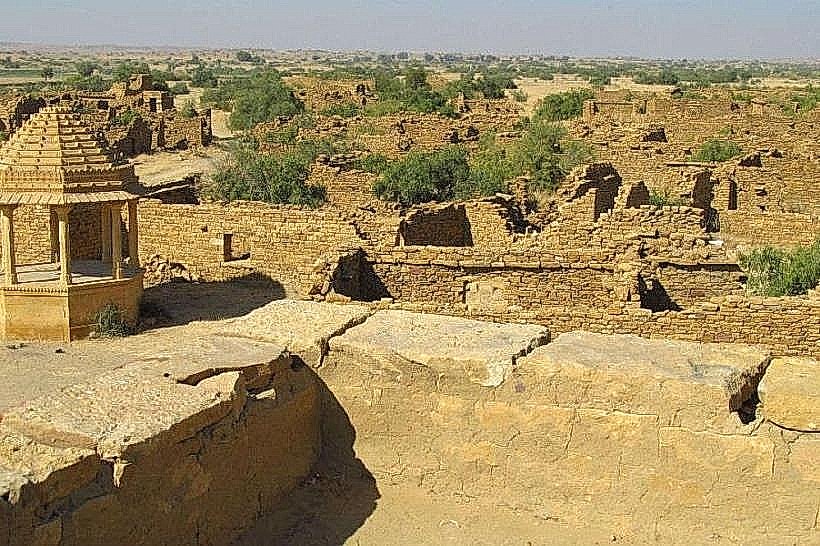
Landmark: Kuldhara Abandoned Village
City: Jaisalmer
Country: India
Continent: Asia
Kuldhara Abandoned Village, Jaisalmer, India, Asia
Kuldhara is a 13th-century abandoned village located in the Jaisalmer district of Rajasthan, India. It is known for its well-preserved ruins and the legend surrounding its sudden desertion.
Visual Characteristics
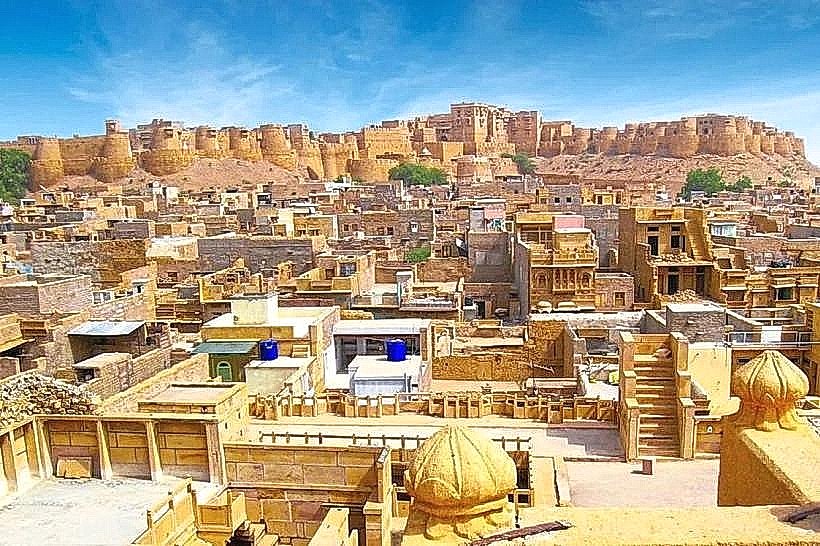
The village consists of approximately 80-100 abandoned houses constructed from sandstone. The structures are largely intact, showcasing traditional Rajasthani architecture with courtyards, small windows, and thick walls. The dominant color of the buildings is the natural ochre of the local sandstone, weathered by time and the desert environment. The village is situated on a slightly elevated plateau, surrounded by arid scrubland and sand dunes.
Location & Access Logistics
Kuldhara is situated approximately 18 kilometers west of Jaisalmer city. Access is via State Highway 40 (Jaisalmer-Sam Road). A well-marked turn-off leads to the village. The final approach is a paved road. Parking is available at the entrance to the village site. There are no direct public transport routes to Kuldhara; visitors typically hire taxis or private vehicles from Jaisalmer.
Historical & Ecological Origin
Kuldhara was established in the 13th century by the Paliwal Brahmins. It served as a prosperous agricultural settlement for centuries. The village was abruptly abandoned overnight by its inhabitants, reportedly in the early 19th century, due to the oppressive taxation and tyranny of the local ruler. The arid climate and sandy soil are characteristic of the Thar Desert ecosystem.
Key Highlights & Activities
Exploration of the village ruins is the primary activity. Visitors can walk through the deserted streets and enter the preserved houses. Interpretive signage provides historical context. Photography of the architecture and the surrounding desert landscape is common. Guided tours are available from local operators in Jaisalmer.
Infrastructure & Amenities
Basic amenities are present at the entrance to the site, including a small ticket counter and limited seating. Restrooms are available near the parking area. Shade is minimal within the village itself, primarily provided by the existing structures. Cell phone signal (4G) is generally available. Food vendors are not present at the immediate site; options are available in Jaisalmer.
Best Time to Visit
The best time of day for photography is during the early morning or late afternoon when the sunlight casts long shadows and highlights the texture of the sandstone. The optimal months for visiting are from October to March, when temperatures are cooler. Midday visits during summer months (April to June) can be extremely hot.
Facts & Legends
The most prominent legend states that the Paliwal Brahmins cursed the village before their departure, ensuring that no one would ever be able to resettle there. This is often cited as the reason for its continued abandonment. Another detail is the organized layout of the village, with a grid pattern of streets, indicating advanced planning for its time.
Nearby Landmarks
- Sam Sand Dunes (15km West)
- Jaisalmer Fort (18km East)
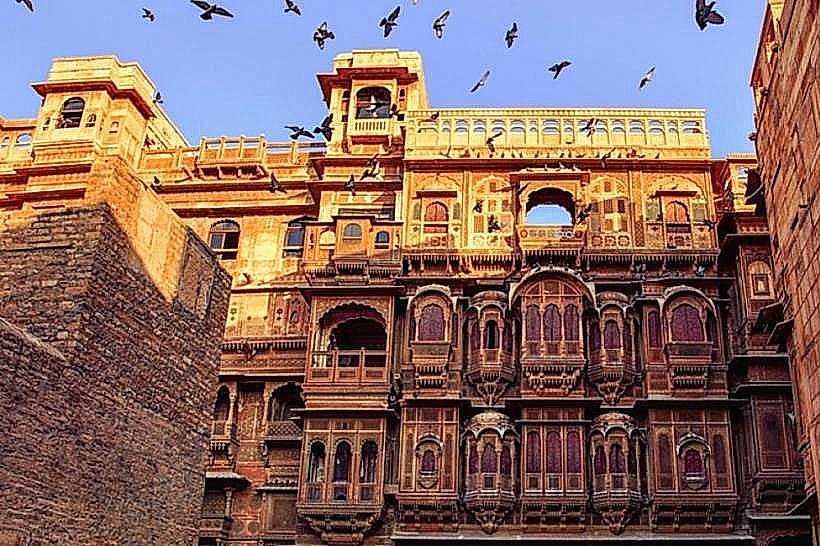
- Patwon Ki Haveli (18km East)
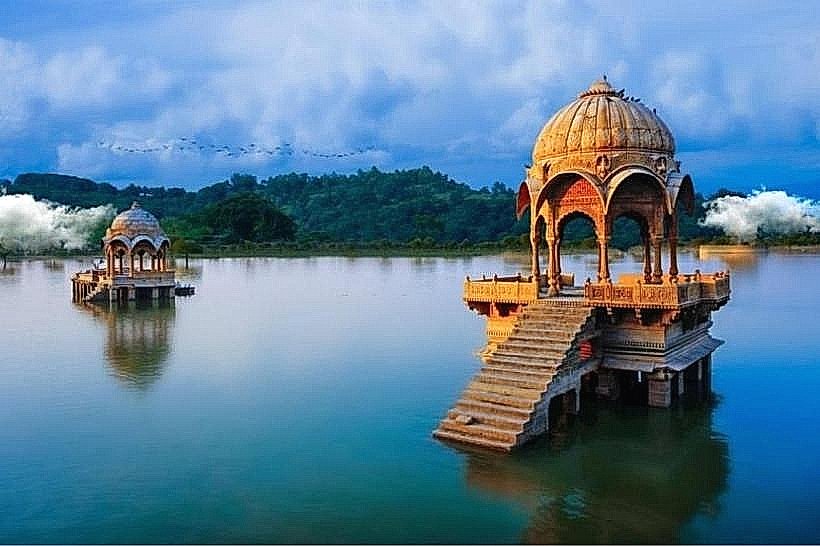
- Gadsisar Lake (19km East)