Landmark: Karaburun-Sazan Marine Park
City: Vlora
Country: Albania
Continent: Europe
Karaburun-Sazan Marine Park, Vlora, Albania, Europe
Karaburun-Sazan Marine Park (Parku Kombëtar Detar Karaburun-Sazan) is Albania's first and only marine national park, established in 2010. It encompasses the maritime territory surrounding the Karaburun Peninsula and Sazan Island in the Vlorë District, covering approximately 125 square kilometers.
Visual Characteristics
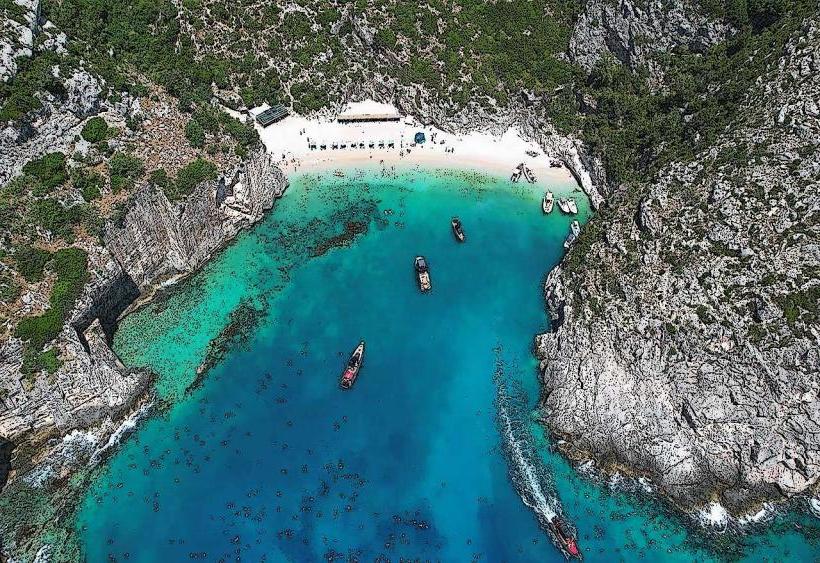
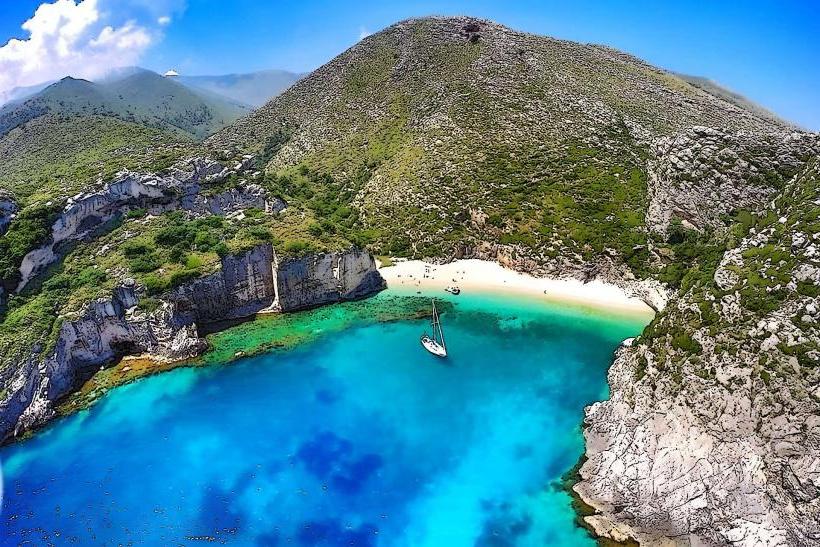
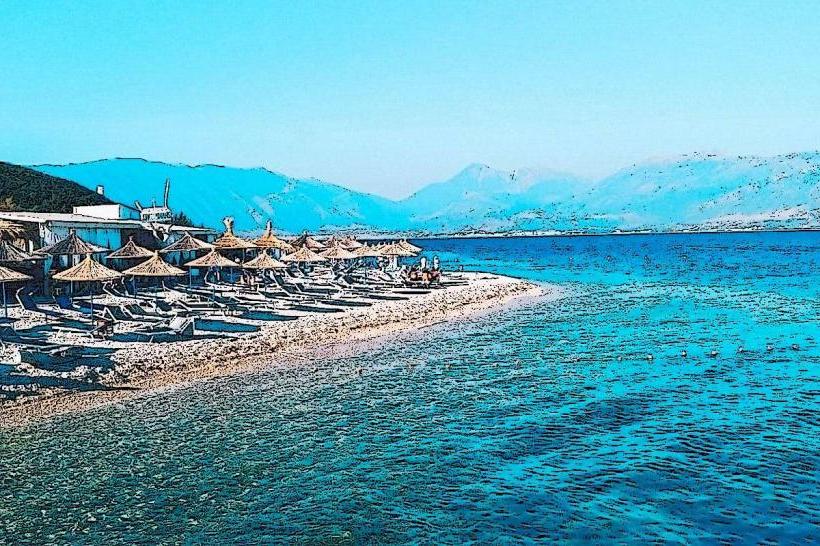
The park is defined by a rugged, uninhabited coastline featuring white limestone cliffs, hidden sea caves, and secluded pebble bays. Underwater, the environment consists of vast meadows of Posidonia oceanica (seagrass) and vertical reef walls. The water is noted for its extreme transparency, often exceeding 30 meters of visibility, with colors ranging from pale turquoise to deep cobalt.
Location & Access Logistics
The park is located at the meeting point of the Adriatic and Ionian Seas.
Access: Entry is exclusively by sea. Most visitors depart from the Port of Vlorë, Radhimë, or Dhërmi via tourist ferries, speedboats, or private vessels.
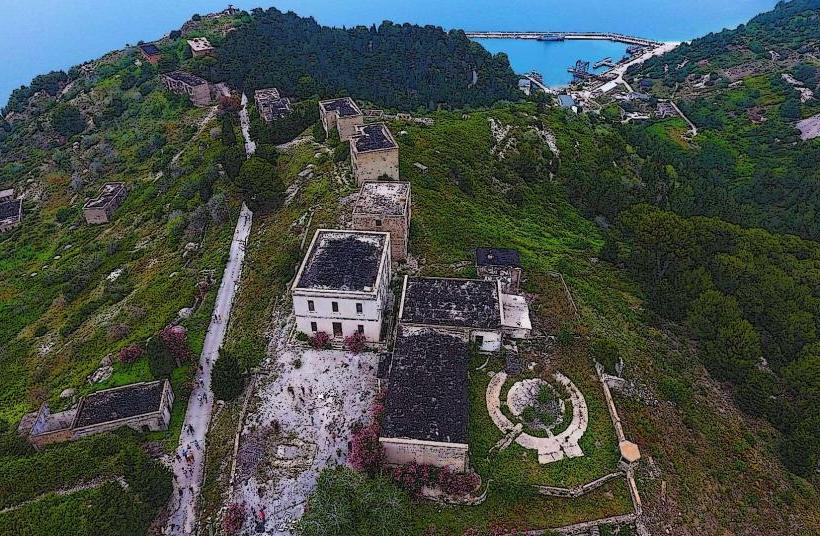
Permits: While the marine park is open, Sazan Island is a military zone; most of the island is restricted, though a designated portion of the port and the "ghost town" is accessible to tourists during the summer season.
Transit Time: A boat trip from Vlorë to Sazan Island takes approximately 45–60 minutes, with another 20 minutes to reach the Karaburun bays.
Historical & Ecological Origin
The park serves as a biological crossroads. It is a critical habitat for the endangered Mediterranean monk seal and the loggerhead sea turtle. Historically, the Karaburun Peninsula and Sazan Island have been strategic military outposts since antiquity. Sazan Island contains hundreds of Cold War-era bunkers and a decommissioned military town, while the peninsula’s cliffs at Grama Bay contain ancient maritime inscriptions.
Key Highlights & Activities
Haxhi Ali Cave: A massive sea cave (30 meters high, 60 meters deep) located at the tip of the peninsula, large enough for boats to enter.
Sazan Island: Exploration of the abandoned military installations and the island's unique microclimate (subtropical).
Diving & Snorkeling: Popular sites include the Italian freighter shipwrecks and the underwater caves of the western cliffs.
Secluded Bays: Stops at Gjiri i Gramës, Gjiri i Arushës, and Gjiri i Dafinës for swimming.
Infrastructure & Amenities
There is no permanent infrastructure within the park boundaries.
Services: During the summer (June–September), rustic seasonal beach bars and umbrella rentals operate in specific bays like Shen Vasili or Bristan.
Facilities: No public restrooms, grid electricity, or shops exist. Visitors must carry all water and food.
Connectivity: Cellular signal is weak or non-existent along the western "wild" side of the peninsula but reliable on the eastern side facing Vlorë.
Best Time to Visit
The optimal window is from June to early September. During this period, the sea is calmest, allowing small boats to access the western caves. July and August are peak months with significant boat traffic. Morning departures (before 09:00) are recommended to avoid the strong afternoon maestral winds that can make the return trip to Vlorë turbulent.
Facts & Legends
A verified historical fact is that Haxhi Ali, a 17th-century pirate from Ulcinj, used the cave as a base to defend the coast from Venetian and French fleets. Local legend suggests that Sazan Island is "the island of snakes," though this is largely a myth used historically to deter unauthorized landings. A geological oddity is the "Blue Hole" near the peninsula's tip, a deep underwater sinkhole.
Nearby Landmarks
Haxhi Ali Cave: 1.0km South of Cape Gjuhëz
Sazan Island: 5.0km North of the Peninsula
Grama Bay: 15.0km South
Vlorë Port: 18.0km East
Radhimë Beach: 12.0km Southeast