Landmark: Kassena Traditional Compounds
City: Tiebele
Country: Burkina Faso
Continent: Africa
Kassena Traditional Compounds, Tiebele, Burkina Faso, Africa
The Kassena Traditional Compounds are a collection of vernacular dwellings located in the town of Tiebele, Burkina Faso.
These structures represent a distinct architectural and cultural heritage of the Kassena people.
Visual Characteristics
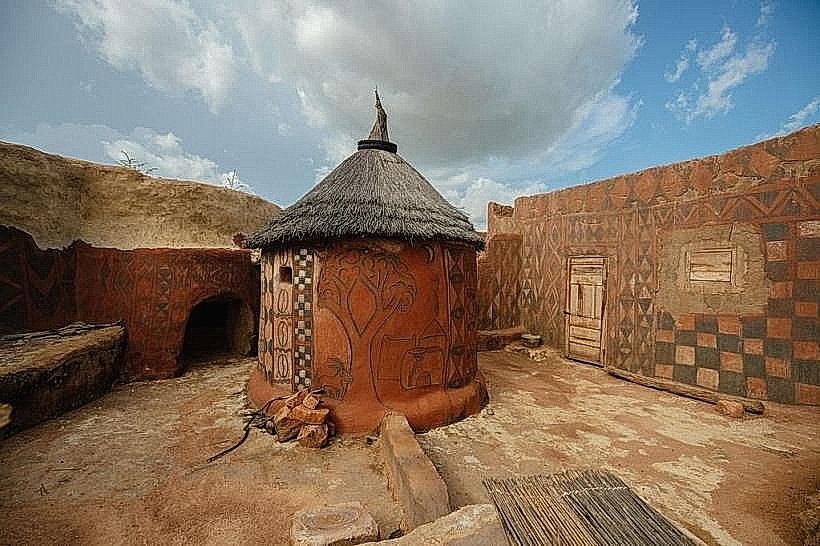
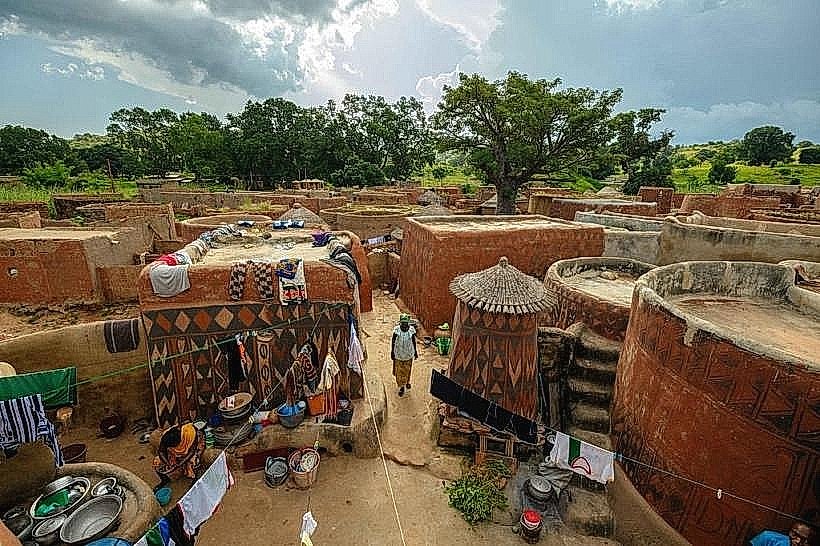
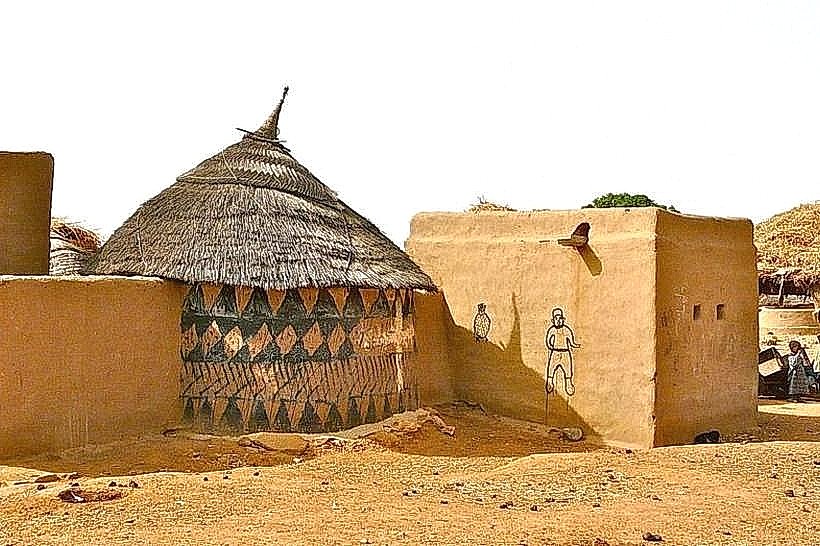
The compounds consist of circular, mud-brick huts with thatched roofs. The exterior walls are coated with a mixture of mud and cow dung, often decorated with geometric patterns and symbolic motifs painted in white, black, and red ochre. The roofs are conical and constructed from dried grass and straw.
Location & Access Logistics
Tiebele is situated approximately 30 kilometers south of Ouagadougou, the capital city of Burkina Faso. Access is via the N1 national road, turning off onto a secondary paved road leading to Tiebele. Parking is available on the outskirts of the village, with local guides often available to escort visitors through the compounds. Public transport options are limited; shared taxis or private vehicles are the most practical means of arrival.
Historical & Ecological Origin
The construction techniques and decorative styles of the Kassena compounds have evolved over centuries, reflecting traditional building methods passed down through generations. The original purpose was to provide shelter and a communal living space for extended families. The materials used are locally sourced, utilizing the earth and vegetation available in the Sahelian environment.
Key Highlights & Activities
Observation of the exterior wall decorations and their symbolic meanings. Interaction with local artisans who create the mud plaster and paintings. Understanding the layout and function of the traditional compound structure. Photography of the architectural details.
Infrastructure & Amenities
Restrooms are not consistently available within the compounds; visitors should plan accordingly. Shade is provided by the thatched roofs of the huts. Cell phone signal is generally weak to non-existent within the village. Food vendors are not typically present directly at the compounds; arrangements for meals should be made in advance or in nearby towns.
Best Time to Visit
The dry season, from November to February, offers the most favorable weather conditions with lower humidity and less rainfall. The late afternoon, between 3:00 PM and 5:00 PM, provides optimal lighting for photographing the wall decorations due to softer shadows.
Facts & Legends
The intricate geometric patterns painted on the walls are not merely decorative; they carry specific meanings related to the family's history, social status, and spiritual beliefs. It is a tradition that the women of the community are primarily responsible for creating and maintaining these designs.
Nearby Landmarks
- Tiebele Market (0.2km West)
- The Chief's Residence (0.3km Northwest)
- Local Artisan Workshops (0.4km West)
- The Catholic Mission of Tiebele (0.6km North)