Information
Landmark: Mudeungsan ObservatoryCity: Gwangju
Country: South Korea
Continent: Asia
Mudeungsan Observatory, Gwangju, South Korea, Asia
The Mudeungsan Observatory is an astronomical observation facility situated on Mudeungsan Mountain in Gwangju, South Korea.
It functions as a research and public outreach center for astronomy.
Visual Characteristics
The observatory complex consists of a main dome structure housing a telescope, constructed with reinforced concrete and painted white. Adjacent to this is a smaller administrative building. The surrounding area is characterized by dense coniferous and deciduous forest typical of mountainous terrain in temperate climates.
Location & Access Logistics
The observatory is located at an elevation of approximately 1,100 meters on Mudeungsan Mountain. Access is via Mudeungsan-ro (Road 12), which leads to the mountain's summit. The final approach to the observatory requires a walk of approximately 1.5 kilometers from the main parking area at the mountain's entrance. Public transport to the mountain entrance is available via Gwangju City Bus lines 1187. There is no direct public transport to the observatory itself.
Historical & Ecological Origin
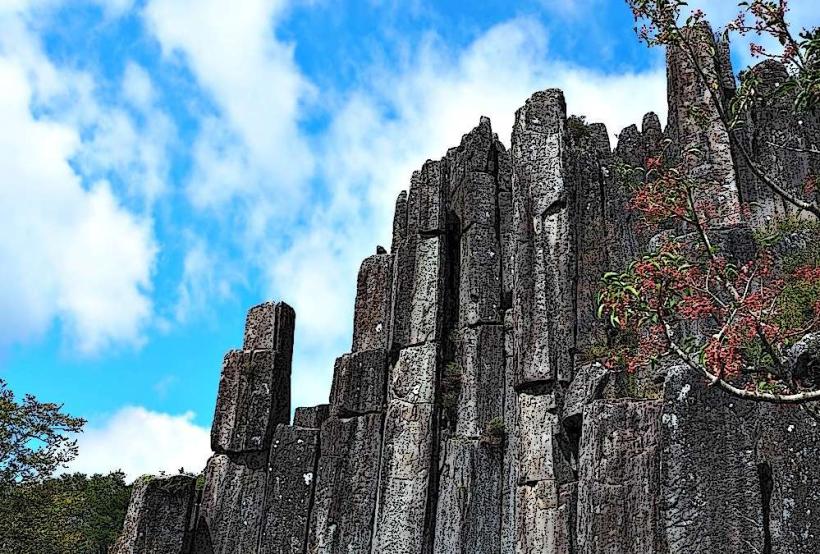
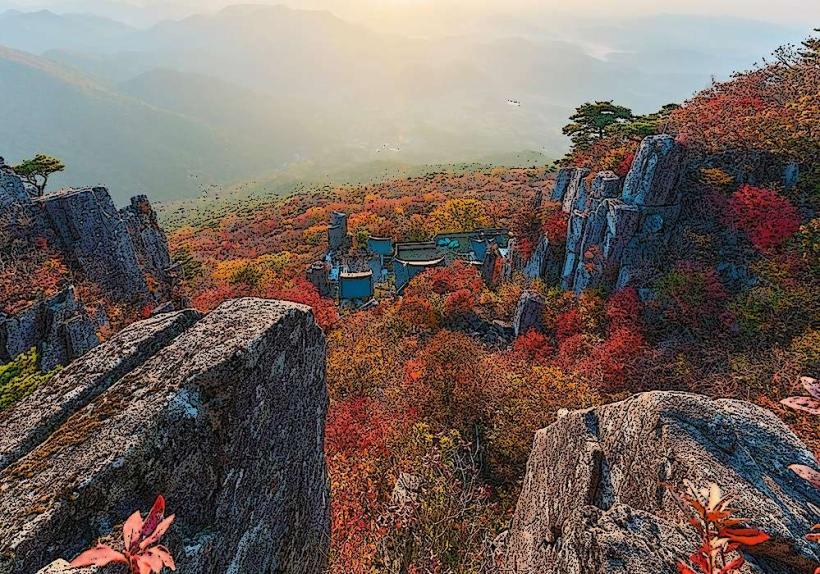
Construction of the Mudeungsan Observatory was completed in 1965. It was established by the Korean Astronomical Observatory. The mountain itself is geologically significant, known for its columnar jointing formations, particularly at the Seoseokdae and Ipseokdae sites, formed by volcanic activity millions of years ago.
Key Highlights & Activities
Public stargazing sessions are offered on clear nights, typically on weekends, requiring advance booking. Visitors can view celestial objects through the observatory's main telescope. Educational exhibits on astronomy are available within the administrative building. Hiking trails on Mudeungsan Mountain provide access to various viewpoints and geological formations.
Infrastructure & Amenities
Restrooms are available at the mountain entrance parking area and a limited number are located near the observatory. Shade is provided by the surrounding forest. Cell phone signal (4G/5G) is intermittent at higher elevations, including the observatory. Food vendors are present at the mountain entrance, but not at the observatory itself.
Best Time to Visit
For astronomical observation, the best time is during the new moon phase for minimal light pollution, typically between September and November for clearer skies. The best time of day for photography of the observatory structure itself is during sunrise or sunset, when the light angle is low. Access to the observatory may be restricted during periods of heavy snow or ice.
Facts & Legends
A local legend suggests that the unique rock formations on Mudeungsan Mountain are the petrified bodies of ancient giants who were punished for their arrogance. The observatory's location was chosen for its altitude and distance from significant light pollution sources in the Gwangju metropolitan area.
Nearby Landmarks
- Mudeungsan National Park Entrance (0.8km South)
- Jeungsimsa Temple (2.5km Southwest)
- Seoseokdae (Columnar Jointing) (1.2km West)
- Ipseokdae (Columnar Jointing) (3.0km West)
- Gwangju Folk Museum (4.5km Southwest)