Landmark: Palais des Ducs
City: Dijon
Country: France
Continent: Europe
Palais des Ducs, Dijon, France, Europe
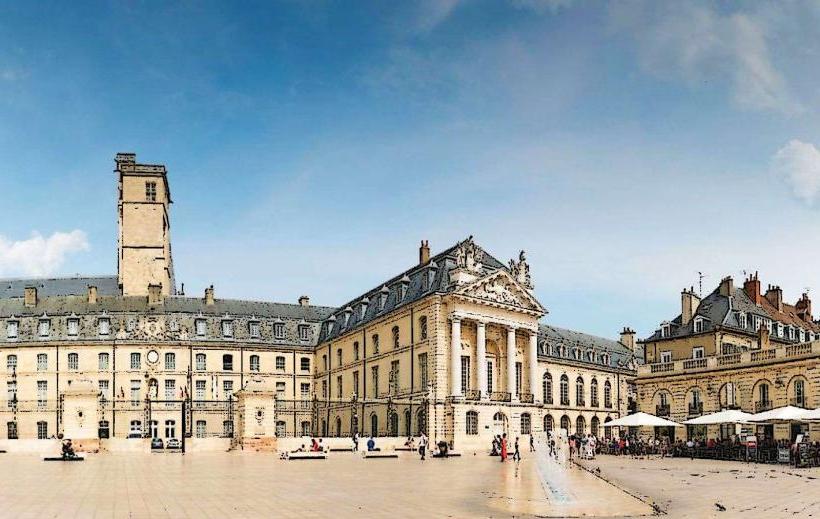
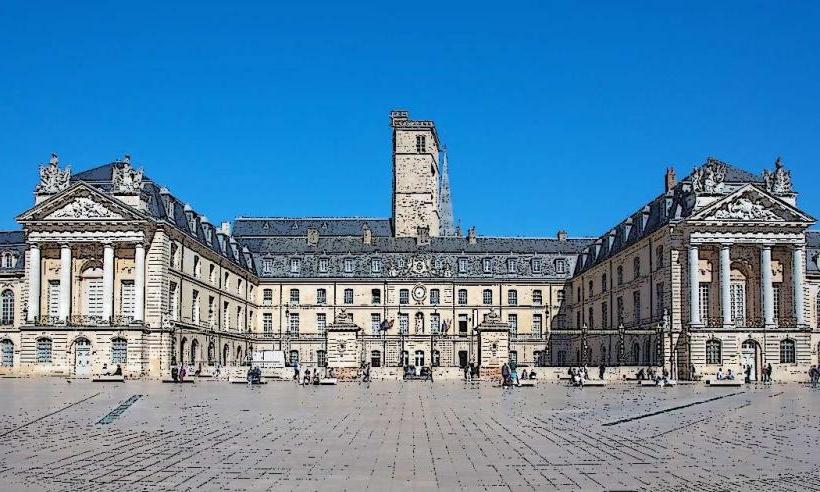
The Palais des Ducs et des États de Bourgogne (Palace of the Dukes and Estates of Burgundy) is a remarkably preserved architectural complex in the center of Dijon. It served as the seat of the powerful Dukes of Burgundy during the 14th and 15th centuries and now houses the Dijon City Hall and the Musée des Beaux-Arts.
Visual Characteristics
The palace is a composite of styles ranging from 14th-century Gothic to 17th and 18th-century Classical. The most striking Gothic feature is the Philippe le Bon Tower, which rises 46 meters above the city. The main facade, redesigned by Jules Hardouin-Mansart (the architect of Versailles), features a symmetrical U-shape facing the semicircular Place de la Libération, characterized by limestone columns, arched windows, and ornate classical pediments.
Location & Access Logistics
The palace is located at Place de la Libération, 21000 Dijon. It is situated in the heart of the pedestrianized historic center.
Transit: A 10-minute walk (0.9km) east of the Dijon-Ville Train Station. The Divia tramway (Lines T1/T2) stops at "Godrans" or "Darcy," both approximately 0.5km away.
Parking: Underground parking is available at Parking Trémouille or Parking Sainte-Anne, within a 5-minute walk.
Historical & Ecological Origin
The site originated as a Roman fortress (Castrum). The medieval palace was largely rebuilt starting in 1364 by Philip the Bold, the first Valois Duke of Burgundy. In the 17th century, after Burgundy was integrated into France, the palace was expanded to accommodate the "Estates of Burgundy" (the regional parliament). The building is constructed from light-colored Burgundian limestone, which has been restored to a bright, reflective finish.
Key Highlights & Activities
Musée des Beaux-Arts: Located in the eastern wing, it contains the monumental tombs of Philip the Bold and John the Fearless, featuring world-renowned "pleurants" (weeping statues).
Philippe le Bon Tower: Visitors can climb the 316 steps for a 360-degree panoramic view of Dijon and the surrounding vineyards.
The Hall of the Tombs: A high-Gothic vaulted hall that serves as the centerpiece of the ducal history.
Cour d’Honneur: The main courtyard, frequently used for public ceremonies and outdoor exhibitions.
Infrastructure & Amenities
The palace grounds include public restrooms near the museum entrance. 5G cellular signal is excellent in the open courtyards and the Place de la Libération. The Musée des Beaux-Arts is largely wheelchair accessible via modern elevators, though the Philippe le Bon Tower is accessible only by stairs.
Best Time to Visit
To capture the limestone facade at its brightest, visit during the morning or early afternoon. The Place de la Libération is best experienced in the evening when the fountains are active and illuminated. The museum is open daily (except Tuesdays), usually from 10:00 to 18:30.
Facts & Legends
A verified historical oddity is that the palace still functions as the active seat of local government; the Mayor of Dijon's office is located within the same complex as the medieval ducal kitchens. Local legend suggests that the palace and the nearby Church of Notre-Dame are connected by a series of tunnels used by the Dukes to move through the city unseen during times of civil unrest.
Nearby Landmarks
Place de la Libération: 0.0km (Directly in front)
Church of Notre-Dame de Dijon: 0.2km North
Magnin Museum: 0.1km South
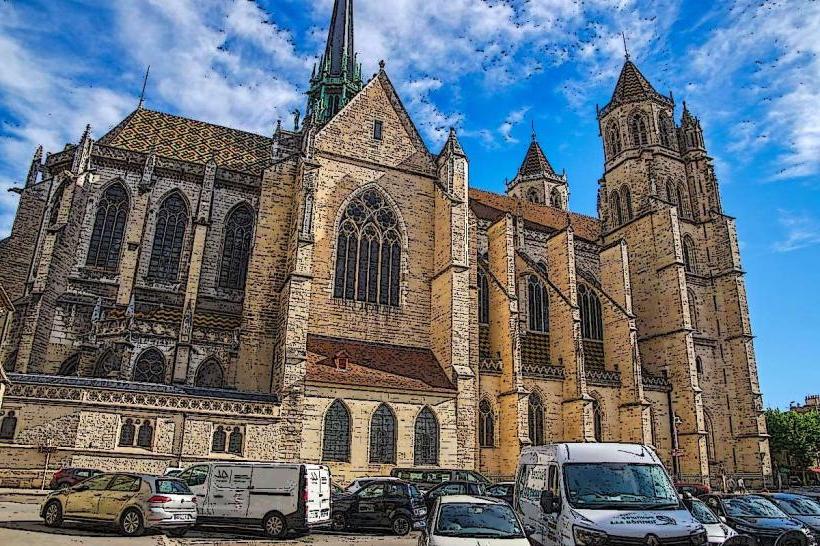
Dijon Cathedral: 0.7km West
Halles Centrales (Market): 0.4km Northwest