Landmark: Reichstag Building
City: Berlin
Country: Germany
Continent: Europe
Reichstag Building, Berlin, Germany, Europe
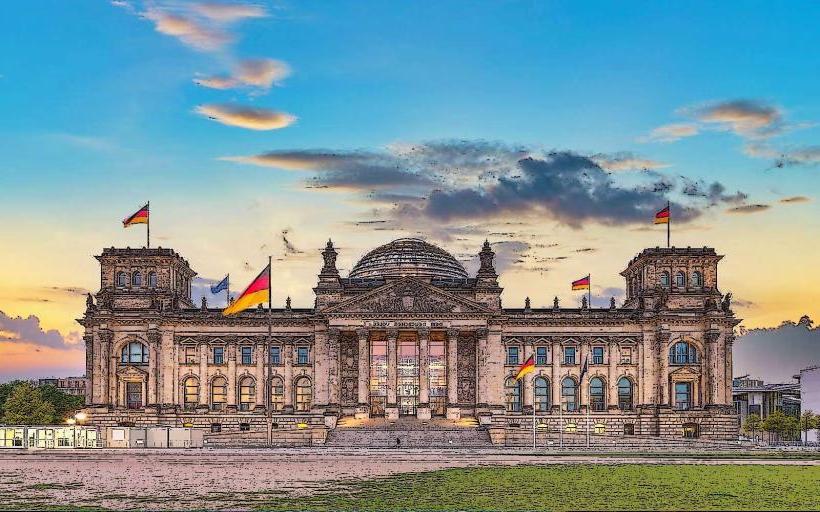
The Reichstag Building is the seat of the German Bundestag, situated at the northern end of the Ebertstraße in Berlin’s Tiergarten district. It functions as the legislative center of Germany, positioned near the south bank of the Spree River.
Visual Characteristics
The structure is a Neo-Renaissance edifice measuring 137 meters long and 97 meters wide, constructed primarily of Silesian sandstone. Its most prominent feature is a large glass and steel dome designed by Norman Foster, which contains a double-helical ramp and a central cone of mirrors to reflect daylight into the plenary chamber below. The facade features massive Corinthian columns and the bronze-cast inscription "Dem Deutschen Volke" (To the German People) above the main entrance.
Location & Access Logistics
The building is located at Platz der Republik 1. It is accessible via the U5 U-Bahn line (Bundestag station) or the S-Bahn (Brandenburg Gate station). Bus line 100 stops at the Reichstag/Bundestag station. Visitors must undergo a security screening and present valid government identification; pre-registration via the official Bundestag website is mandatory for dome and terrace access.
Historical & Ecological Origin
Designed by Paul Wallot, construction occurred between 1884 and 1894 to house the Imperial Diet of the German Empire. It was severely damaged by the 1933 Reichstag fire and World War II bombings. The modern reconstruction, including the addition of the glass dome, was completed by architect Norman Foster in 1999 following the reunification of Germany.
Key Highlights & Activities
Visitors can walk the internal spiral ramps of the glass dome for 360-degree views of the Berlin skyline. Audio guides provide automated commentary on the surrounding government buildings and landmarks. The plenary chamber is visible through the glass floor of the dome, allowing the public to observe parliamentary sessions from above.
Infrastructure & Amenities
The facility includes a rooftop restaurant (Käfer) adjacent to the dome, public restrooms, and elevator access for individuals with mobility issues. The building utilizes an ecological energy system involving solar panels and geothermal heat storage. 5G cellular signal is strong throughout the exterior and interior public areas.
Best Time to Visit
Evening visits provide views of the illuminated city and the interior lights of the plenary chamber. Summer months (May to September) offer the longest operating hours, with the dome typically open until midnight. Photography is best during the late afternoon when the sun highlights the sandstone textures of the western facade.
Facts & Legends
The basement walls contain Cyrillic graffiti left by Soviet soldiers in May 1945, which was preserved during the 1990s renovations as a historical record. A common misconception is that the 1933 fire was started by Marinus van der Lubbe alone, though historical debate continues regarding the potential involvement of the Nazi Party to justify emergency decrees.
Nearby Landmarks
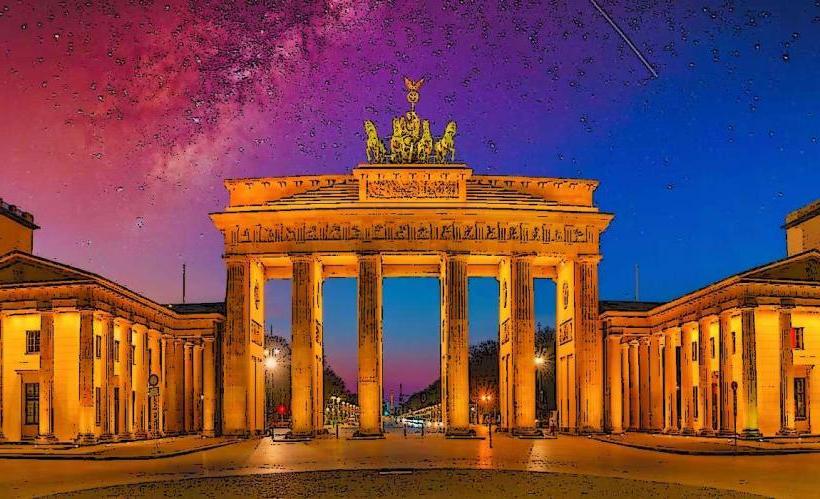
Brandenburg Gate – 0.4km South
Memorial to the Murdered Jews of Europe – 0.8km South
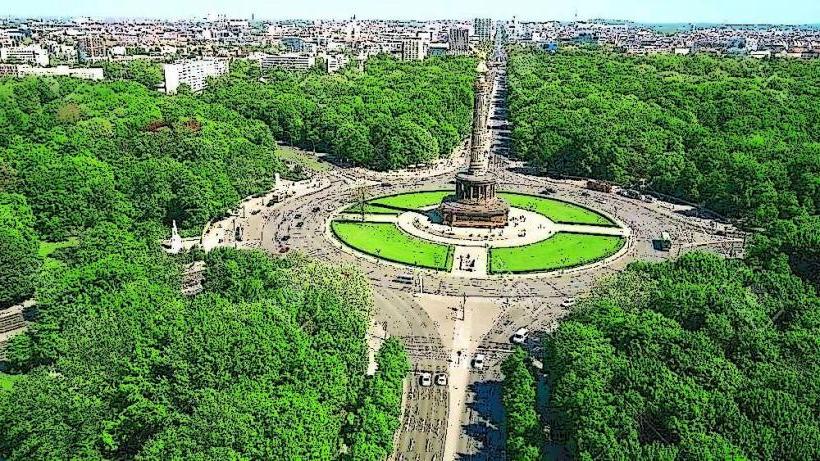
Tiergarten Park – 0.1km West
Chancellery (Bundeskanzleramt) – 0.3km Northwest
Soviet War Memorial (Tiergarten) – 0.5km Southwest