Landmark: Rouen Cathedral
City: Rouen
Country: France
Continent: Europe
Rouen Cathedral, Rouen, France, Europe
Rouen Cathedral
The Cathédrale Notre-Dame de Rouen is a Roman Catholic church in Rouen, Normandy. It is the seat of the Archbishop of Rouen and is noted for its architectural evolution from the 12th to the 16th centuries.
Visual Characteristics
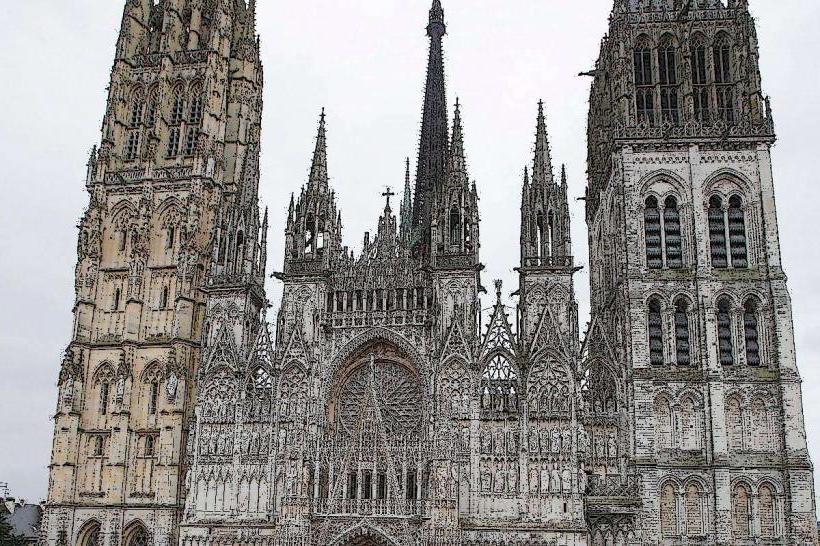
The cathedral is a masterpiece of Gothic architecture, displaying a progression from Early Gothic to the Flamboyant style. It features three distinct towers: the Tour Saint-Romain (12th century), the Tour de Beurre (Butter Tower, 15th century), and the central cast iron spire, which reaches 151 meters, making it the tallest church in France. The facade is exceptionally wide and intricately carved, famously captured in a series of over 30 paintings by Claude Monet.
Location & Access Logistics
Address: Place de la Cathédrale, 76000 Rouen.
Public Transit: Served by the Teor bus lines (T1, T2, T3) at "Cathédrale" or the Metro at "Théâtre des Arts."
Admission: Entry is free.
Hours: Monday: 14:00–18:00; Tuesday–Saturday: 09:00–18:00; Sunday: 08:00–18:00 (hours may vary during services).
Historical & Ecological Origin
Built on the foundations of a 4th-century basilica and a later Romanesque cathedral, the current structure was primarily constructed between 1202 and 1876. The building is composed of local Lutetian limestone, which is susceptible to atmospheric erosion. The cathedral famously survived Viking raids, the Hundred Years' War, and heavy Allied bombing in 1944.
Key Highlights
The Spire: Replaced a wooden spire destroyed by lightning in 1822; it made the cathedral the tallest building in the world from 1876 to 1880.
Royal Tombs: The choir contains the tomb of Richard the Lionheart, which holds his heart, and the tomb of Rollo, the first Duke of Normandy.
The Butter Tower: Legend states it was funded by the "butter tax"-fees paid by the wealthy to consume butter during Lent.
Stained Glass: Features a collection of 13th-century glass known as the "Belles Verrières," alongside modern windows replacing those lost in WWII.
Infrastructure & Amenities
The cathedral is located in a high-density pedestrian zone.
Accessibility: The main nave and aisles are accessible to individuals with reduced mobility.
Connectivity: Robust 5G coverage is present throughout the square.
Events: During summer nights, the facade hosts a large-scale light projection show (Illuminations de la Cathédrale).
Best Time to Visit
Late afternoon provides direct sunlight on the western facade, highlighting the textures Monet studied. Summer evenings are preferred for the light show. To avoid crowds and observe the light through the stained glass, visit on weekday mornings.
Facts & Legends
A historical fact: In 1944, seven bombs hit the cathedral; one failed to explode in the choir, preventing the total collapse of the structure. The "Butter Tower" is architecturally significant for its flamboyant crown, which influenced several other regional towers in Normandy.
Nearby Landmarks
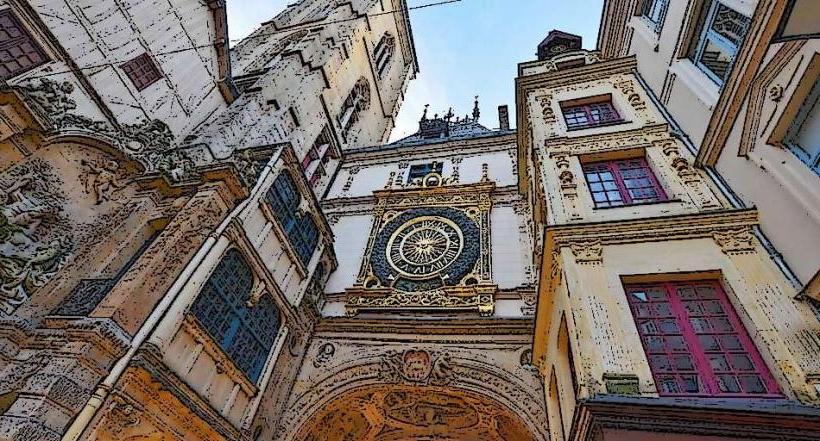
Gros-Horloge (Great Clock) – 0.2km West
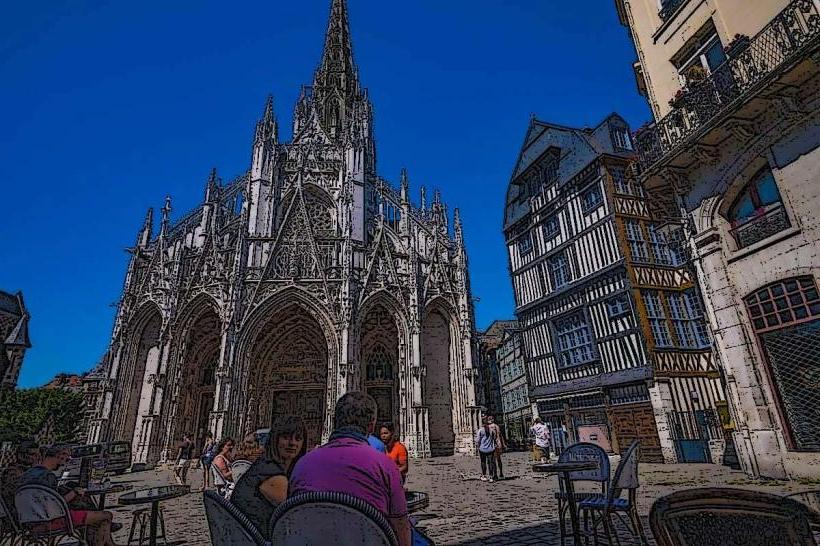
Saint-Maclou Church – 0.3km East
Palais de Justice – 0.4km Northwest
Place du Vieux-Marché (Joan of Arc site) – 0.6km West
Musée des Beaux-Arts – 0.7km North