Landmark: Sevanavank Monastery
City: Sevan
Country: Armenia
Continent: Asia
Sevanavank Monastery, Sevan, Armenia, Asia
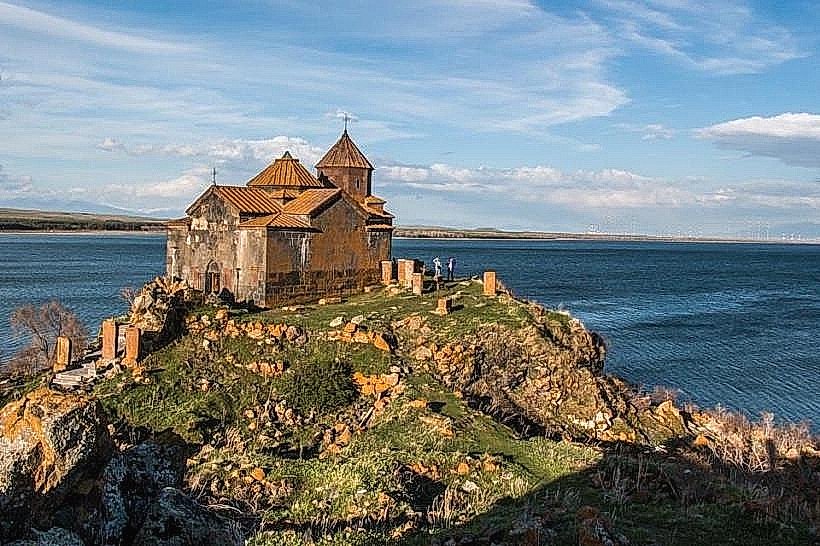
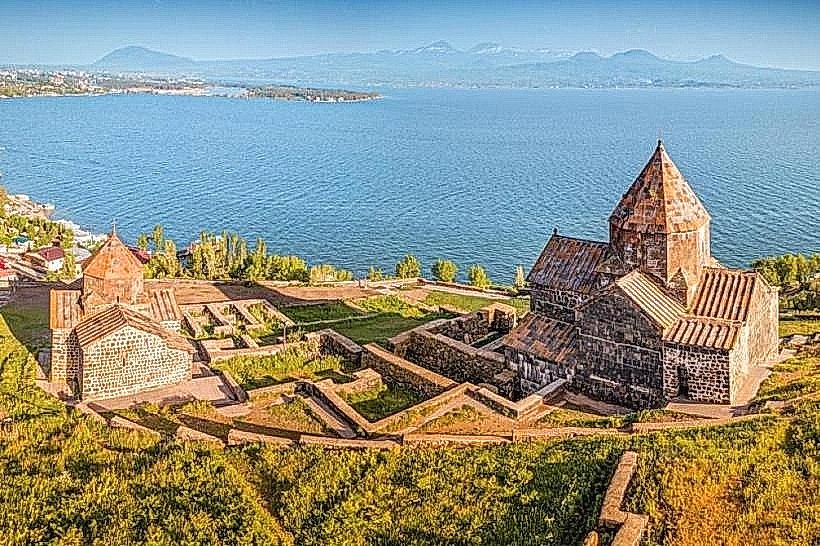
Sevanavank Monastery is a monastic complex situated on a peninsula on the northwestern shore of Lake Sevan in Armenia.
Visual Characteristics
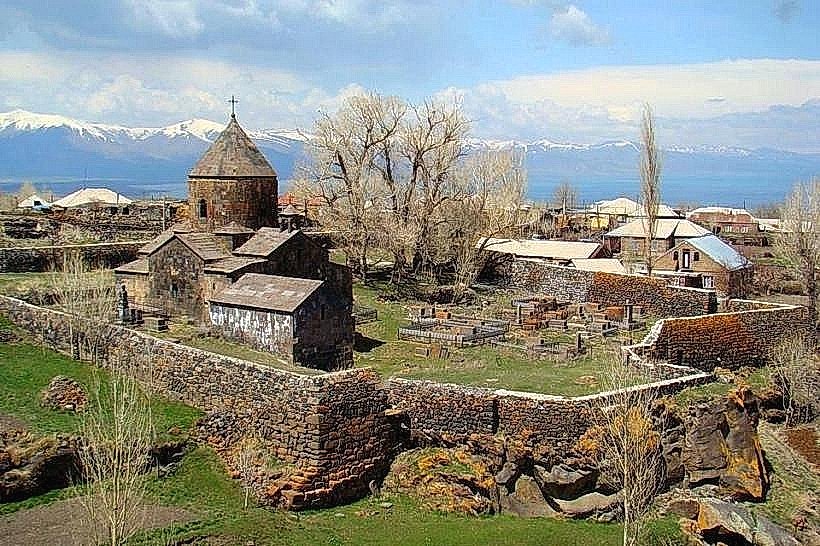
The monastery complex comprises two churches: Saint Apostle Church and Saint Gregory Church. Both are constructed from dark, rough-hewn basalt stones. Saint Apostle Church is a rectangular structure with a gabled roof. Saint Gregory Church is smaller and octagonal in plan, topped by a conical dome. The structures exhibit simple, functional Armenian architectural design, with minimal ornamentation.
Location & Access Logistics
Sevanavank Monastery is located approximately 65 kilometers northeast of Yerevan. Access is via the M4 highway. From the city of Sevan, follow the signs for the monastery, which is situated on a prominent peninsula. Parking is available at the base of the peninsula. Public transport options include intercity buses from Yerevan to Sevan, followed by a local taxi or a walk to the monastery.
Historical & Ecological Origin
The monastery was founded in the 9th century by Prince Grigor Supan II of the Syunik dynasty. The original purpose was to serve as a monastic retreat and a defensive outpost. The peninsula itself is a natural elevation on the lakebed, formed by volcanic activity contributing to the geological makeup of the region.
Key Highlights & Activities
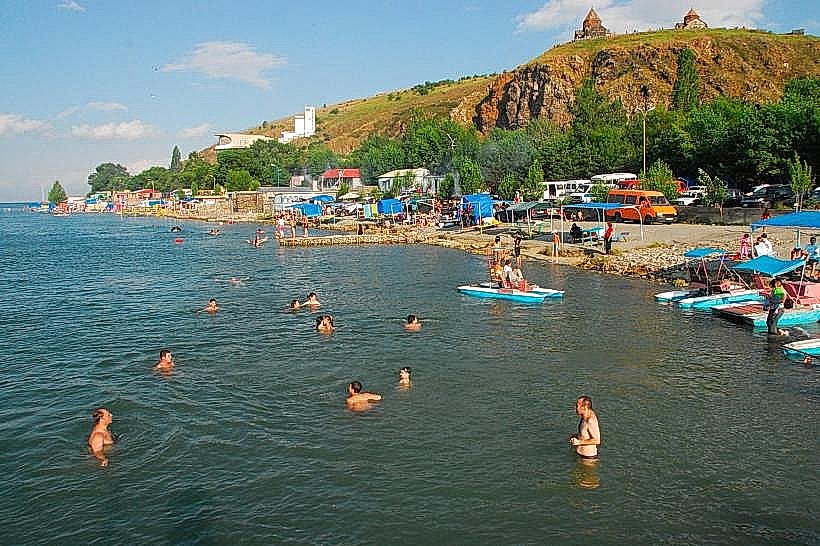
Visitors can explore the two churches and the surrounding grounds. Photography of the architectural elements and the panoramic views of Lake Sevan is possible. Walking the perimeter of the peninsula offers unobstructed vistas of the lake.
Infrastructure & Amenities
Restrooms are available near the parking area. Limited shade is provided by the monastery structures themselves. Cell phone signal (4G) is generally available. Food vendors and cafes are located at the base of the peninsula.
Best Time to Visit
For photography, early morning or late afternoon light provides optimal illumination of the basalt structures. The months of May through October offer the most favorable weather conditions for visiting. Lake Sevan's water levels can fluctuate, but access to the peninsula is generally consistent.
Facts & Legends
A local legend states that the monastery was named after Saint Gregory, who established a school there. Another account suggests the name derives from Saint Sevan, a hermit who lived in the area. The monastery was historically a significant religious and cultural center.
Nearby Landmarks
- Sevan City Center (1.5km Southwest)
- Lake Sevan National Park Visitor Center (2km Southwest)
- Hayravank Monastery (10km South)
- Dilijan National Park (25km Northeast)