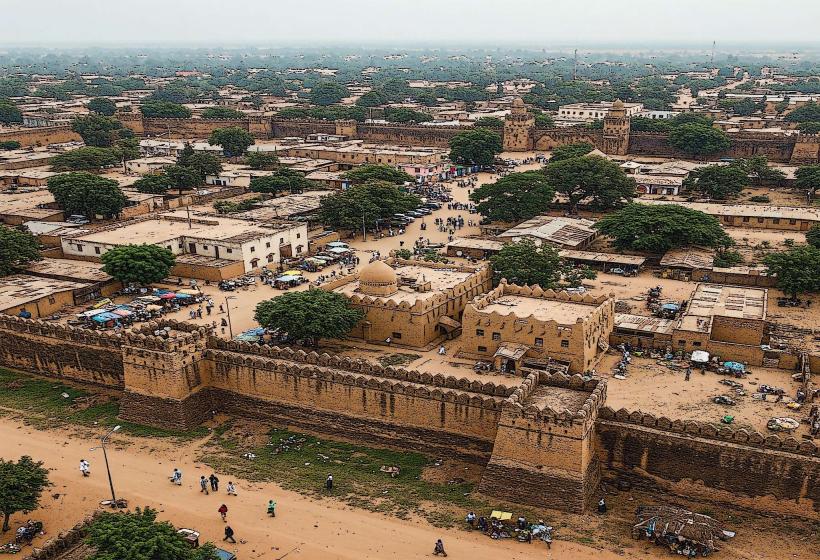
Landmark: Sokoto City Walls
City: Sokoto
Country: Nigeria
Continent: Africa
Sokoto City Walls, Sokoto, Nigeria, Africa
The Sokoto City Walls are historical defensive earthworks surrounding the city of Sokoto, Nigeria. These fortifications represent a significant aspect of the city's historical development.
Visual Characteristics
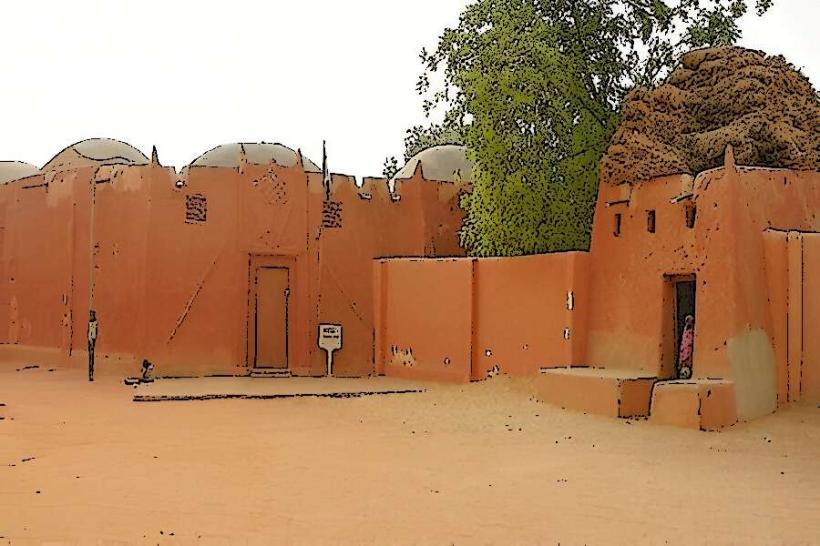
The walls are primarily composed of compacted earth and mud, with some sections reinforced with laterite. Their current state varies, with some portions exhibiting clear rampart structures while others are more degraded. The height of the remaining sections ranges from approximately 2 to 5 meters. The architectural style is characteristic of traditional West African defensive earthworks.
Location & Access Logistics
The Sokoto City Walls are situated within the urban perimeter of Sokoto. Access is generally from city roads such as Ahmadu Bello Way and Kano Road. Specific entry points are not designated, and access is often through existing urban pathways. Parking is available on adjacent city streets, subject to local regulations. Public transport within Sokoto includes taxis and minibuses that traverse the city's main thoroughfares, providing access to areas near the wall remnants.
Historical & Ecological Origin
The construction of the Sokoto City Walls is attributed to the Sokoto Caliphate, with significant development occurring in the 19th century. They were built to defend the capital of the caliphate against external threats. The construction utilized locally sourced earth and materials, reflecting traditional building techniques of the region.
Key Highlights & Activities
Exploration of the remaining wall sections is the primary activity. Visitors can observe the scale and construction methods of historical fortifications. Walking along the accessible portions of the ramparts provides a perspective on the city's historical layout. Archaeological interest is a key draw for those studying pre-colonial defensive structures.
Infrastructure & Amenities
There are no dedicated visitor facilities directly at the wall sites. Restrooms and food vendors are located in the surrounding urban areas of Sokoto. Cell phone signal (4G/5G) is generally available within the city limits, including areas near the walls.
Best Time to Visit
The best time for visiting is during the dry season, typically from November to March, to avoid potential rain that can affect ground conditions. The late afternoon, between 3:00 PM and 5:00 PM, offers favorable lighting for photography due to lower sun angles.
Facts & Legends
A notable historical fact is that the walls were designed to enclose a significant area, reflecting the importance of Sokoto as a political and religious center. Local accounts sometimes refer to specific gates or sections of the wall having particular historical significance related to battles or royal movements, though detailed documentation for these is often scarce.
Nearby Landmarks
- Sokoto Central Mosque (0.8km West)
- Sokoto State Government House (1.2km Northwest)
- Usman Dan Fodio University (3.5km South)
- Sokoto Museum (1.0km West)
- Palace of the Sultan of Sokoto (0.9km West)