Landmark: Taman Sari Gua Sunyaragi
City: Cirebon
Country: Indonesia
Continent: Asia
Taman Sari Gua Sunyaragi, Cirebon, Indonesia, Asia
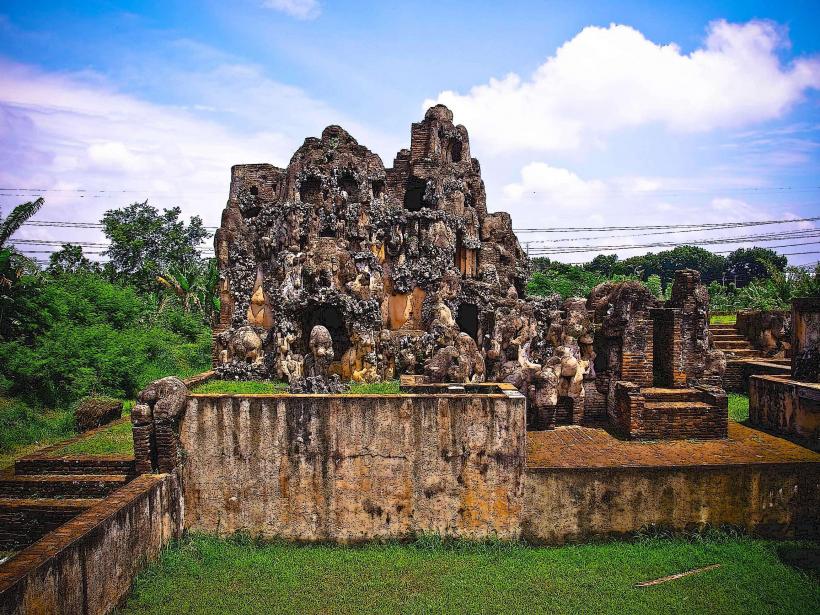
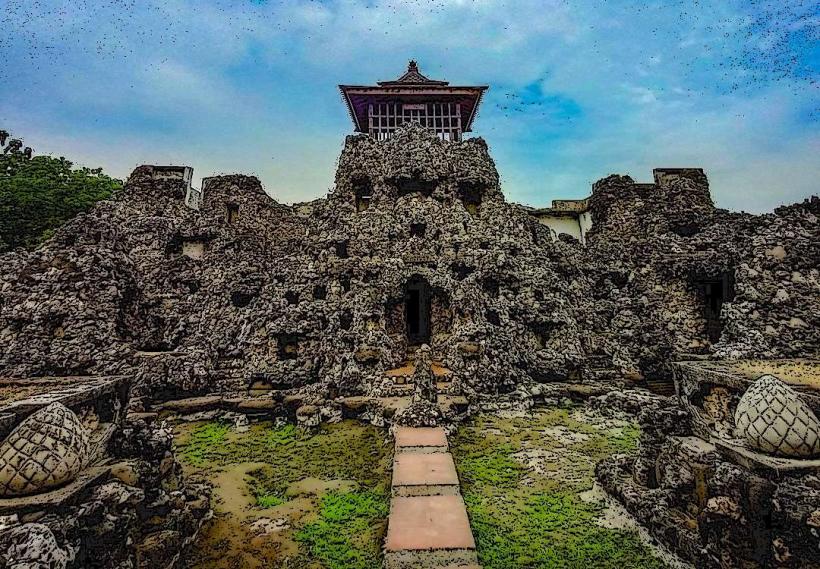
Taman Sari Gua Sunyaragi is a historical water palace and garden complex located in Cirebon, West Java, Indonesia. It is a unique architectural site known for its cave-like structures and intricate stonework.
Visual Characteristics
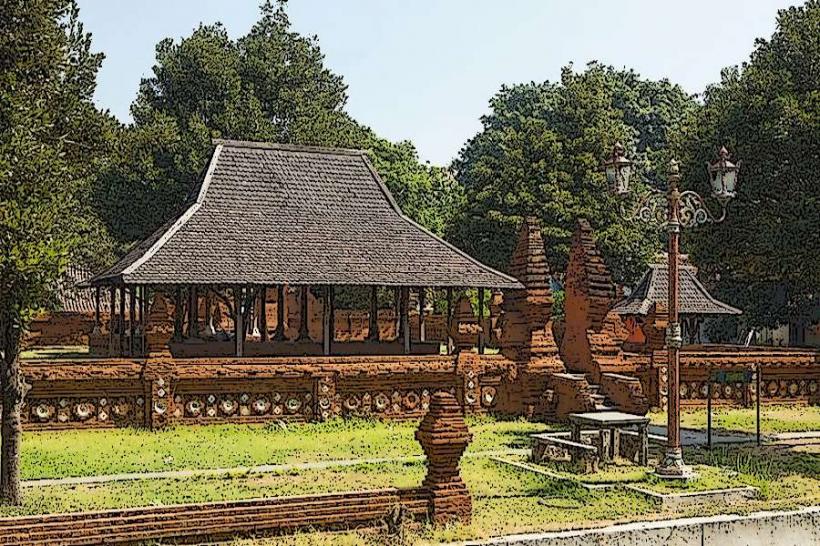
The complex features a series of interconnected stone structures resembling caves and fortresses. The primary building material is carved sandstone, exhibiting a greyish-brown hue. Architectural elements incorporate Hindu-Buddhist influences with Javanese decorative motifs. The site includes open courtyards, artificial caves, and water features. The overall height of the structures varies, with some reaching approximately 5 meters.
Location & Access Logistics
Taman Sari Gua Sunyarangi is situated approximately 2 kilometers west of Cirebon's city center. Access is via Jalan Brigjen Dharsono. Parking is available on-site for private vehicles. Public transportation options include local angkot (minibus) routes that pass near the entrance; specific route numbers should be confirmed locally as they can change. The nearest major transport hub is Cirebon Station, from which taxis or angkots can be taken.
Historical & Ecological Origin
Construction of Taman Sari Gua Sunyaragi began in 1703 and was completed in 1749. It was commissioned by Sultan Anom of the Kasepuhan Sultanate. The original purpose was as a place for meditation, spiritual retreat, and recreation for the royal family. The site's design is influenced by the concept of a "cave" or "grotto," reflecting a spiritual journey.
Key Highlights & Activities
Exploration of the artificial caves and chambers is the primary activity. Visitors can walk through the stone corridors and examine the detailed carvings. Photography of the unique architecture is permitted. Guided tours are available, providing historical context and explanations of the site's symbolism.
Infrastructure & Amenities
Restrooms are available within the complex. Limited shaded areas are provided by the stone structures. Cell phone signal (4G) is generally available. Food vendors are typically located outside the main entrance to the complex.
Best Time to Visit
The best time of day for photography is in the late morning or late afternoon when the sunlight creates distinct shadows on the stone surfaces. The dry season, from June to September, offers the most favorable weather conditions with less rainfall. There are no tide-dependent activities at this site.
Facts & Legends
A local legend states that the caves were created by supernatural beings to provide a place for the Sultan to meditate and commune with spirits. Another notable feature is the "Batu Layar" (Sail Stone), a large rock formation resembling a sail, which is said to have spiritual significance.
Nearby Landmarks
- Keraton Kasepuhan (0.8km East)
- Keraton Kanoman (1.2km East)
- Masjid Agung Sang Cipta Rasa (1.5km East)
- Museum Batik Trusmi (3.5km Southwest)