
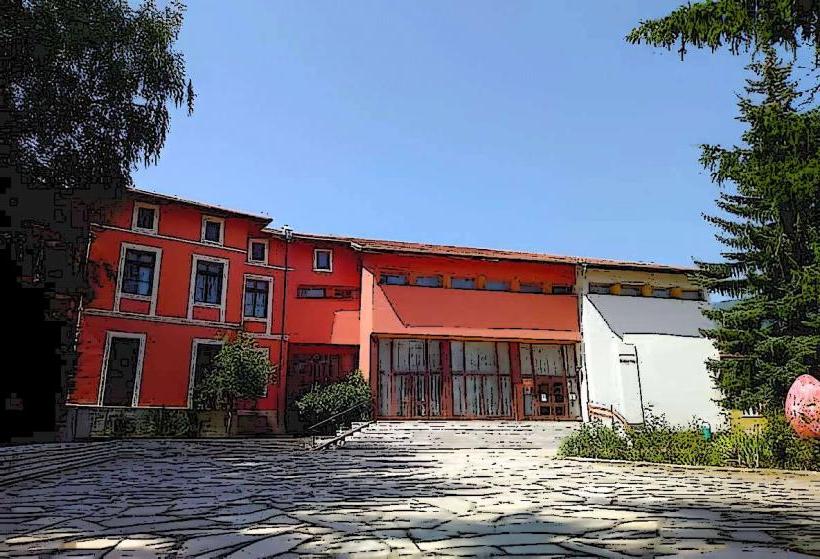
Landmark: Velingrad Historical Museum
City: Velingrad
Country: Bulgaria
Continent: Europe
Velingrad Historical Museum, Velingrad, Bulgaria, Europe
Velingrad Historical Museum is a regional cultural institution located in the Chepino district of Velingrad, Bulgaria. It serves as the primary repository for archaeological, ethnographic, and historical artifacts from the Chepino Valley and the Western Rhodope Mountains.
Visual Characteristics
The museum occupies a two-story solid masonry building with a white plaster facade and a red-tiled hip roof. It features a dedicated gallery wing with large windows and a paved courtyard containing outdoor lapidarium exhibits. The interior is divided into thematic halls with wooden flooring and specialized climate-controlled display cases for delicate organic materials.
Location & Access Logistics
The museum is situated at ul. "Sveti Kiril i Metodiy" 6, approximately 3km from the Velingrad city center (Kleptuza area). Access is via the main boulevard connecting the Ladzhene and Chepino districts. The Velingrad-Chepino railway halt on the narrow-gauge line is 500 meters away, and local bus line No. 1 stops within 200 meters of the entrance. Limited street parking is available.
Historical & Ecological Origin
Established in 1951, the museum was created to preserve the heritage of the three villages (Chepino, Ladzhene, and Kamenitsa) that formed Velingrad in 1948. The building was specifically adapted to house the extensive collection of the Velingrad Easter egg painting tradition and the archives of Resistance leader Vela Peeva, for whom the city is named.
Key Highlights & Activities
Visitors can view the permanent exhibition of "Pisanki" (traditionally waxed and dyed Easter eggs), which is the largest collection of its kind in Bulgaria. Guided tours detail the Roman and Byzantine fortress remains found at the nearby Tsepina Fortress. The museum hosts workshops on traditional Rhodopean weaving and egg-decorating techniques during the spring season.
Infrastructure & Amenities
The facility includes a small gift shop selling traditional crafts and a public restroom for visitors. 5G and 4G cellular coverage is available throughout the site. There is no on-site cafeteria, but multiple food vendors and cafes are located within 300 meters on the main commercial street of the Chepino district.
Best Time to Visit
The museum is best visited between 10:00 and 12:00 for optimal natural lighting in the ethnographic halls. The Easter period (March–May) is the peak season for the specialized egg-painting exhibits. It is closed on weekends during the winter season (November–March), so checking the seasonal schedule is required.
Facts & Legends
The museum houses a unique collection of "hidden" Christian artifacts from the 17th century, a period when the local population underwent mass Islamization. A specific historical oddity is the display of a 19th-century "wedding tree," a local Rhodopean tradition where a decorated branch was used as a symbolic ritual object to ensure fertility.
Nearby Landmarks
Kleptuza Karst Spring: 0.8km South
Sveti Nedelya Church: 0.4km Southwest
Vela Peeva Memorial House: 1.2km North
Mineral Pool "Chepino": 0.6km Southeast
Narrow-Gauge Railway Station: 0.5km Northwest


