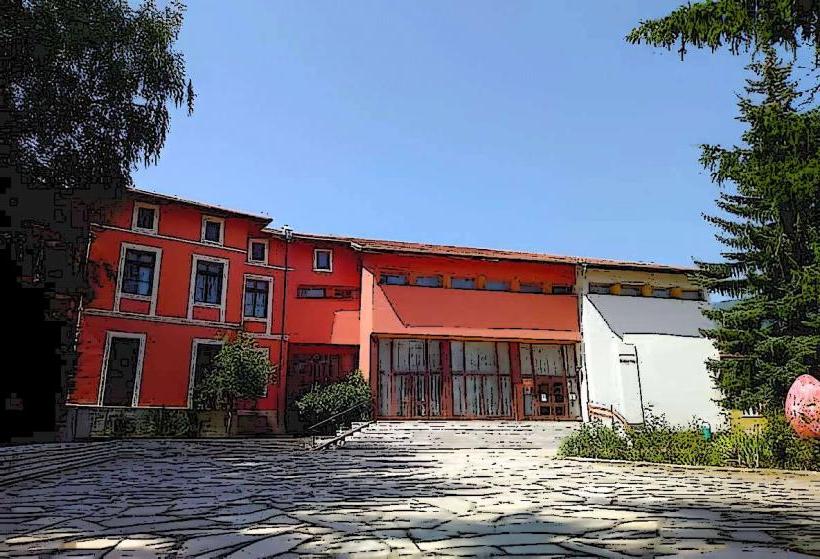
Landmark: Velingrad Mineral Baths
City: Velingrad
Country: Bulgaria
Continent: Europe
Velingrad Mineral Baths, Velingrad, Bulgaria, Europe
Velingrad Mineral Baths is a complex of public thermal facilities situated across the Ladzhene, Kamenitsa, and Chepino districts of Velingrad, Bulgaria. It constitutes the core of the city’s status as the "Spa Capital of the Balkans," utilizing the region’s 80 hyper-thermal mineral springs.
Visual Characteristics
The bathhouses vary from 19th-century Ottoman-style structures to mid-20th-century Socialist Classicist architecture. Common materials include thick stone masonry, marble interior cladding, and domed ceilings with circular light apertures. Exterior facades are typically finished in yellow or white plaster, featuring arched entryways and decorative ironwork. The water is clear, colorless, and characterized by a slight hydrogen sulfide odor.
Location & Access Logistics
The primary facilities, including the Central Mineral Bath, are located on ul. "Khan Asparuh" in the Ladzhene district. Access is via the main city thoroughfare, bul. "Saedinenie". The Velingrad Railway Station is within a 0.5km radius of the central baths. Parking is regulated by the "Blue Zone" street system, with dedicated lots available near the Sulphur Bath in the Kamenitsa district.
Historical & Ecological Origin
The mineral springs originate from a deep geothermal reservoir in the Western Rhodope Mountains, surfacing at temperatures between 28°C and 91°C. The first organized bathhouses were established during the Roman era, while the current public structures were largely rebuilt between 1910 and 1950. The water is chemically classified as hydrocarbonate-sulphate-sodium with high fluoride content.
Key Highlights & Activities
Visitors utilize the public indoor thermal pools for balneotherapy and physical rehabilitation. Specific pools are designated for men and women, following traditional Balkan bathing protocols. The Sulphur Bath is specifically used for treating skin and neurological conditions. Drinking fountains outside the bathhouses provide free access to thermal water for internal metabolic treatment.
Infrastructure & Amenities
The bathhouses include changing rooms, individual lockers, and marble massage benches. Public restrooms are located inside each facility. While 5G cellular signal is strong throughout the complexes, the thick stone walls of the older baths can cause signal degradation inside. Food vendors, pharmacies, and towel rental shops are concentrated within 100 meters of the bath entrances.
Best Time to Visit
The baths are best visited between 07:00 and 10:00 to avoid high occupancy levels. Mid-week visits (Tuesday–Thursday) are recommended for quieter conditions. For photography of the historical architecture, the late afternoon sun (16:00–18:00) highlights the textures of the stone facades and the steam venting from the outdoor conduits.
Facts & Legends
The Sulphur Bath is built over a unique spring where the water emerges naturally at 42°C, requiring no mechanical heating or cooling for therapeutic use. Local legend claims the springs were a favored recovery site for the Thracian tribes of the Besi, who believed the mineral-rich waters were a gift from the chthonic deities of the Rhodope Mountains.
Nearby Landmarks
Velingrad Central Park: 0.1km West
Velingrad Municipality Building: 0.3km Southwest
Velingrad Historical Museum: 3.2km South
Kleptuza Karst Spring: 3.5km South
Sveti Troitsa Church: 0.7km Northwest