Landmark: Vieux Nice
City: Nice
Country: France
Continent: Europe
Vieux Nice, Nice, France, Europe
Vieux Nice is the historic district of Nice, France, positioned between the Castle Hill to the east and the Promenade des Arts to the west. It serves as the city's old town, characterized by a dense network of narrow streets situated adjacent to the Quai des États-Unis and the Mediterranean coastline.
Visual Characteristics
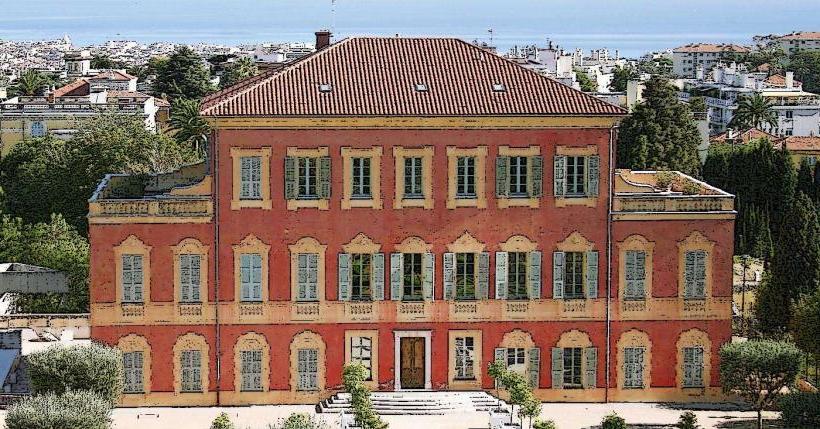
The district is defined by tall, narrow tenement buildings painted in warm shades of ochre, terracotta, and yellow, frequently featuring green or blue wooden shutters. Architectural styles are primarily Sardinian and Baroque, with cobblestone and paved pedestrian lanes. Key structures include the Cathédrale Sainte-Réparate with its tiled dome and the Palais Lascaris featuring ornate 17th-century ornamentation.
Location & Access Logistics
Vieux Nice is bordered by the Boulevard Jean Jaurès to the north and the Cours Saleya to the south. It is accessible via the Lignes d'Azur Tramway Line 1 at the Cathédrale-Vieille Ville and Opéra-Vieille Ville stations. Vehicle traffic is strictly limited to residents and delivery services; the nearest public parking facilities are the Parking Vinci Park Cours Saleya and Parking Sulzer.
Historical & Ecological Origin
The area developed significantly during the 13th century as the population moved from the Castle Hill down to the coastal plain. It remained the primary urban center of Nice until the mid-19th century expansion. The district's layout reflects medieval defensive requirements, with tall structures providing natural shade during high-temperature months.
Key Highlights & Activities
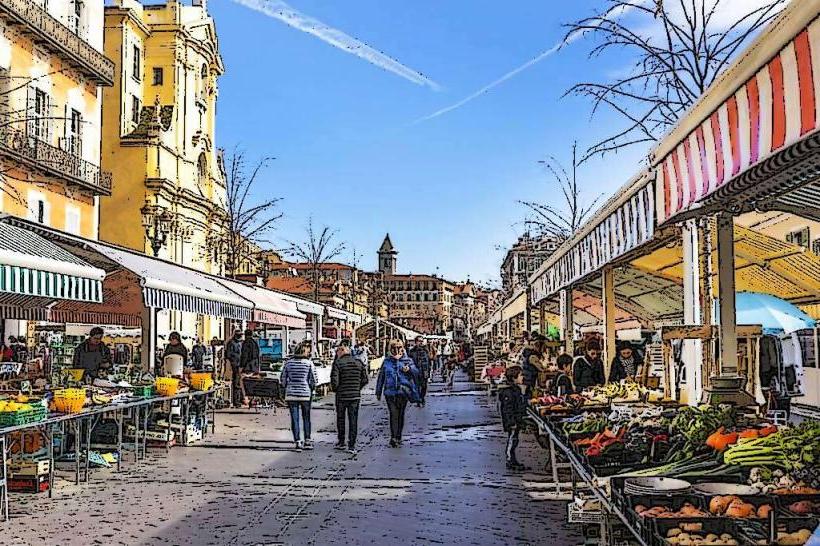
Visitors can access the Cours Saleya market for regional products and flowers. Exploration of the Baroque interiors of the Chapelle de la Miséricorde is a primary activity. The ascent to the Colline du Château via the municipal elevator or stairs provides views of the district's rooftops. Dining at local establishments specializing in Niçoise cuisine, such as Socca, is common.
Infrastructure & Amenities
Public restrooms are located at the entrance to the Cours Saleya and near the Place Rossetti. The district lacks open green space but provides shade through its high-density architecture. 4G and 5G cellular coverage is consistent throughout the old town. Extensive food and retail vendors operate along the main thoroughfares and squares.
Best Time to Visit
The Cours Saleya market is best visited between 08:00 and 12:00 for full vendor participation. Photography of the Place Rossetti is optimal in the early morning to avoid crowds and utilize soft lighting. The district is highly frequented during the summer months (June–August); late spring and early autumn offer cooler temperatures for pedestrian exploration.
Facts & Legends
The "Lou Baous" (The Cannon) is fired every day at noon from the Colline du Château, a tradition started in 1860 by Sir Thomas Coventry to remind his wife to return for lunch. Historically, the district was once the site of the city's original fortifications before they were dismantled by the troops of Louis XIV in 1706.
Nearby Landmarks
Colline du Château – 0.2km East
Cathédrale Sainte-Réparate de Nice – 0.1km North
Cours Saleya – 0.1km South
Opéra de Nice – 0.3km Southwest
Palais Lascaris – 0.1km North