City: Baton Rouge
Country: USA Louisiana
Continent: North America
Baton Rouge, USA Louisiana, North America
Baton Rouge is a consolidated city-parish (East Baton Rouge Parish) situated on the Istrouma Bluff of the Mississippi River. Known as the "Red Stick" (the English translation of its French name), it is defined by its role as the state capital, its status as a major deep-water port, and its identity as the home of Louisiana State University (LSU).
Historical Timeline
Inhabited by the Houma and Bayou Goula peoples. Discovered by French explorer Sieur d'Iberville in 1699, who named the site for a reddened cypress pole marking tribal boundaries. It has been ruled by seven different flags, including France, Great Britain, Spain, and the short-lived Republic of West Florida. A critical historical event occurred in 1849 when it replaced New Orleans as the state capital. In the 20th century, the city transformed into an industrial powerhouse with the 1909 opening of the Standard Oil refinery. The 21st century has been shaped by massive population shifts following Hurricane Katrina (2005) and a significant downtown revitalization effort.
Demographics & Population
The 2026 population is approximately 221,000 (Metro area ~870,000). The demographics are Black or African American (51%), White (36%), and Hispanic or Latino (6%). The economy is driven by the petrochemical industry (home to the 5th largest refinery in the U.S.), state government, and higher education.
Urban Layout & Key Districts
Baton Rouge is organized along the river and the I-10/I-12 split, with distinct cultural zones.
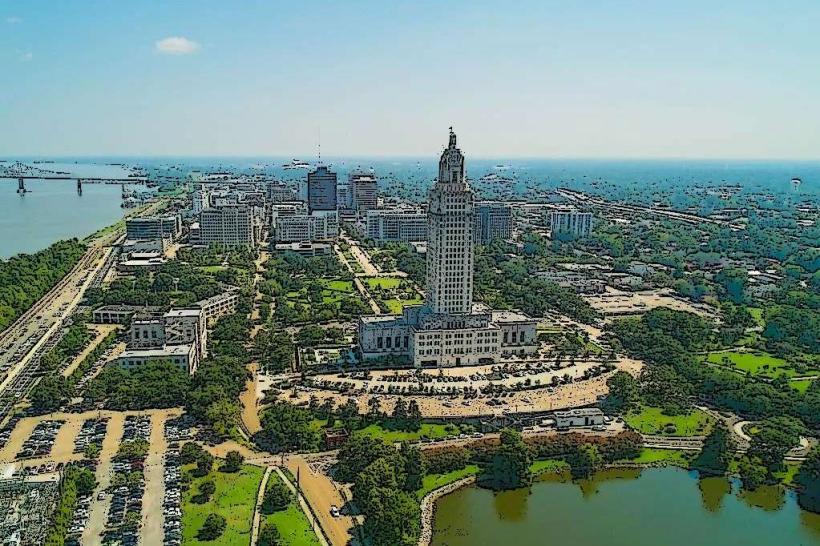
Downtown / Capitol Park: The political and business hub featuring the State Capitol, museums, and riverfront parks.
Spanish Town: The city's oldest neighborhood (1805), known for its diverse architecture, narrow streets, and the "Pink Flamingo" Mardi Gras tradition.
Garden District: A prestigious mid-city area featuring 20th-century bungalows and high-density foliage.
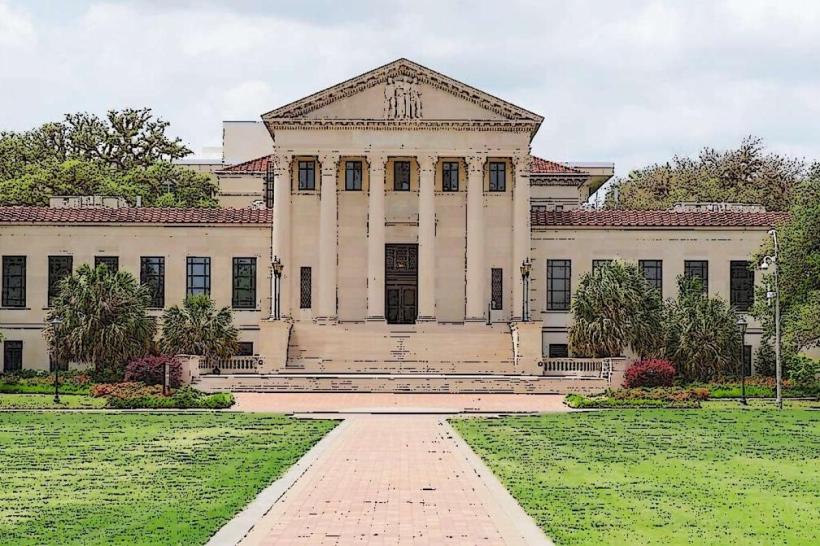
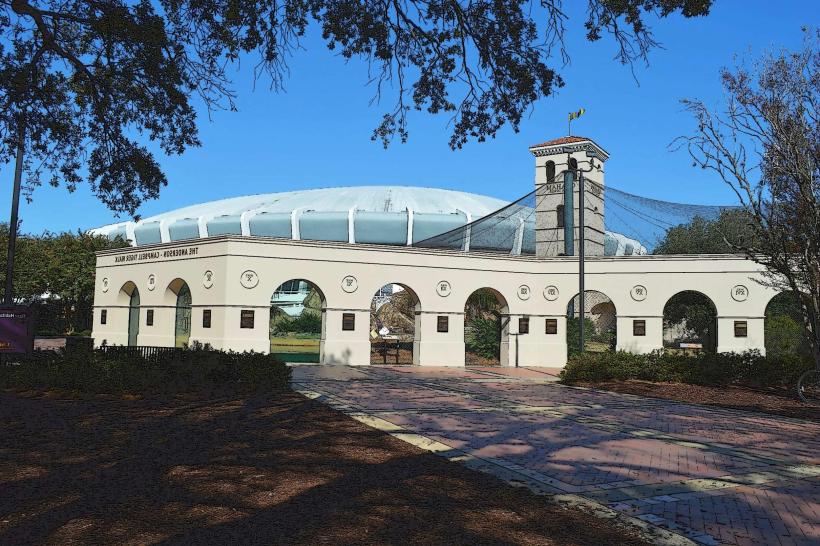
LSU / North Gate: The massive university campus and its surrounding commercial district, dominated by Tiger Stadium and student life.
South Baton Rouge / Perkins Road: An upscale growth corridor featuring boutique shopping, the Perkins Road Overpass entertainment area, and high-end residential.
Top City Landmarks
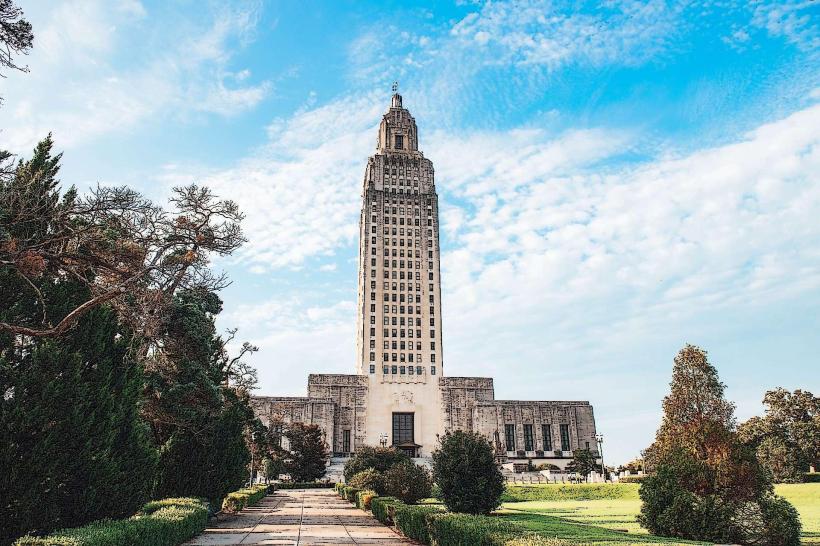
Louisiana State Capitol: The tallest capitol building in the U.S. (137m); site of the 1935 assassination of Governor Huey P. Long.
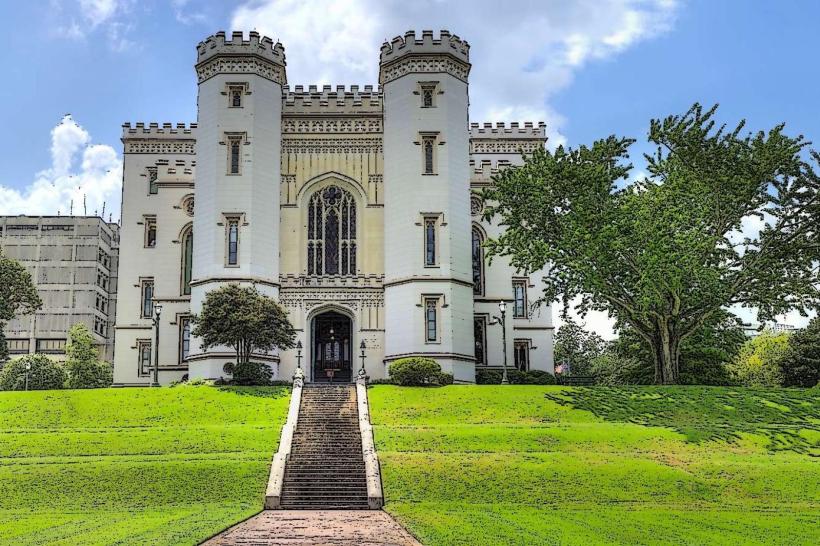
Old State Capitol: A Gothic Revival "castle" on a bluff overlooking the river, now a museum of political history.
USS Kidd (DD-661): A Fletcher-class destroyer from WWII, docked in the Mississippi River as a memorial.
LSU Tiger Stadium: Known as "Death Valley," it is one of the largest and loudest sporting venues in the world.
Mike the Tiger Habitat: A state-of-the-art $3 million enclosure housing LSU’s live Bengal tiger mascot.
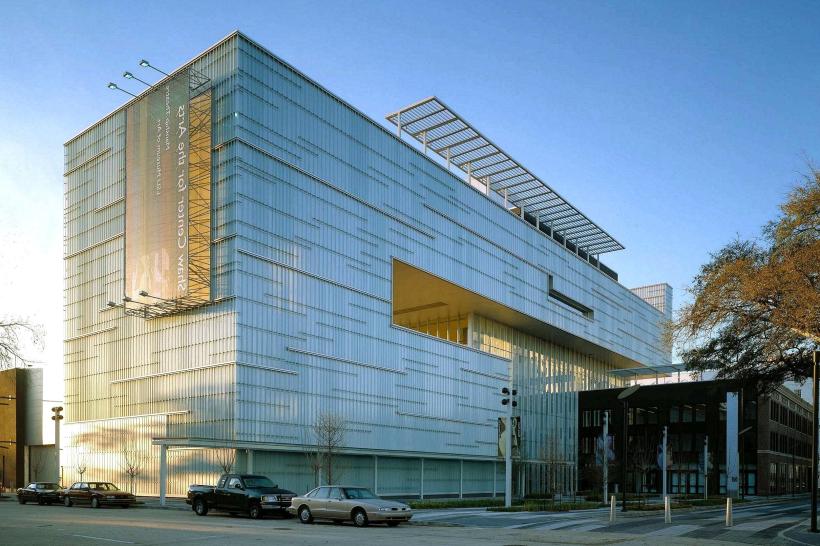
Shaw Center for the Arts: A modern multi-use cultural facility housing the LSU Museum of Art and a rooftop terrace with river views.
Transportation Network
Movement is strictly automotive-centric. The city is a major junction for I-10, I-110, and I-12. Public transit is provided by CATS (Capital Area Transit System). Commercial air service is via Baton Rouge Metropolitan (BTR). The Horace Wilkinson Bridge provides the primary crossing over the Mississippi River.
Safety & "Red Zones"
The general safety level is low. Baton Rouge consistently ranks among the most violent cities in the U.S. per capita. Caution is advised throughout the city after dark. "Red Zones" include the "Murder Triangle" (bounded by I-110, Florida Blvd, and Greenwell Springs Rd), as well as parts of North Baton Rouge and the Gardere area. Downtown and the LSU campus are generally safe during the day but require standard urban awareness. Environmental hazards include severe hurricane risk, flash flooding, and extreme summer humidity.
Digital & Financial Infrastructure
Internet speeds average 500+ Mbps with fiber availability via AT&T and Cox. Main mobile carriers are Verizon and AT&T. Card acceptance is universal. ATMs are concentrated in the Downtown and LSU/Perkins Road areas.
Climate & Air Quality
Temperatures range from 5°C to 16°C in winter and 23°C to 34°C in summer. The city is statistically one of the wettest in the U.S. Air quality is moderate, influenced by the heavy concentration of petrochemical facilities north of downtown.
Culture & Social Norms
The standard tipping percentage is 20%. A "Formal-Southern" greeting is standard in professional settings, while "LSU-Casual" dominates the city. Dress codes are "Business-Professional" near the Capitol. The city is culturally defined by its Cajun and Creole influence, its obsession with LSU Football, and its identity as the "Red Stick."
Local Cost Index
1 Espresso: $4.50 (USD)
1 Standard Lunch: $18.00 (USD)
1 USS Kidd Admission: $15.00.
Nearby Day Trips
St. Francisville, AL: (50 km north; a historic town known for its antebellum plantations and rolling hills).
New Orleans, LA: (130 km southeast; the state's largest cultural hub).
Lafayette, LA: (90 km west; the heart of Acadiana/Cajun country).
Facts & Legends
Baton Rouge has the tallest capitol building in the United States. Historically, it was the site of the only Civil War battle fought in the state's capital. A local legend involves the "Ghost of the Old Capitol," rumored to be a former legislator who died in the building. Another legend concerns the "Red Stick" itself, with some locals claiming the original pole was enchanted to protect the boundary between the Houma and Bayou Goula tribes.