Landmark: Bluebonnet Swamp Nature Center
City: Baton Rouge
Country: USA Louisiana
Continent: North America
Bluebonnet Swamp Nature Center, Baton Rouge, USA Louisiana, North America
The Bluebonnet Swamp Nature Center is a 103-acre protected area located in Baton Rouge, Louisiana.
It preserves a cypress-tupelo swamp and bottomland hardwood forest ecosystem.
Visual Characteristics
The swamp features dense stands of mature cypress trees, some exceeding 100 feet in height. Tupelo gum trees are also prevalent. The forest floor is characterized by a thick understory of ferns, vines, and various herbaceous plants. Water levels fluctuate seasonally, creating shallow pools and exposed mudflats. Boardwalks constructed from treated lumber provide elevated pathways through the wetland areas.
Location & Access Logistics
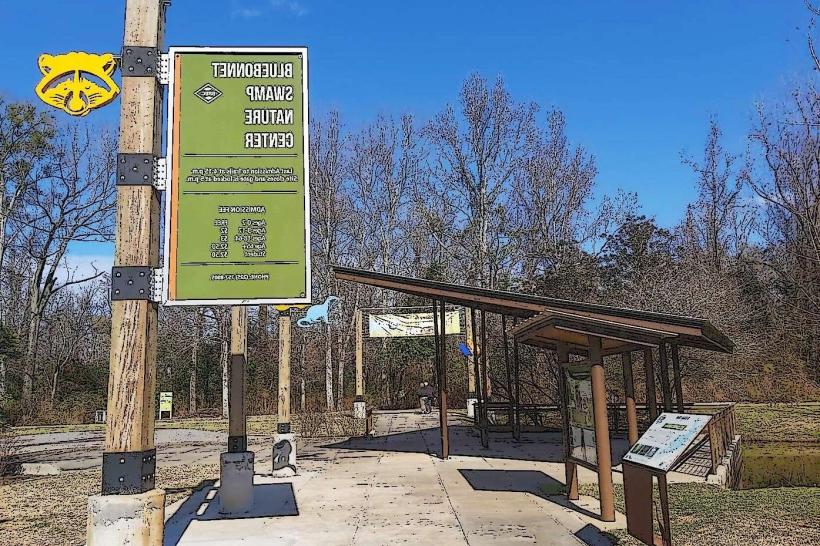
The Bluebonnet Swamp Nature Center is situated at 10503 Old Hammond Highway, Baton Rouge, LA 70815. It is approximately 10 miles east of the Baton Rouge city center. Access is via Old Hammond Highway. Ample free parking is available on-site in a dedicated lot. Public transportation options are limited; the closest bus route is CATS Route 17, with a stop approximately 1.5 miles from the entrance, requiring a walk along the highway.
Historical & Ecological Origin
The site is a remnant of the historical cypress-tupelo swamps that once covered large portions of the Mississippi River floodplain. The land was acquired by the City of Baton Rouge and developed into a nature center to preserve this ecosystem. The ecological origin is a bottomland hardwood forest and swamp environment, shaped by the natural hydrology of the region.
Key Highlights & Activities
Visitors can walk the 1.5 miles of elevated boardwalks and gravel trails. Observation platforms are positioned throughout the swamp for wildlife viewing. Photography of flora and fauna is permitted. Educational programs and guided walks are offered on select dates.
Infrastructure & Amenities
Restrooms are available in the main building. Limited shaded areas are present along the boardwalks. Cell phone signal (4G/5G) is generally available within the center's main building and along portions of the trails, but can be intermittent within the denser swamp areas. No food vendors are located on-site; visitors should bring their own provisions.
Best Time to Visit
For optimal wildlife viewing, early morning (7:00 AM - 9:00 AM) and late afternoon (4:00 PM - 6:00 PM) are recommended. The best months for comfortable weather and active wildlife are March through May and September through November. Water levels are typically highest in late winter and spring, which can impact trail accessibility in certain low-lying areas.
Facts & Legends
The center is home to a significant population of American alligators. A specific tip for visitors is to listen for the distinct calls of various wading birds, particularly during the spring nesting season, which can help locate active areas.
Nearby Landmarks
- LSU Rural Life Museum (2.5km West)
- USS Kidd Veterans Museum (8.0km West)
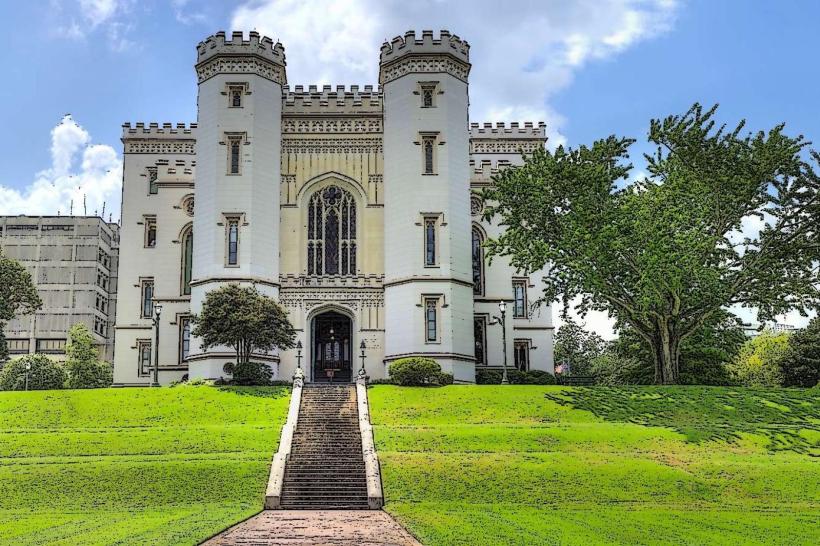
- Old State Capitol (8.5km West)
- Magnolia Mound Plantation (9.0km West)