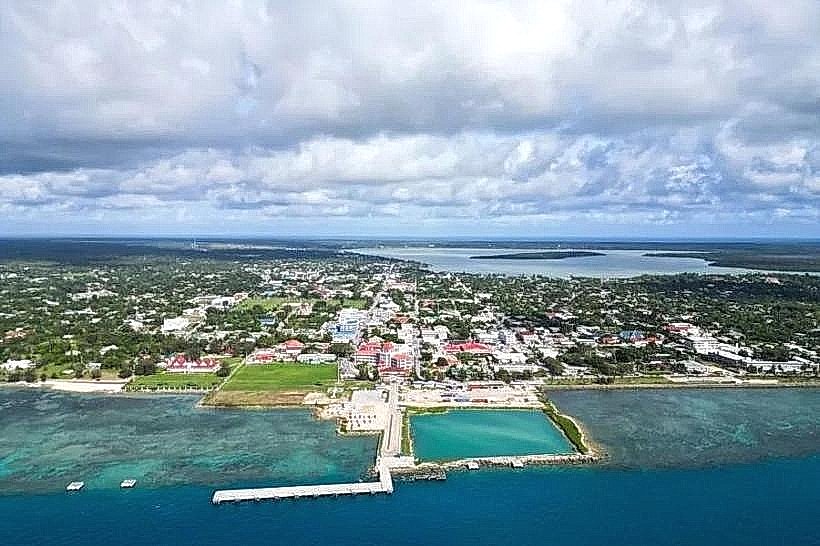
City: Nukualofa
Country: Tonga
Continent: Australia
Nukualofa, Tonga, Australia
Nuku'alofa serves as the political, economic, and administrative capital of the Kingdom of Tonga, situated on the northern coast of Tongatapu, the nation's largest island. The coastal urban area anchors the country's main commercial port, government ministries, and royal institutions along the Pacific Ocean.
Historical Timeline
Polynesian communities established settlements along Tongatapu's coast centuries prior to European contact, with Captain James Cook landing nearby in 1777. King George Tupou I declared Nuku'alofa the official capital of Tonga in 1845, establishing the central seat of government and constructing the Royal Palace. The modern urban landscape was primarily reconstructed following the 2006 civil unrest, which destroyed approximately 80% of the central business district. The 2006 riots and subsequent Chinese-funded reconstruction project served as the primary event shaping the city's current layout, commercial architecture, and grid infrastructure.
Demographics & Population
The urban population within the city limits of Nuku'alofa is approximately 23,200 residents, with the surrounding Greater Nuku'alofa metropolitan area comprising nearly 35,000 residents. Indigenous Tongan (Polynesian) individuals account for approximately 96% of the population, followed by Chinese expatriates at 2%, and small communities of Euro-Pacific and other Pacific Islander groups making up the remaining 2%. The median age of the population is 22.8 years.
Urban Layout & Key Districts
Nuku'alofa is arranged along a low-lying coastal plain facing the Fanga'uta Lagoon to the south and the northern ocean front along Vuna Road. The Central Business District (CBD) sits immediately behind the waterfront, containing the parliamentary buildings, main banking institutions, and central markets. Kolomotu'a forms the historic residential district located to the west of Taufa'ahau Road, while Kolofo'ou encompasses the eastern administrative zone surrounding the royal grounds.
Top City Landmarks
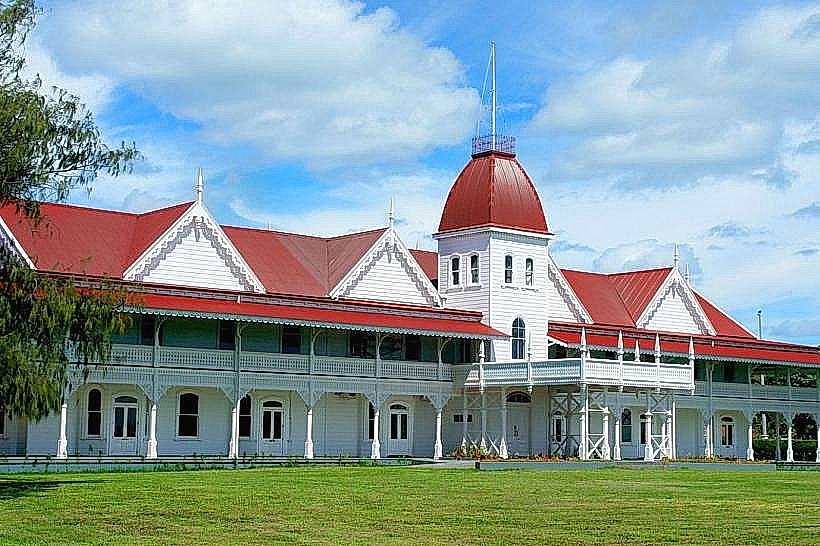
Royal Palace: A Victorian-style wooden structure completed in 1867 that serves as the official residence of the Tongan monarch.
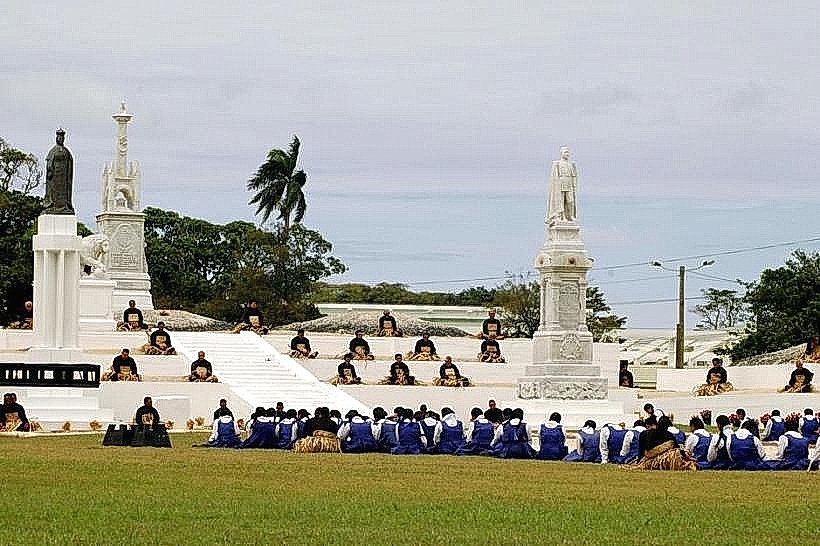
Mala'e Kula: The official royal burial grounds established in 1893, housing the tombs of the modern Tupou dynasty.
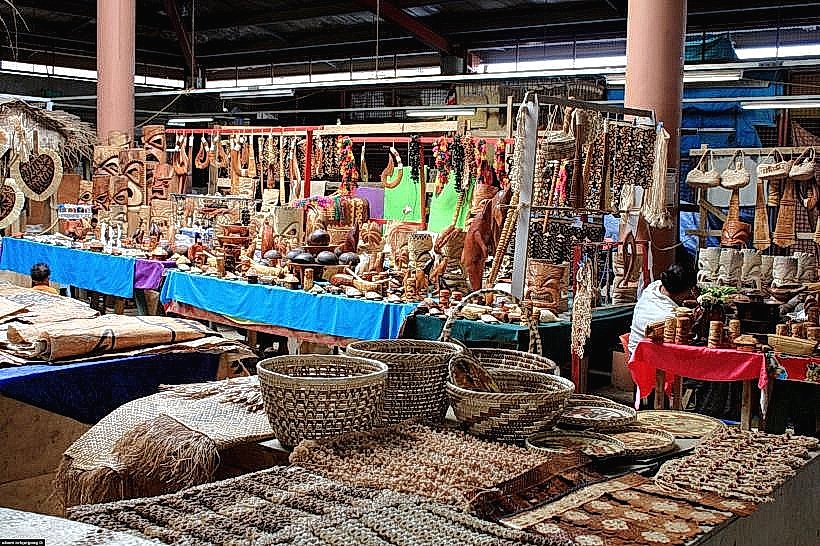
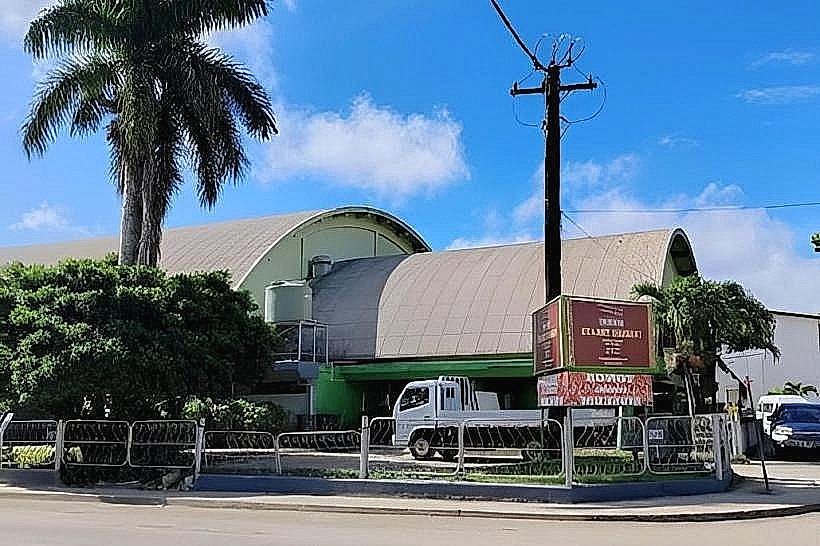
Talamahu Market: The central multi-story public market acting as the main hub for regional produce, agriculture, and Tongan handcrafts.
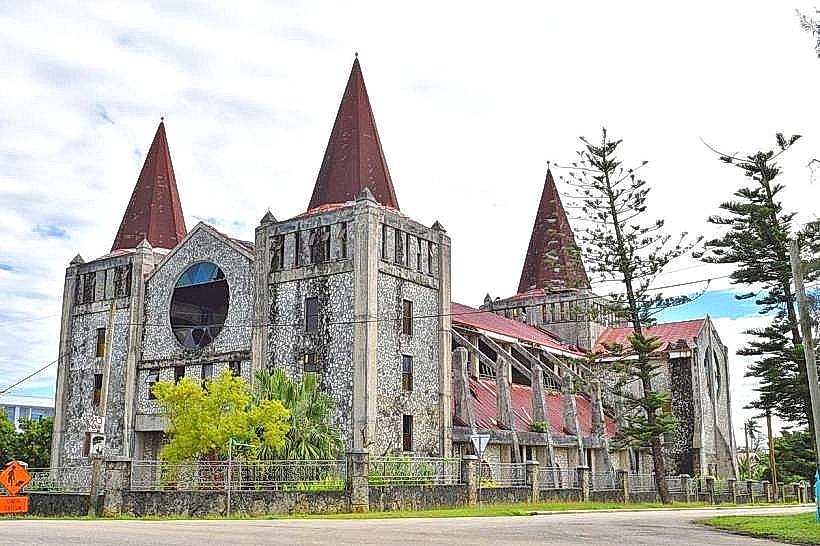
Centenary Church: The primary place of worship for the Free Wesleyan Church of Tonga, holding a seating capacity of over 2,000.
Vuna Wharf: A historic deep-water commercial pier reconstructed for domestic ferry operations and oceanfront pedestrian access.
Transportation Network
Public transit within Nuku'alofa relies on an informal network of privately operated minivans operating from the main bus terminal near Vuna Wharf. The city has no metro, light rail, or tram system. Taxis are privately owned, do not run meters, and are identified by a capital letter "T" on their license plates. Standard ride-sharing applications such as Uber, Bolt, or Grab do not operate within Tonga. Traffic density remains low to moderate, experiencing brief congestion along Taufa'ahau Road during morning and late-afternoon commute hours.
Safety & "Red Zones"
Nuku'alofa maintains a generally high baseline safety level with low rates of violent crime. Visitors should exercise standard caution around night venues in the harbor area after dark due to occasional alcohol-related disputes. The primary safety concerns involve aggressive stray dogs in peripheral residential streets and petty opportunistic theft.
Digital & Financial Infrastructure
Average fixed broadband internet speeds range around 60 to 120 Mbps in the capital center. The two primary mobile telecommunications carriers providing LTE coverage are Digicel Tonga and Tonga Communications Corporation (TCC / U-Call). Card acceptance is moderate; major hotels and larger restaurants accept Visa and MasterCard, but smaller businesses and local markets operate strictly on cash. ATMs operated by Bank South Pacific (BSP) and ANZ are available throughout the town center.
Climate & Air Quality
Nuku'alofa experiences a tropical climate with a warm, wet season from November to April and a cooler, dry season from May to October. Average daily temperatures range between 21°C in August and 29°C in February. Air quality is consistently high due to oceanic trade winds, though low-lying areas face localized flooding risks during tropical cyclones and severe summer rainstorms.
Culture & Social Norms
Tongan society operates under conservative Christian norms. Tipping is not customarily expected or required in local establishments. Standard formal greetings involve a light handshake while maintaining respectful body posture. Dress codes are conservative; public modesty laws strictly forbid both men and women from appearing shirtless in public, and swimwear must be limited to beach areas. Public consumption of alcohol outside licensed premises is illegal. Sunday is legally designated as a day of rest, during which most commercial operations, transportation, and recreation are shut down.
Accommodation Zones
Kolofo'ou (Waterfront): Recommended for direct walking access to government buildings, restaurants, ferry terminals, and town center amenities.
Sopu (Western Suburbs): Recommended for quieter, residential lodging options along the western coastal road away from central commercial traffic.
Local Cost Index
1 Espresso: 6.00 TOP ($2.50 USD)
1 Standard Lunch: 20.00 TOP ($8.40 USD)
1 Bus Ticket: 1.50 TOP ($0.63 USD)
Nearby Day Trips
Ha'amonga 'a Maui Trilithon: A massive 13th-century stone megalith located near Niutoua, roughly 31 kilometers east of the capital.
Mapu'a 'a Vaea Blowholes: Natural limestone blowholes stretching along 5 kilometers of coastline near Houma, 15 kilometers southwest.
Anahulu Cave: A limestone cave system containing freshwater swimming pools, located 23 kilometers east near Haveluliku.
Pangaimotu Island: An offshore coral islet accessible via a 10-minute boat ride from Nuku'alofa harbor, used for day recreation and snorkeling.
Facts & Legends
According to Tongan mythology, the island of Tongatapu was pulled directly from the ocean floor by the demigod Maui using his enchanted fishhook, the Manaiakalani. Local tradition holds that Maui then struck the land at various points to flatten the terrain, creating the distinct low-lying topography that defines Nuku'alofa and the surrounding atoll landscape today.