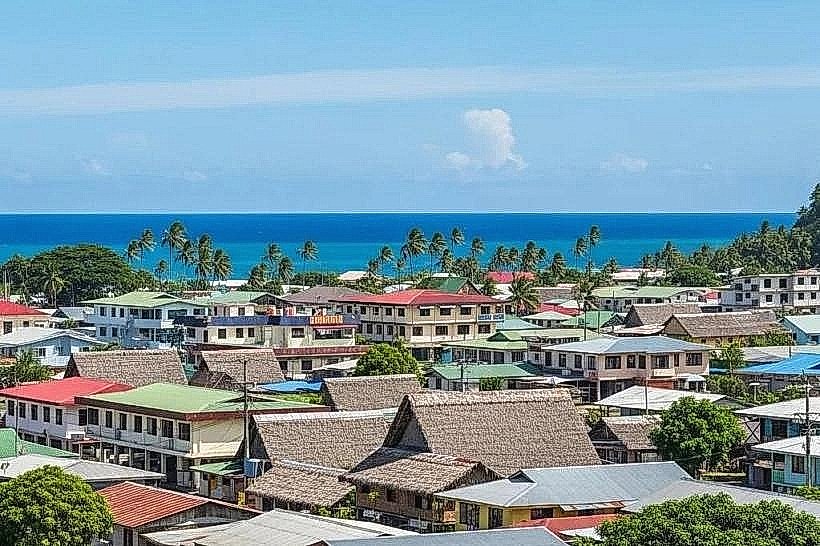
City: Safotu
Country: Samoa
Continent: Australia
Safotu, Samoa, Australia
Safotu is a major traditional village and administrative sub-center on the central northern coast of Savai'i. It serves as a primary service hub for the Gaga'ifomauga district, situated between the lava fields of Saleaula and the western agricultural plains.
Historical Timeline
Established as a seat of high-ranking orator titles, Safotu has functioned as a regional power center for centuries. The village was governed by traditional councils through the colonial eras of Germany and New Zealand. The most significant architectural shift occurred after the 1905–1911 Matavanu eruptions, which spared Safotu but redirected regional trade toward its harbor. The primary event shaping the current urban form was the post-independence infrastructure drive of the 1970s, which established the district hospital and secondary schools as permanent fixtures.
Demographics & Population
The village population is approximately 1,200 residents. The demographics are 99% ethnic Samoan. The median age is approximately 21 years, consistent with the young demographic profile of rural Savai'i.
Urban Layout & Key Districts
Safotu is organized linearly along the Main North Coast Road. The village is divided into the coastal "Tai" section, which contains the churches and ceremonial grounds, and the inland "Uta" section, where plantations and newer residential developments are located. The District Hospital zone (East) serves as the primary logistical landmark.
Top City Landmarks
Safotu District Hospital
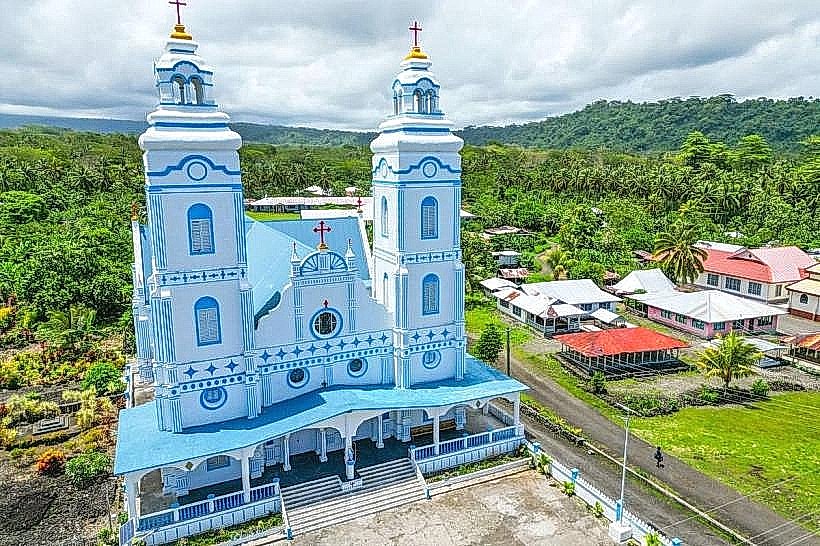
Congregational Christian Church of Safotu (EFKS)
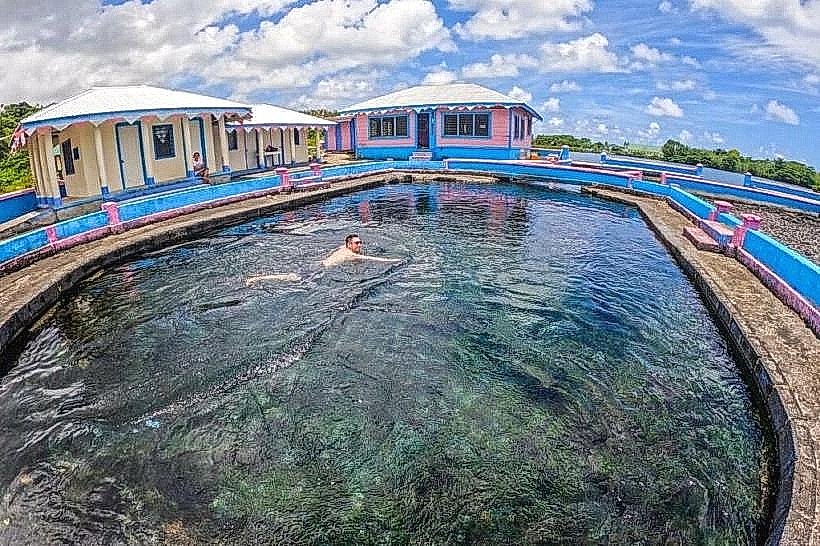
The Safotu Coastal Springs
Gaga'ifomauga College
The Safotu Wharf and Bay
Transportation Network
Movement within Safotu is facilitated by private vehicles and the Savai'i bus network. Buses originate from Salelologa and pass through Safotu several times daily. There is no rail or metro infrastructure. Taxis are available but usually require a phone booking from the Salelologa hub; official taxis are white. Traffic is light, consisting mostly of residents and delivery vehicles.
Safety & "Red Zones"
The village is very safe. There are no "red zones." Cultural protocols are the primary safety consideration; visitors must respect the "Sa" (evening prayer) by stopping all activity when the bells ring. Walking through the village center in revealing clothing is considered a breach of local peace.
Digital & Financial Infrastructure
Average internet speed is 20 Mbps via 4G/LTE. Vodafone and Digicel are the providers. Card acceptance is extremely low; cash is the only reliable medium of exchange. There are no ATMs in Safotu; the nearest banking facilities are located 45 minutes east in Salelologa.
Climate & Air Quality
Temperatures range from 24°C to 30°C. Air quality is pristine due to the lack of industry and the presence of maritime trade winds. The area experiences high humidity and heavy tropical rainfall from November to April, with a consistent risk of tropical cyclones.
Culture & Social Norms
Tipping is not practiced. A handshake is the standard greeting. Dress code is conservative; shoulders and knees must be covered when visiting the village or hospital. Alcohol consumption is strictly regulated by the village council and is generally prohibited in public spaces.
Accommodation Zones
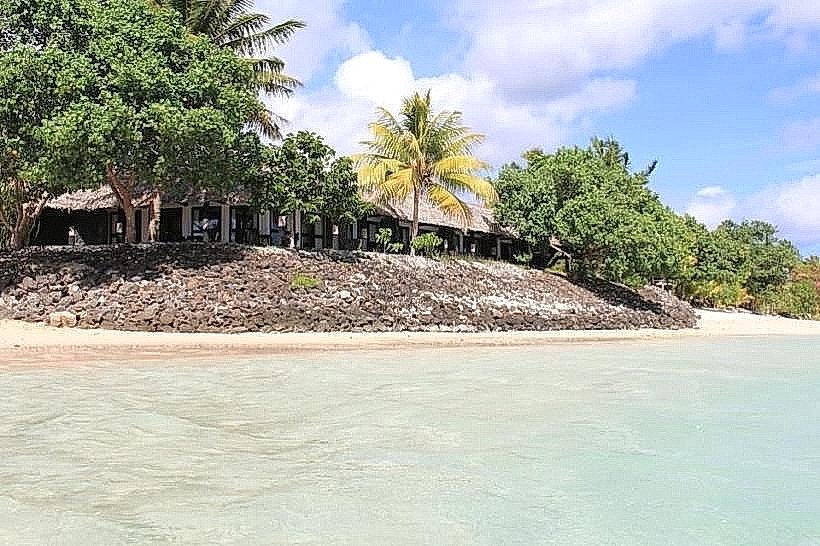
Manase Border: Stay in the nearby Manase area (5 minutes west) for beach-fale style accommodation with proximity to Safotu's services.
Safotu Inland: Stay in local guesthouses for an immersive experience of traditional Samoan village life.
Local Cost Index
Espresso: 9.00 WST ($3.30)
Standard Lunch: 20.00 WST ($7.40)
Bus Ticket (to Salelologa): 7.00 WST ($2.60)
Nearby Day Trips
Saleaula Lava Fields: 10 km (15-minute drive).
Manase Beach: 3 km (5-minute drive).
Pe'ape'a Cave: 12 km (20-minute drive).
Mataolealelo Spring: 10 km (15-minute drive).
Facts & Legends
According to local legend, Safotu was the site of a great battle between the warriors of Tonga and Samoa, where the local defenders used the coastal caves to launch a decisive counter-attack. A verified historical oddity is that Safotu serves as a "hospital village," where the regional medical facilities are so integrated into the community that the village council often oversees the security and maintenance of the hospital grounds alongside government officials.