Landmark: Anapji Pond
City: Gyeongju
Country: South Korea
Continent: Asia
Anapji Pond, Gyeongju, South Korea, Asia
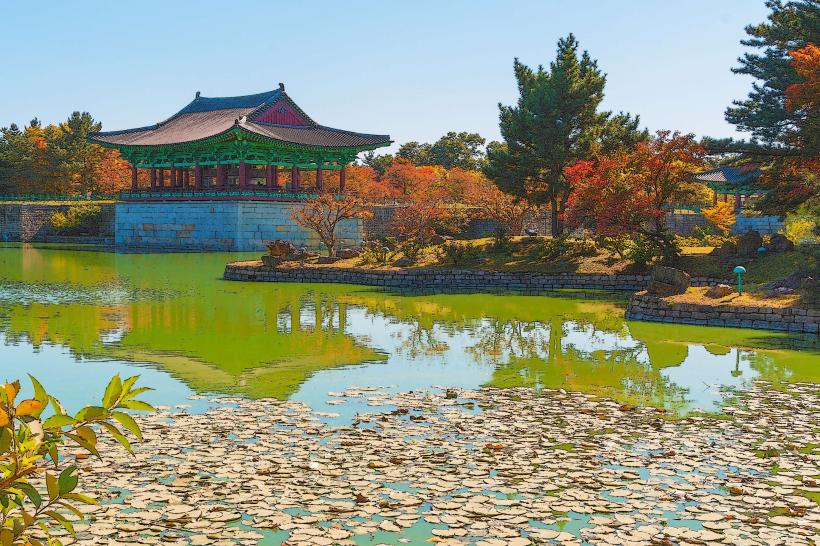
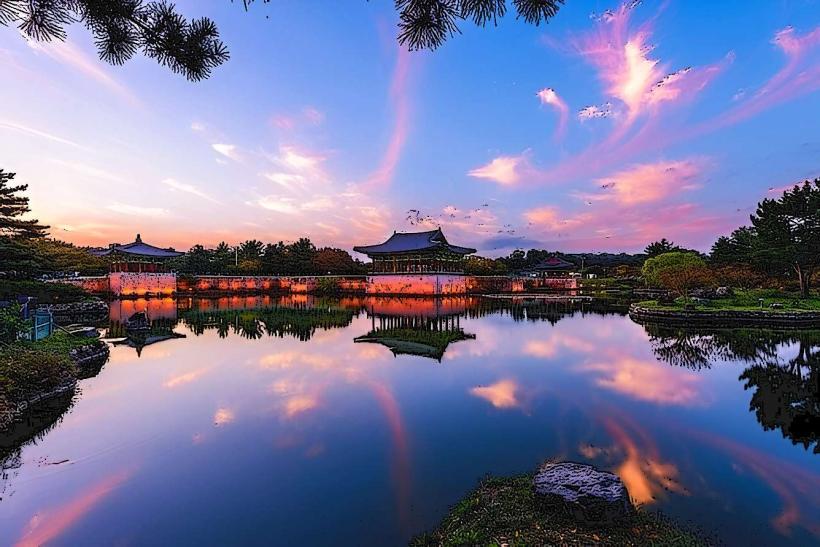
Anapji Pond is a constructed reservoir located in Gyeongju, North Gyeongsang Province, South Korea. It is part of the Gyeongju Historic Areas, a UNESCO World Heritage site.
Visual Characteristics
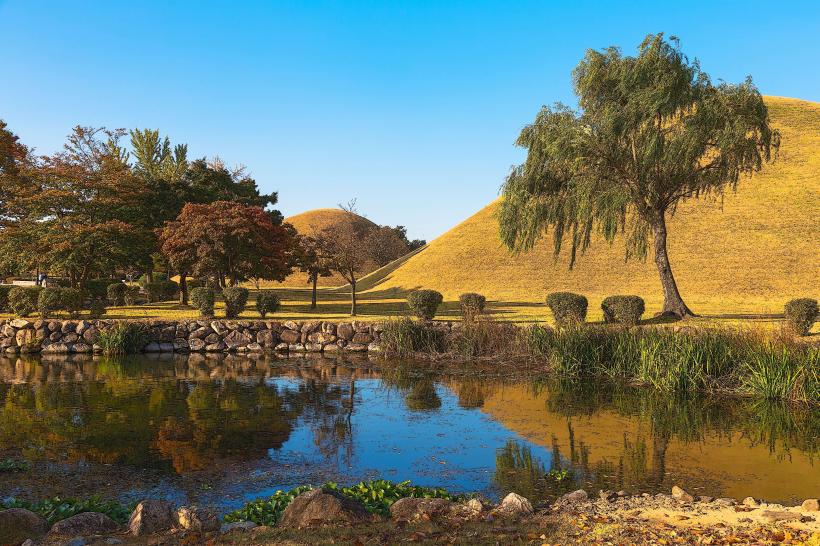
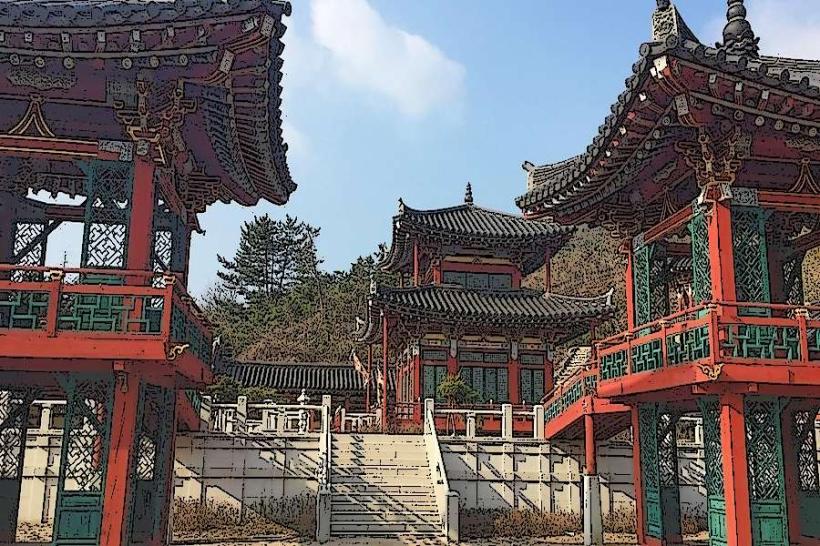
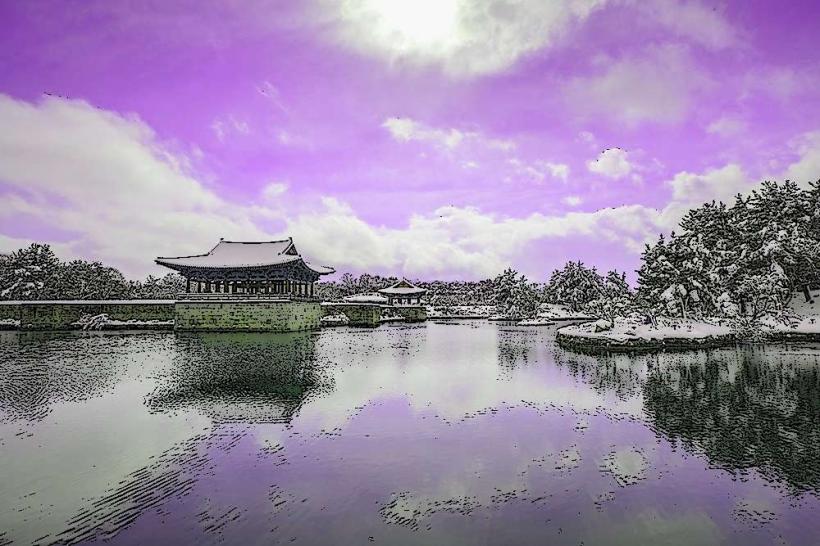
The pond is rectangular, measuring approximately 180 meters by 120 meters. Its banks are lined with stone retaining walls. Three small islands are situated within the pond. The surrounding area features meticulously landscaped gardens with a variety of trees and flowering plants. Several reconstructed traditional Korean pavilions (known as jeongja) are positioned along the pond's edge, including the main Imhaejeon Pavilion.
Location & Access Logistics
Anapji Pond is situated approximately 1.5 kilometers east of Gyeongju City Hall. Access is via Gyeongju's main arterial roads, specifically Gyeongju-daero. Parking is available at a dedicated lot adjacent to the site. Public transport options include local bus routes 10, 11, 16, and 700, which stop within a 5-minute walk of the entrance.
Historical & Ecological Origin
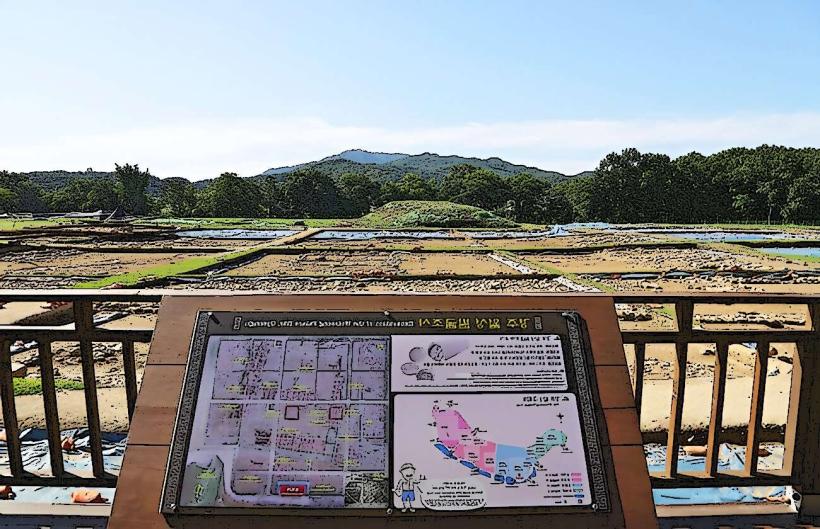
Anapji Pond was constructed in 674 AD during the Silla Kingdom under the reign of King Munmu. It served as a royal garden and a place for banquets and entertainment. The pond was originally part of the Donggung Palace and Wolji Pond complex. The site was later buried and forgotten until its excavation and partial reconstruction began in the 1970s.
Key Highlights & Activities
Visitors can walk along the perimeter of the pond. Photography of the pavilions, especially during evening illumination, is a primary activity. Exploring the reconstructed pavilions offers insight into Silla architecture. The landscaped gardens provide areas for quiet observation.
Infrastructure & Amenities
Restrooms are available on-site. Shaded areas are provided by trees and pavilion structures. Cell phone signal (4G/5G) is generally strong within the park. Food vendors are not present within the immediate vicinity of the pond, but restaurants and cafes are located a short distance away in the city center.
Best Time to Visit
For photography, the early morning (sunrise) and late evening (after sunset when the pavilions are illuminated) offer optimal lighting conditions. The best months for visiting are April and May for spring blossoms, and October and November for autumn foliage. There are no tide-dependent activities.
Facts & Legends
A notable historical oddity is the discovery of over 30,000 artifacts during the pond's excavation, including pottery, jewelry, and wooden items, providing significant archaeological data about the Silla period. A local legend suggests that the pond was named Anapji, meaning "duck pond," because of the waterfowl that frequented it, though its official name was Donggung Palace and Wolji Pond.
Nearby Landmarks
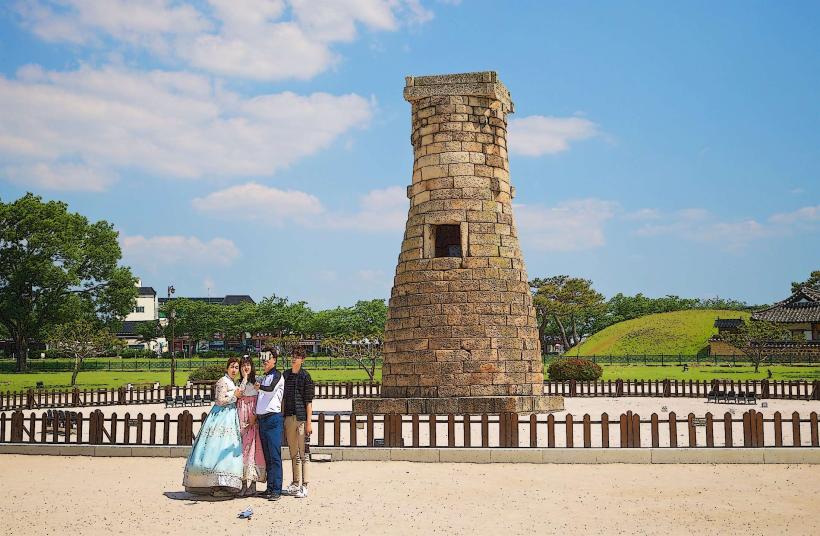
- Cheomseongdae Observatory (0.3km West)
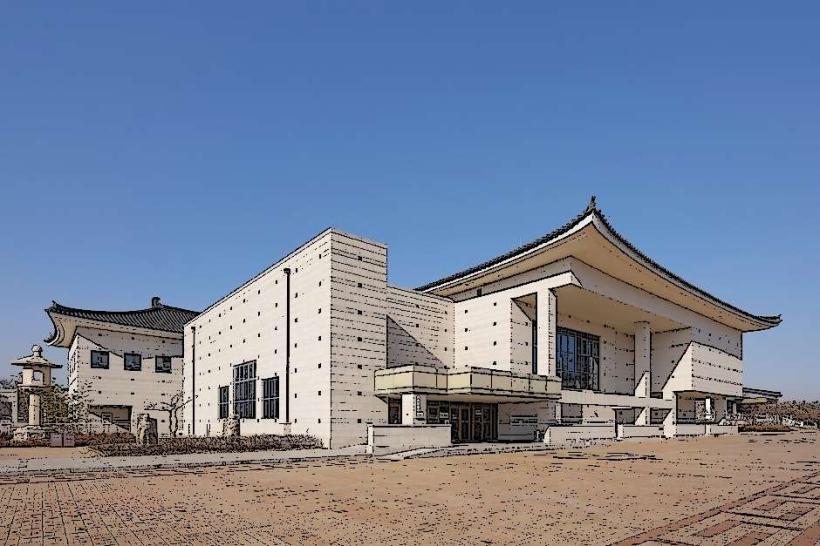
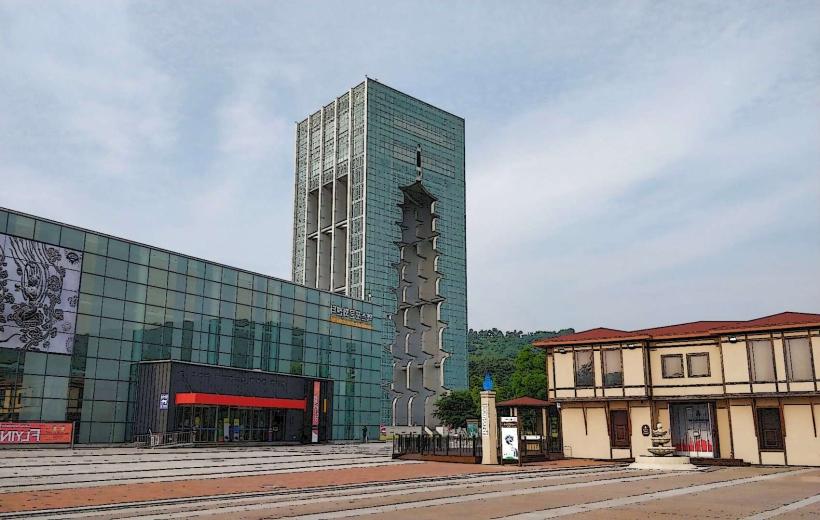
- Gyeongju National Museum (0.8km Southwest)
- Hwangnidan-gil Street (1.2km West)
- Daereungwon Tomb Complex (1.5km West)
- Bunhwangsa Temple (2.5km Northeast)